When, Why and How the European Paradise Became Hell on Earth?
Before answering When, Why and How the European Paradise Became Hell on Earth, you might have a reason to land on this page. But, there may be two, or three reasons others who landed on it have. So, we might have two or three types of readers who landed on this page to address each of their concerns. Hang up with me and be patient to captures my brain. You'll be glad you did.
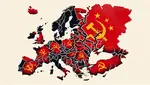
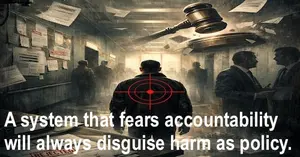
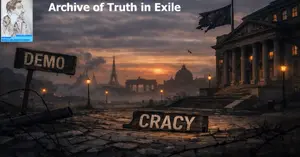
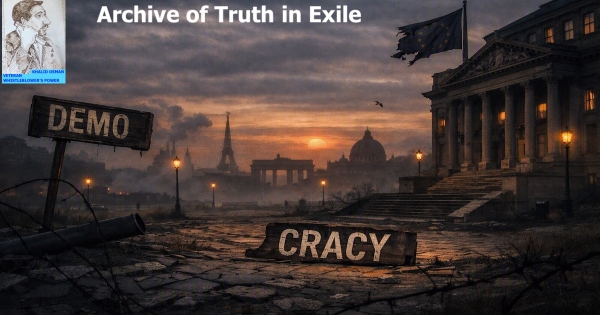 When, Why and How the European Paradise Became Hell on Earth?: An image illustrating the break of such democracy that continues to happen since 1989, just after the break of the world political balance which continued until 1992. After that period, democracy in Europe dimmed. Reasons? Read and understand this specific issue of potential decay.
As the first one, please let me know your reasons to click on this title to read the page. To do that fill the comments for at the bottom of the page. By doing this you will bring in three types of discussions that maybe varied to have a great understanding of such topic from different points of view. This is an open and free opinion network.
The Philosophic Logic with A Wisdom Proverb!
Hell on earth is not only climatic. It is also economical, political and social combined in a fabric of different official activities that produce human rights violations, injustice and unfairness.
These social dilemmas that produce crises and make people exhausted, sick and tired have existential reasons. The reason beneath them started to develop since 1989 and not 1991. This is the "when".
Everything that happens on this earth has a reason and you know already that "Nothing happens, until something moves." But, regarding these crises, the movement was not primarily "nature" and that is evidentially because nature develops naturally in balance and order and in a better way, until something that moved to affect its natural foundation and erupt its flows.
The same dynamics of balance occur not naturally in the example of nature, but systemic with its own scientific. When any system is built with its own foundational balance nothing happens, until something moves. And now the "until something moves" concerns us more... following the dynamic argument of this scientific approach to world crises.
I think that you are intrigued now. But, let's move forward following the same aesthetic logic. The foundational balance of systems is not mechanical in its base. It is ethical, moral and spiritual and it is fuelled by memory. Memory is stemmed from historical experiences. Historical experiences are not all good. So, the bad is expected to repeat itself in modern systems that lose the foundational balance of the system.
- When will we "you and me" reach the "Why"?
If this is not enough to capture your attention and thinking capabilities to extract the "Why" from the lines above, Continue reading.
People make mistakes. That is natural. They also correct themselves. That is natural too. So, this reflects also on those in the systems. But, mistakes done by individuals are different from the mistakes done by those in the systems. Mistakes in the systems hurt individuals, when the mechanical part of the foundational balance of systems work wrong and the ethical, moral and spiritual part of it is neglected.
The neglecting of the ethical, moral and spiritual part of the foundational balance of systems is the "something moves" in Einstein's theory. And there are always interests of sects in the systems that moves in the direction of neglect with bias.
Those sects in the systems moves not only by their interests, but also when something else moves in the base of individuals and thus the societies around them. Each of these moves happen when the mechanical foundational balance of the systems work alone and neglect the ethical, moral and spiritual balance of the systems.
This is both the "Why" and the "How" in the headline: When, Why and How the European Paradise Became Hell on Earth.
- But, all of these ingredients in the headline go deeper in the following analyses:
Europe's Digital Age Fatigue!
Europe entered the digital age with confidence. It believed that technology could be domesticated through regulation, that complexity could be managed through procedure, and that democratic stability could be preserved by building systems that were precise, predictable, and carefully engineered.
For a time, this confidence felt justified. Digital tools accelerated administrative processes, reduced visible bureaucracy, and created the impression of a continent moving smoothly into a modern era.
But beneath this surface, a quieter exhaustion began to form. Not collapse. Not chaos.
A fatigue... a slow, structural tiredness produced by the weight of digital obligations, the saturation of regulatory demands, and the growing distance between institutions and the societies they govern.
The (reduced visible bureaucracy) hurts and makes so many societal problems. It put the blame of any error not in the officials, but on the mechanics of digitalisation.
Europe's digital‑age fatigue is not a dramatic event, yet. It is a condition. It is the feeling that daily life has become wrapped in layers of verification, authentication, and procedural caution. It is the sense that every interaction, whether public, private, or civic now requires a digital ritual: log in, confirm, consent, verify, comply.
These rituals do not destroy democracy, but they thicken it, preparing for decay. They make participation feel administrative rather than meaningful. They turn citizenship into a sequence of digital tasks. Citizens are humans and they need human approaches, not the digitalised ones.
This fatigue emerges from several structural forces that matured after 1989.
The first is regulatory saturation. Europe's instinct, when confronted with new challenges, is to regulate. Each crisis produces another layer of rules, another framework, another compliance requirement.
Over time, regulation becomes not a tool but a reflex. Institutions respond to complexity with more complexity. Citizens experience this as friction: more steps, more forms, more obligations. The digital layer becomes heavier than the democratic layer.
The second force is technocratic insulation. Europe's decision-making increasingly occurs in expert circles far from public life. Policies are crafted with technical precision but without proximity to the emotional and cultural realities of citizens
Expertise becomes accurate but distant. Institutions become competent but unfeeling. Citizens sense that governance has drifted into rooms they will never enter, spoken in languages they do not use, shaped by logics that do not reflect their daily experience.
The third force is algorithmic governance. Digital systems enforce clarity, but clarity without human weight becomes cold. Algorithms optimize for efficiency, not empathy. They detect errors, not frustration. They register failed inputs, not democratic fatigue.
Europe becomes governed by tools that understand compliance but not despair, accuracy but not anxiety, procedure but not people. Citizens feel monitored rather than understood.
The fourth force is institutional fatigue. Europe's administrative machinery, already complex, becomes saturated by digital demands. Systems slow down not because they are failing, but because they are overloaded.
Institutions respond to pressure with caution instead of adaptation. They defend their own complexity. They protect their own procedures. Fatigue becomes structural: a continent that is not collapsing yet, but struggling to breathe inside its own architecture.
Europe's digital‑age fatigue is therefore not a technological problem. It is a political condition. It is the moment when digital systems stop accelerating society and begin thickening it:
- When regulation stops protecting citizens and begins tiring them.
- When expertise stops guiding democracy and begins distancing it.
- When institutions stop adapting and begin defending their own saturation.
This fatigue explains why Europe's post‑1989 optimism dimmed into a more cautious, more regulated, more insulated democratic reality. It explains why citizens feel increasingly burdened by obligations that do not feel connected to democratic purpose.
This is the first lesson through which wise societies feel the decay beneath the claimed democracy.
It explains why public trust erodes quietly, not through scandal, but through exhaustion.
Europe's digital‑age fatigue is the pre‑rupture condition. It is the quiet weakening that precedes structural rot. It is the moment before institutions confront pressures they can no longer absorb with regulation, procedure, or technocratic confidence.
This episode behind the unseen decay of democracy stands exactly where my Season-6 descent requires it: as the bridge between the post-1989 shift and the deeper rots that follow: regulatory overreach, technocratic insulation, and institutional fatigue inside the EU architecture.
The mentioned European episodes are on my Substack Blog with a different linguistic approach you can reach at the sections of the Global Dynamics.
The Rot of Regulatory Overreach in Europe!
Europe's strength has long been its regulatory confidence. After the fractures of the 20th century, the continent rebuilt itself through rules carefully drafted, meticulously enforced, and designed to protect citizens from the excesses of markets, states, and historical volatility.
Regulation became a symbol of stability, a guarantee that Europe would never again allow chaos to govern its future. But over time, this strength hardened into something else: a structural burden, a saturation of rules that no longer protect but exhaust, no longer clarify but complicate, no longer stabilize but slowly weaken the democratic fabric they were meant to preserve.
Regulatory overreach is not the collapse of law. It is the overgrowth of law. It is the moment when rules multiply faster than institutions can adapt, when complexity is answered with more complexity, and when governance becomes a labyrinth that citizens must navigate rather than a structure that serves them.
Europe's instinct to regulate every emerging challenge: technological, social, economic has created a continent where the administrative layer is thicker than the democratic layer, and where daily life is increasingly shaped by obligations that feel procedural rather than purposeful.
This rot begins with procedural saturation:
Every new problem produces another directive, another compliance requirement, another layer of obligations. Institutions respond to pressure by adding rules instead of reforming structures. Regulation becomes a reflex, not a strategy.
Citizens experience this saturation as friction: more forms, more steps, more verification, more digital rituals. The machinery of governance becomes heavier, slower, and more demanding, even as it claims to be modern and efficient.
The second expression of this rot is regulation as a substitute for adaptation:
Instead of confronting structural weaknesses, Europe often adds rules to compensate for them.
When institutions struggle to adapt to digital transformation, they regulate technology. When political systems struggle to connect with citizens, they regulate participation. When markets shift faster than policy can respond, they regulate the shift. Regulation becomes a bandage placed over deeper fractures.
The continent appears orderly, but the order is superficial... held together by layers of rules rather than genuine institutional renewal.
The third expression is the rise of compliance culture:
Citizens internalize the idea that obedience is safer than engagement. They learn to navigate systems by following instructions rather than questioning them. Democratic participation becomes administrative compliance.
The citizen becomes a user, the voter becomes a registrant, and public life becomes a sequence of digital confirmations. Europe's democratic energy dims not through repression, but through procedural fatigue.
The fourth expression is friction by design:
Regulatory systems become so detailed that they slow themselves down. Processes that were meant to simplify life become burdensome. Digital portals multiply steps. Verification becomes constant. Authentication becomes ritual. Institutions claim efficiency, but citizens feel weight.
Europe's digital architecture becomes a landscape of small obstacles, each minor, but collectively exhausting.
The fifth expression is institutional self‑protection:
Regulatory bodies defend their own complexity. Simplification becomes a threat. Reform becomes a risk. Institutions protect the very procedures that tire them. This self‑protection creates a closed loop: rules generate more rules, systems generate more systems, and fatigue becomes structural.
Europe's governance becomes saturated not because it is failing yet, but because it cannot stop adding layers to itself.
Regulatory overreach does not break Europe, yet. It tired Europe. It creates a continent where governance feels heavy, where adaptation feels slow, and where citizens sense that the democratic purpose of Europe has been buried under layers of administrative caution.
The optimism of 1989: open borders, open markets, open futures slowly transforms into a landscape of obligations, restrictions, and digital procedures that feel more like management than democracy.
This rot is one of the engines of Europe's digital-age fatigue. It is the mechanism that turns digital systems into administrative rituals, that transforms innovation into paperwork, and that makes citizens feel monitored rather than empowered.
It is the quiet weakening that prepares the ground for the next episode in my descending structure: The Rot of Technocratic Insulation: the environment that protects overreach and distances decision-making from public life.
The Rot of Technocratic Insulation in Europe!
Europe's institutions were built on a promise: that expertise could stabilize democracy, that technical knowledge could prevent the political excesses that once fractured the continent, and that governance could be protected from volatility by placing decision-making in the hands of those trained to manage complexity.
For decades, this model worked. It produced predictability, safety, and a sense of continental maturity. But over time, expertise drifted away from proximity. It hardened into distance.
And distance matured into insulation... a structural condition where institutions become so confident in their own competence that they stop listening, stop adapting, and stop feeling the societies they govern.
Technocratic insulation is not corruption. It is not authoritarian drift. It is the quiet distancing of governance from public life. It begins with expertise that operates without touch. Policies are crafted with analytical precision but without emotional or cultural resonance. Decisions are technically correct yet socially thin.
Institutions speak in frameworks, directives, and procedural language that citizens do not use. The gap between technical mastery and lived reality widens until governance feels like a distant architecture rather than a shared project. This rot deepens through decision‑making that occurs behind procedural walls.
Europe's administrative culture protects itself through complexity. Committees, councils, and regulatory bodies operate in rooms citizens never enter. Processes become opaque not because they are secret, but because they are saturated with technical detail.
Accountability becomes a ritual rather than a relationship. Citizens see outcomes, not reasoning. They experience governance as something done to them, not with them.
A third expression of this rot is institutional self‑confidence.
Technocratic bodies believe they understand society better than society understands itself. They trust their models, their projections, their risk assessments. They assume that expertise is inherently superior to public sentiment.
This confidence becomes a form of blindness: institutions fail to see emerging pressures because they do not feel them. They respond to early signs of strain with procedural adjustments rather than structural reflection. They interpret public frustration as misunderstanding rather than warning.
The fourth expression is democratic dimming.
Democracy does not collapse under technocratic insulation; it fades. Citizens feel represented by systems they cannot influence. Participation becomes symbolic. Engagement becomes administrative. Voting becomes a gesture rather than a force.
Europe's democratic energy drains not through repression, but through distance... distance created by institutions that believe competence is enough to sustain legitimacy.
The fifth expression is mutual fatigue.
Technocratic insulation exhausts both sides. Institutions tire from defending their own complexity. Citizens tire from navigating it. Experts feel besieged by criticism they interpret as ignorance. Citizens feel dismissed by institutions they interpret as arrogant.
Fatigue becomes reciprocal, structural, and quietly corrosive. It produces a continent where trust erodes not through scandal, but through emotional withdrawal.
This rot is one of the engines of Europe's digital‑age fatigue.
It is the environment that protects regulatory overreach, allowing rules to multiply without democratic correction. It is the architecture that slows adaptation, making institutions respond to digital pressures with caution instead of reform.
It is the condition that transforms governance into a distant, insulated system that cannot feel the weight of public life.
Technocratic insulation does not break Europe. It thickens Europe. It creates a continent where governance feels distant, where expertise feels untouchable, and where citizens sense that decisions affecting their lives are made in rooms they will never enter.
It is the quiet weakening that prepares the ground for the next stage in my descending structure: The Rot of Institutional Fatigue Inside the EU Architecture... the moment when Europe's machinery becomes too saturated, too slow, and too insulated to adapt to the pressures shaping the digital age.
The Rot of Institutional Fatigue Inside the EU Architecture!
Europe's institutions were designed to endure. After the upheavals of the 20th century, the continent built an administrative architecture meant to absorb pressure, prevent instability, and maintain continuity across nations with different histories, cultures, and political rhythms.
For decades, this architecture functioned as intended. It provided stability, predictability, and a sense of shared direction. But as Europe entered the digital age, the very strengths of this architecture began to turn into weaknesses.
Systems built for endurance became systems that resisted adaptation. Structures designed to manage complexity became saturated by it. The result is a quiet, accumulating exhaustion: institutional fatigue.
Institutional fatigue is not collapse. It is not crisis, yet. It is the slow weakening of a system that has become too heavy to move, too layered to respond, and too insulated to feel the pressures shaping the societies it governs. This fatigue begins with saturation.
Europe's institutions carry decades of accumulated rules, procedures, directives, and frameworks. Each new challenge adds another layer. Nothing is removed; everything is preserved. The architecture grows thicker, not stronger.
Processes become slower not because they are failing, but because they are overloaded. Decision‑making becomes cautious, defensive, and incremental. Institutions respond to pressure by protecting their own complexity rather than simplifying it.
The second expression of this fatigue is structural rigidity.
Europe's administrative machinery was built for stability, not speed. It excels at maintaining order but struggles to adapt to rapid technological, social, and geopolitical shifts. When confronted with new realities, institutions hesitate. They form committees, draft reports, and negotiate procedures.
Adaptation becomes a long process rather than an immediate response. Citizens experience this rigidity as distance: a sense that Europe moves too slowly to meet the demands of the present.
The third expression is internal exhaustion.
Institutions tire from managing their own weight. Staff navigate systems that demand constant coordination across agencies, departments, and member states. Procedures multiply. Responsibilities overlap.
Administrative energy is consumed by maintaining the architecture rather than improving it. Fatigue becomes internalized: a culture where innovation feels risky, simplification feels impossible, and change feels like a threat to institutional identity.
The fourth expression is external frustration.
Citizens tire from navigating institutions that feel distant, slow, and saturated. They encounter digital portals that multiply steps, regulations that feel excessive, and procedures that seem designed to protect the system rather than serve the public.
Trust erodes quietly... not through scandal, but through exhaustion. People withdraw emotionally from institutions that appear competent yet unresponsive, stable yet immobile.
The fifth expression is misalignment with the digital age.
Europe's architecture was built in an era when governance moved at the pace of paperwork. Today, society moves at the pace of technology. The mismatch creates friction. Digital systems accelerate expectations, but institutions operate through layers of verification, compliance, and procedural caution.
The result is a continent where public life feels faster than public governance, and where institutions struggle to keep up with the very digital transformation they attempt to regulate.
The sixth expression is the protective loop.
Fatigued institutions protect themselves. They defend their procedures, preserve their layers, and resist simplification. Reform becomes difficult because every layer of the architecture is tied to another. Change in one area requires change in many others. The system becomes self‑reinforcing: complexity protects complexity, and fatigue deepens fatigue.
Institutional fatigue inside the EU architecture is therefore not a failure of democracy.
It is a condition of saturation... a structural tiredness produced by decades of accumulated rules, cautious governance, and technocratic insulation.
It explains why Europe feels heavy, why adaptation feels slow, and why citizens sense that the continent's institutions are no longer aligned with the pace of the world around them.
This episode stands precisely where my Season-6 descent requires it: as the final structural weakening after digital-age fatigue, regulatory overreach, and technocratic insulation.
It is the moment when Europe's architecture, once a source of stability, becomes a source of exhaustion. It is the quiet pre‑rupture condition that prepares the ground for the next movement in my archive.
Optimization That Ignores Human Complexity in Europe!
Europe's digital transformation promised clarity, efficiency, and modernity. Systems were redesigned to optimize processes, reduce administrative burdens, and accelerate decision-making.
For a time, this promise felt real. Digital portals replaced paper forms, automated procedures replaced slow bureaucratic chains, and institutions celebrated the arrival of a continent finally aligned with the pace of technology.
But beneath this surface, a deeper structural weakness began to form: optimization that ignores human complexity.
Optimization is not neutral. It simplifies. It categorizes. It reduces life into administrative geometry.
Europe's digital systems classify citizens into risk groups, eligibility brackets, compliance statuses, and algorithmic profiles. These classifications are mathematically elegant but humanly inaccurate.
They flatten realities that are layered, contradictory, emotional, and culturally diverse. A person becomes a dataset. A community becomes a segment. A society becomes a model. The continent's administrative imagination sharpens while its social sensitivity thins.
This rot deepens when optimized systems impose uniform solutions on non‑uniform societies. Europe is not a single cultural fabric; it is a mosaic of histories, languages, traditions, and economic conditions.
Yet optimization seeks standardization: one process, one rule, one digital pathway for all.
Policies designed for uniform efficiency collide with uneven realities. What works smoothly in one region becomes friction in another. Citizens encounter procedures that do not fit their daily life, obligations that feel alien to their local rhythms, and digital demands that ignore the particularities of their circumstances.
The third expression of this rot is exclusion produced by efficiency.
Systems optimized for speed inevitably leave behind those who cannot move at the same pace: the elderly navigating unfamiliar interfaces, migrants facing linguistic and bureaucratic barriers, low-income citizens with unstable access to technology, and those simply exhausted by constant verification.
Efficiency becomes a quiet form of inequality; not declared, not intentional, but structural. Europe's digital architecture becomes comfortable for the adaptable and punishing for the vulnerable.
The fourth expression is automation that removes judgment.
Human administrators can bend rules when reality demands it. They can see context, feel urgency, and recognize exceptions that do not fit the form but are morally clear.
Algorithms cannot. They enforce rules with perfect consistency, even when consistency produces injustice.
A system optimized for fairness becomes a system incapable of mercy. Citizens receive decisions that satisfy the logic of the machine but violate the logic of life.
Europe's governance becomes correct on paper and wrong in experience.
The fifth expression is the inability of optimized systems to feel pressure.
Algorithms detect errors, not emotions. They register failed inputs, not frustration. They respond to technical signals, not social strain. Institutions that rely on these systems lose sensitivity to early signs of democratic fatigue.
The anger, exhaustion, and quiet withdrawal of citizens do not appear in dashboards or reports. Europe becomes governed by tools that understand compliance but not despair, accuracy but not anxiety, procedure but not people.
The sixth expression is friction hidden inside efficiency.
Digital systems appear fast and modern, but they multiply steps: more logins, more confirmations, more identity checks, more consent boxes, more compliance rituals.
What is presented as simplification becomes experienced as thickening. Daily life is slowly wrapped in layers of digital obligation. Citizens feel this as digital-age fatigue; not a dramatic collapse, but a steady draining of energy by systems that demand constant interaction without offering emotional or democratic nourishment.
Optimization that ignores human complexity is not global decay, yet.
It is a European form of rot... a structural weakening produced by the continent's belief that optimized systems can manage complexity better than proximity, judgment, and human touch.
Optimization becomes a kind of blindness: a technical clarity that cannot feel the weight of public life, a procedural elegance that cannot sense the emotional realities of citizens, a digital architecture that cannot adapt to the pressures shaping Europe's present.
This episode stands exactly where my Season-6 descent requires it: as the bridge between algorithmic governance and the deeper Rot of Institutional Fatigue Inside the EU Architecture.
It explains why Europe's systems feel efficient yet exhausting, modern yet distant, clear yet emotionally thin. It is the quiet precondition that makes institutional fatigue not an accident, but an inevitability.
To connect with these analyses further read the following episodes on my Substck Blog:
- Season 6, Episode 1: Witness Clarity - Societal Awakening
- Season 6, Episode 2: The World Repeats Historical Decay.
- Season 6, Episode 2.1: Europe's Hidden Authoritarianism.
- Season 6, Episode 2.1.1: Europe's Capitalist Authoritarianism.
- Season 6, Episode 2.1.1.1: When Europe's Democracy Went Dark A Little.
- Season 6, Episode 3: The Pattern of Rupture
- Season 6, Episode 4: Real Collapse of World Systems In Motion.
To read the depth just just click or press hoapoliticalscene.substack.com. The better is to subscribe the Intelligentsia Newspaper Online in the ACTION form below.
Those Who Stand By Me
- Those who carry truth quietly are part of this Archive.
- You reached tens of thousands.
- Now help this Archive of Truth reach hundreds of thousands.
- Our next move begins... to make this world better.
- Fifty Years in Motion - From fleeing dictatorial injustice to being displaced for standing with the people, the sacrifices continue. Victory to the mass.
The Ecosystems of the Global Dynamics, Where Great Understanding Begins!
I spent years building these global dynamics to rival failures of systems that do not see the fractures they create and the rupture that is shaping beneath the surface of recent decay that resemble the decay of each historical era, despite slight differences.
Explore'em. Dig deeper in architecture, infrastructure, ecosystems and their 5 pillars. You will reach your societal movement easily. If convinced, let's combine. Subscribe to Intelligentsia Newspaper and embrace the Action Guide.
Why and How the European Paradise Became Hell on Earth?: Dynamics of Analyses Build Ethics that Manage Human Rights Violations and Injustice and Raise Societal Awareness…
Global Dynamics are a Worldwide Projected Plans to Save the world!
The Global Dynamics are attracted by climate change and its outcome like epedimcs, along with many natural, economical and human crises that affect the world.
International Dynamics to Repair the Globe!
International Dynamics are planned to repair the globe and renovate the ecosystem to sustain climate, and to abolish classic systems and launch the mass systems.
Khalid Mohammed Osmans Dynamics Are Yours to Save Our Planet!
Khalid Mohammed Osmans Dynamics combined with systematical units ensure building the systems of the masses and launching the era of the masses.
Dynamic Revelation That Saves You and the Globe!
Dynamic Revelation expresses how reaching dynamics concerning the world's masses can solve worldwide problems and save you and the globe.
Dynamic Minds Help You Build a Mind that You Can Say It's Dynamic!
Dynamic Minds help you grow a mind that you can say it's dynamic. They also make you active to enlighten others & energize them to solve global problems.
TAGS: TheInsightLens, ClimateChange, TradeWars, FuturisticWarning, Sustainability, EcoAwareness, FuturisticRobot, HumanoidRobotWarns, Khalid Osman,
When, Why and How the European Paradise Became Hell on Earth?: Dynamics of Arc Ecosystem 2 Calculate and Evaluate the Ethical Foundation of Truth to Strengthen Worldwide Societies...
Exile Archive Spine of Meaning!
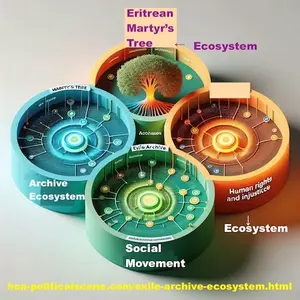
What anchors the Exile Archive Spine of Meaning is the moment testimony stood alone, refusing erasure & forming the structure that holds every resistance upright.
Exile Archive Practical Philosophy Paves the Way to Social Movement!
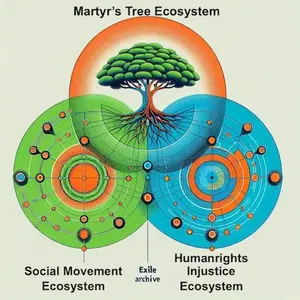
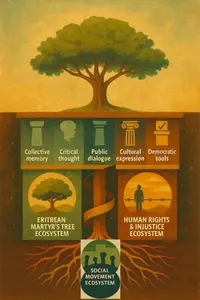
Exile Archive Practical Philosophy was in the Eritrean Martyr's Tree. It was initiated from the plant, grew from the ground with its trunk, branches & leaves.
Exile Archive Five Pillars Structural and Operational!
Exile Archive Five Pillars Structural and Operational! They function as both structure and practice, turning the archive’s public architecture into living, operational pathways.
TAGS: The Insight Lens, Khalid Osman, SpaceExploration, CostOfDiscovery, NASA, SpaceX Starship, Cosmos 482, Boeing Starliner Disaster, ISS, Venus Probe, Webb Space Telescope, EthicsInScience,
When, Why and How the European Paradise Became Hell on Earth?: Dynamics of Arc Ecosystem 3 Capture Systemic Elements that Make Societies Vulnerable to Human Rights Violations & Injustice...
Exile Archive Action Guide Builds the Grassroots of Social Movement!
Exile Archive Action Guide Builds the Grassroots of Social Movement! It's the basics to solve crises, conflicts, economy, human rights violations & injustice.
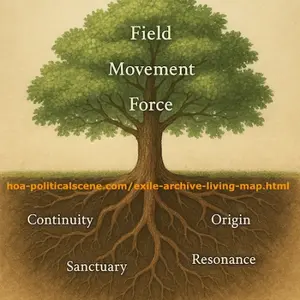
Exile Archive's Living Map - A Tree of Life! How It Changes Life?
Exile Archive's Living Map - A Tree of Life! It changes lives. A rooted journey from witness & creation to insight, guiding your path through life.
Exile Archive's Living Map - Tree of Creation for Meaning Changes Life
Exile Archive's Living Map - Tree of Creation for Meaning Changes Life: Reflect, inspire new work & deepen your journey through exile & witness.
The Hidden Dangers of Space Exploration: Are We Going Too Far? [Latest on The Insight Lens: May 10, 2025]
TAGS: The Insight Lens, Khalid Osman, SpaceExploration, Cosmos, Science, SafetyInSpace, EarthFirst, Cosmos 482, Boeing's Starliner Disaster, James Webb Space Telescope,
When, Why and How the European Paradise Became Hell on Earth?: Dynamics of Arc Ethics Carry A Tree's Ecosystem Methods to Empower Societies...
Exile Archive Emotional, Ethical and Symbolic Beginning! Origin Story!
Exile Archive Emotional, Ethical and Symbolic Beginning: Origin story with inspiration you need to know why social resistance is necessary & when & how to fuel it.
Exile Archive Power Denial and the Moral Architecture You Must Build!
Exile Archive Power Denial and the Moral Architecture You Must Build: A testimony on failing systems and how you reclaim agency to build moral architecture of life.
Exile Archive on the Illusion of Neutrality in a World Built by Power!
Exile Archive on the Illusion of Neutrality in a World Built by Power, probes how power shapes neutrality & reveals the structures that define conflict, order & truth.
Seeing Through the Noise: Four Ways to Read the World Without Falling!
Seeing Through the Noise: Four Ways to Read the World Without Falling Into the Trap! 4 how-to methods to understand power, uncertainty & chaos.

TAGS: BeeCrisis, SaveTheBees, GovernmentCuts, Beekeeping, BeeCrisis, BuzzOffCuts
When, Why and How the European Paradise Became Hell on Earth?: Dynamics of Arc Poetic Cascade the Vulnerable Passing Poetic Knowledge to Ease Political Stress & Elevate the Poetic Spirit of Public Resistance...
Exile Archive Imagery Poetry Hub! How Social Resistance Becomes Poetic
Exile Archive Imagery Poetry Hub explores emotional and political poetry revealing exile's origins and early instincts that sharpen your political vision.
Exile Archive Voices Become Frontlines: Art & Literature for Justice!
Exile Archive Voices Become Frontlines: Art & Literature for Justice! The basics of the social movements voices are simple & the archive empowers the vulnerable.
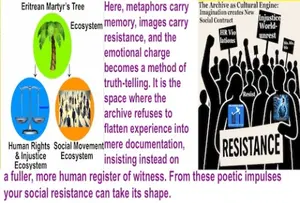
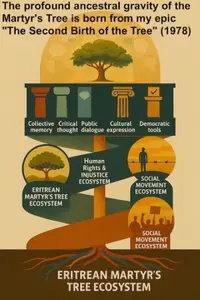
Before you continue, prepare a cup of tea and a few roasted salted peanuts. This combined nutrition settles the nerves. Besides, the taste is amazing. Besides, it has a bio-secret, you may discover after some weeks of taking hot tea and peanuts. This is a Sudanese bio-strength. A Whisper in the Soul, opens a new landscape to ease the weight of the journey... a different landscape with a horizon that divers from the ones you have just walked through. The poem carries you into open spaces... where you can settle and feel comfort.
"A Whisper in the Soul" by poet Khalid Mohammed Osman... Interval to relax and rejuvenate, so you can continue on Archive of Truth in Exile with new energy.
Why and How the European Paradise Became Hell on Earth?: From Colonial Empires to Space Frontiers: Lessons Unlearned [Latest on The Insight Lens: May 9, 2025]
TAGS: The Insight Lens, Khalid Osman, SpaceExploration, SpaceColonialism, Colonialism, Sustainability, Innovation, Geopolitics, EarthSurvival, ResourceExtraction, TradeWars,
When, Why and How the European Paradise Became Hell on Earth?: Dynamics of Archive of Truth in Exile Challenge Mental Lived Experiences Socially to Improve Life...
Archive of Truth in Exile: A Living Record of Power and Witness!
The Archive of Truth in Exile: Mapping silence, power, and survival. Testimony against erasure. Making an archive a living witness for you to claim justice.
Archive of Truth in Exile - Testimony Matters!
Archive of Truth in Exile - Testimony Matters: A foundational document on witness, erasure, and the moral architecture guiding the entire archive & raising societies.
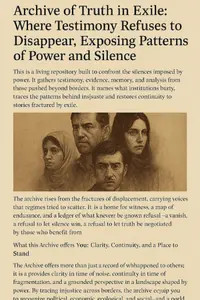

When, Why and How the European Paradise Became Hell on Earth?: Dynamics of Art of Journalism on Substack Channel the Ethical and the Moral of HOA. Political Scene...
Substack Exile Archive Presents Fragments of Resistance!
Substack Exile Archive Presents Fragments of Resistance... poetic testimony, legal critique, and public witness from the margins of exile and defiance.
Substack Exile Archive - Ethics of Proximity - Shadow Beneath State!
Substack Exile Archive - Ethics of Proximity - Shadow Beneath State explores how some authorities manipulate and break the system of fairness and justice.
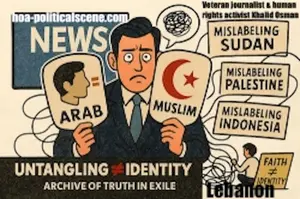
Arab - Muslim: Untangling Faith Identity!
Arab - Muslim: Untangling Faith Identity!

TAGS: Wellness Travels 3080, expressive writing heals, expressive writing alleviate anxiety, expressive writing cures depression, expressive writing eases stress, expressive writing develops into creative writing,
When, Why and How the European Paradise Became Hell on Earth?: Dynamics of Asiatic Intelligence Charge the New Geopolitical Issues for their Complexity...
Cosmopolitan Korean is an International Korean: 세계를 구하는 코스모폴리탄 코리안!
International Korean is a Cosmopolitan Korean: 세계적인 한국인들이 지구를 구합니다! 베테랑 활동가이자 저널리스트이자 시인인 칼리드 모하메드 오스만(Khalid Mohammed Ottoman)으로부터 지구를 구할 글로벌 역학에 대해 알아보세요.
Sekai no konton: 反駁できない事実は、世界的な混乱はスポーツの混乱ではなく、本当の道徳的な混乱であると言っています。 しかし
Sekai no konton: 反駁できない事実は、世界的な混乱はスポーツの混乱ではなく、本当の道徳的な混乱であると言っています。 しかし、これらの兆候は文化的および政治的であり、それは人々の不正行為の結果として混乱を引き起こします。
Shijie Hunluan -Shìjiè hǔnluàn: 世界政权制造世界混乱并伤害世界。在这里修复它
Shijie Hunluan - Shìjiè hǔnluàn: 世界政权通过不合理的政策制造世界混乱,这些政策导致全球变暖及其疾病,如冠状病毒、健康威胁、政治冲突和国际恐怖主义。 在这里学习修复世界
Woldeu Kaoseu - 월드 카오스: 세계체제는 세계에 혼란을 일으키고 세계를 해친다. 여기에서 수정하십시오!
Woldeu Kaoseu - 월드 카오스: 세계 정권은 코로나바이러스, 건강 위협, 정치적 갈등, 국제 테러와 같은 지구 온난화와 질병으로 이어지는 비합리적인 정책을 통해 세계를 혼란에 빠뜨립니다. 여기에서 세상을 고치는 법을 배우십시오!
Kekacauan Dunia: Rejim dunia merosakkan dunia. Betulkan di sini!
Kekacauan Dunia dicipta oleh kerajaan dengan dasar tidak rasional mereka yang telah menimbulkan banyak masalah. Inilah cara untuk membetulkan dunia.
TAGS: TradeWars, GlobalEconomy, MarketAnalysis, EconomicImpact, SupplyChain, trendingnews, world_trending_news, U.S trending_news, TradeWar_vs_China
When, Why and How the European Paradise Became Hell on Earth?: Dynamics of Capitalists Circulate Personal Economical Interests for Wealth, and Exploit Poor Sectors...
International Compliance is a Compliance to People, Not to Governments
International Compliance should be your government's compliance and commitment to you who voted for it to make your life better, not worse.
Space Exploration vs. Earth's Survival: The Real Dilemma! [Latest on The Insight Lens]
When, Why and How the European Paradise Became Hell on Earth?: Dynamics of Communists Cite the Complexity of Social Sectors to Maintain Working Class Dynamics...
Multikulturelle Kultur zur Korrektur politischer Praktiken und Kultur!
Multikulturelle Kultur, um politische Praktiken zu korrigieren, eine neue Kultur politischer Systeme aufzubauen und das Leben auf der Erde zu retten.
Ein Kosmopolitischer Mensch ist erleuchtet & interessiert an der Welt!
Ein Kosmopolitischer Mensch interessiert sich normalerweise für die Welt und ihre probleme. Sie wird immer steigen, wenn die globale krise eskaliert, um den Globus zu retten.
Cosmopolitan Korean is an International Korean: 세계를 구하는 코스모폴리탄 코리안!
International Korean is a Cosmopolitan Korean: 세계적인 한국인들이 지구를 구합니다! 베테랑 활동가이자 저널리스트이자 시인인 칼리드 모하메드 오스만(Khalid Mohammed Ottoman)으로부터 지구를 구할 글로벌 역학에 대해 알아보세요.
Cosmopolitan Chinese: 全世界华人拯救地球
Cosmopolitan Chinese: 呼吁全球华人拯救地球! 了解资深活动家、记者和诗人哈立德·穆罕默德·奥斯曼 (Khalid Mohammed Osman) 拯救地球的全球动态。
Politikai Bajok Világ rezsimjei tönkreteszik a világot. Javítsd ki itt
Politikai Bajok: A világ klasszikus rendszerei tönkreteszik a világot. Rögzítse a világot tudományos folyamattal, hogy kiszolgálja az összes embert a bolygón.
The Age of Gold: How Trade Wars and Economic Policies Shape the Future? [Latest on The Insight Lens]
When, Why and How the European Paradise Became Hell on Earth?: Dynamics of Concepts Clarify Their Ethical & Logical Flows to Address Flawed Illusionary Narratives...
Learn Dynamics Through Dynamic Perspectives to Solve Global Problems!
The learning curve of Dynamic Perspectives provides you with a rare opportunity to better understand today's global problems and share the solution with others.
HOA's Dynamic Concept for You to Think Well of Your World!
I reached HOA's Dynamic Concept through close observation to two serious changes that affect our world badly. It is for you, to make the world better.
Dynamic Critique to Global Political History Being Forged, or Plotted!
Dynamic Critique gets in the heart of global political history to criticize it as being forged and even plotted, which has resulted in massive human disasters!
Dynamic Remarks Indicate that Classic Systems are Over Practically!
Dynamic Remarks about why classic systems are over and what is the alternatives to classic political parties. That also means what are the new systems we need.
Dynamic Statement Reveals Serious Global Matters to Deal With!
Dynamic Statement reveals serious matters that affect our lives daily & suggests the solution of complicated matters through basic process to shift all systems.
Trade Wars Fallout: Global Economic Battles! [on The Insight Lens: 2025-04-18]
When, Why and How the European Paradise Became Hell on Earth?: Dynamics of Ecology Classify Environmental Steps with the Ethics of the Martyr's Tree to Manage Global Warming...
HOA Climate Change Requires Governments Change!
For the HOA Climate Change, which requires governments change, the masses should do the climate math. How? Get my mind free of charge. You'll never regret.
Climate Change Should Lead to Classic Systems Change!
Climate Change is product of the ruling elites of classic political parties and their classic systems. That requires changing classic systems to masses systems.
What's HOA's Common Goal? How It Solves Your Global Disaster?
HOA's Common Goal helps you realize that the saying "that is the way it is" & the "obvious" are manipulated politically to accept the failure of your government.
Climate Justice Must Be Done by the Masses, Not by Calling Governments
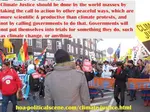
Climate Justice should be done by world masses, not by calling governments to do so. Governments will not put themselves into trials for climate, or anything.
Environmental Scene's 2 Dangerous Characteristics with Health Effects!
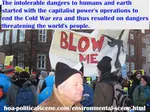
Environmental Scene has two characteristics, the announced & hidden scenes. Both foretell of dangers that are intolerable to humans and intolerable to the Earth.
When, Why and How the European Paradise Became Hell on Earth?: Dynamics of Economies Clear the Confusion of Societies, Raising Social Economical Foundations to Strengthen People...
HOA's Economical Forums: COVID-19 Proves the Failure of Governments!
HOA's Economical Forums: How Do COVID-19, conflicts & economy prove the failure of international governments? The global mass must take classic systems down.
The Capital Power Complicated Our Lives!
The Capital Power complicated our lives since the 1980s by collapsing the balance of global political power and collapsing the balance of the global ecosystem.
Free Market Policies are Capitalism Monopoly You Should Stand Up to!
Free Market Policies are capitalism monopoly. They have harmful effects on your life as an individual, in addition to dangerous issues you don't know about.
Acquisition is the Basis of the Policies of Capitalist Systems!
Acquisition is the Basis of the Policies of Capitalist Systems! As this capitalist acquisition of resources mean domination, the greatest common denominators of humans relate to fighting capitalist acquisition.
The 3 T's of the Trade Wars that Tremble the World! [on The Insight Lens: 2025-04-17] These are Trump's Tariff Turmoil: Unraveling the Global Economy!
When, Why and How the European Paradise Became Hell on Earth?: Dynamics of Hub Combine Dynamic Revolutionary Narratives to Replace Systemic Static Narratives that Violate Ethics...
Islamist Movement Decomposes. Factual Facts of the Islamist Movement!
Islamist Movement Decomposes. This is clear to every modern and civilized mind. However, one question remains. Why this so called Islamic Movement is still controlling in some areas?
Conventional Narratives Hub Coverage From History to the Present!
Conventional Narratives Hub covers all narratives historically from the past to the present, whether they are economical, environmental, political, or social.
The Revolution I Would Not Sell!
The Revolution I Would Not Sell is a continuation to the unwritten system I have that proved to be working right! This system achieved planting 5 million trees to spark development.
Ink Between Borders - Exile by Principles: Peace Unheard!
Ink Between Borders - Exile by Principles: Peace Unheard! An urgent reflection on exile, unrecognized peace & moral resistance in post-conflict narratives.
Has International Terrorism Disappeared?
Has International Terrorism Disappeared? A political project like this has many phases. It is likely when the first phase has been done, we see the 2nd, the 3rd, etc...
How to resist human rights violations, and injustice, Poetically? Video lessons: Episode 12
When, Why and How the European Paradise Became Hell on Earth?: Dynamics of Ideas Communicate Societal Moralities to Stop a Creeping Systemic Illusion Behind the Scenes...
Dynamic Ideas to You as Important Asset in Global Development!
The important asset of dynamic ideas is you. You are asset in global development, even when you feel weak as individual. The dynamical ideas get you strength.
HOA's Dynamic Thoughts on Biggest World Problems & How to Solve Them!
HOA's Dynamic Thoughts are about the world biggest problems, their origin and causes and how to solve them. Be part of the solutions. Subscribe to newsletter.
Dynamic Commentaries to Work the Masses' Dynamics In and Out!
Dynamic Commentaries include dynamic ideas to work the theory of the masses in and out and build the masses era.
Dynamic Comments to Put the Theory into Practice!
Dynamic Comments about the dynamics of the masses, the masses systems and the masses era to help you put the theory into practice.
Dynamic Views to Explore the World's Problems and Solve Crises!
Dynamic Views to explore the global problems, discover their origins and provide solutions to the crises the human and planet face.
The Next Frontier! [on The Insight Lens]
When, Why and How the European Paradise Became Hell on Earth?: Dynamics of Illusion Compel Independent Journalists to Dissolve Systemic Illusion…
Superstitions Rule Sudan and Other States in the Horn of Africa!
Do you believe in superstitions? The Horn of Africa is superstitious. They spread from Nigeria across Sudan to India! They even nest in the political systems.
The World Superficiality on How People Comply with Dangerous Policies!
The World Superficiality is clear on how people comply with irrational policies that create economical downturn, global warming with pandemics & international terrorism.
How Does Political Illusion of Mass Media Deteriorate our World?
The Political Illusion of Mass Media is a political game played by the power of the capital in regimes that deteriorate the world. Do you know how to manage it?
INTELLECTUAL SHALLOWNESS is Subjective and Objective. How to Avoid it?
Intellectual SHALLOWNESS is mainly political shallowness. It's subjective & objective habit that indicates a superficiality. Here is how not to be superficial.
SUPERFICIALITY DEFINTION & Subjectivity & Objectivity on World Crises!
Intellectual Superficiality expresses a lack of depth when looking into news events, or facts about something. It becomes dangers when misunderstanding involves crises that threaten your life.
How Trump’s Tariffs Led to Price Hikes & Consumer Resistance? [The Insight Lens]
When, Why and How the European Paradise Became Hell on Earth?:
Ink Therapy: The Healing Power of Writing From Hannover to the World! #Wellness_Travels_3079
TAGS: Wellness Travels 3079, writing heals, writing alleviate anxiety, writing eases depression, writing relieves stress,
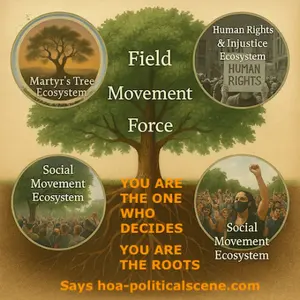
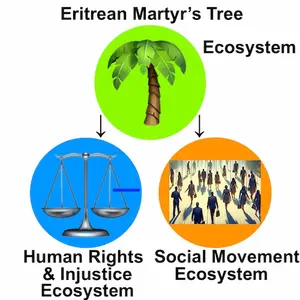
When, Why and How the European Paradise Became Hell on Earth?: Dynamics of Martyr’s Tree Concentrate on Its Ethics Attracting Global Societies to the 3 Specific Ecosystems It has Developed...
Sudanese Martyr's Day to Make Your Revolutionary Day!
The Sudanese Martyr's Day is a day created by journalist Khalid Mohammed Osman every month, every year to celebrate a Sudanese martyr.
Sudanese Martyr's Actions to Celebrate Martyr's Anniversaries & Revolt
The Sudanese Martyr’s Actions are planned to set you free by participating in martyrs’ anniversaries, and becoming organizer to defeat the totalitarian regime.
5,000,000 Martyr’s Trees Enhance Global Environment!
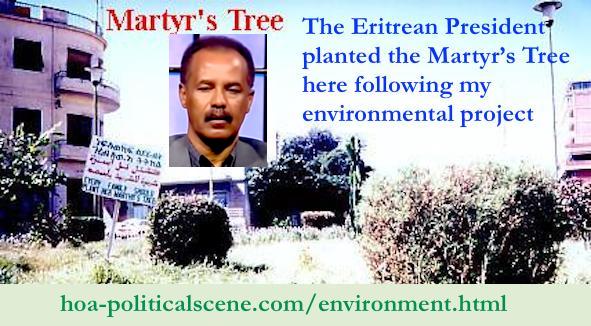
Khalid Osman's Eritrean Martyr’s Tree invention accomplished planting of 5,000.000 Eritrean martyrs trees & cleaned environment from chemical weapons & mines.
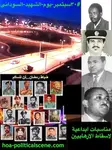

Sudanese Martyr’s Feast to Celebrate Sudanese Martyr's Feats & Revolt!
The Sudanese Martyr’s Feast is a day created by journalist Khalid Mohammed Osman every month, every year to celebrate Sudanese martyrs by planting Martyr’s Tree
Sudanese Martyr’s Tree Posters to Decorate Your Public Place!
The Sudanese Martyr’s Tree Posters for martyrs families & Sudanese opposition campaigners and rallies to use in their camp to conquer the tyrants of Sudan.
Sudanese Martyrs’ Plans to Plant Martyrs’ Trees and Setup Revolution!
The Sudanese Martyrs’ Plans are prepared by activist Khalid Mohammed Osman to carry on social activities to plant martyrs trees everywhere to setup revolution.


Sudanese Martyr's Tree to Plant & Motivate People to Revolt!
The Sudanese Martyr’s Tree, as the Eritrean Martyr's Tree is created by veteran activist and journalist Khalid Mohammed Osman to set the fire of the revolution.
Sudanese Martyr’s Tree Project to Make the Revolution Right!
Sudanese Martyr’s Tree Project planned by activist & journalist Khalid Mohammed Osman to know in details how to carry this project and make revolution right.

Climate Change: Myths vs. Reality! [Latest on The Insight Lens]
When, Why and How the European Paradise Became Hell on Earth?: Dynamics of "Mind You" Connect Mind Capabilities for People to Raise their Instinct & Intuition...
HOA's Global Alerts Get You Setup to Build a System to Prevent Dangers
HOA's Global Alerts aren't intended to sit you in state of being watchful for possible dangers, but they set you up to prevent such dangers by building a system.
I am Asking You to Be Clever & Think How to Save Yourself & the World!
I am Asking You to be clever & think of conflicts, ecological, economical, health & social crises created by bad planning. Then decide to change that by the LPE.
Doctor Feeling Good Will Put Your Healthy Body in Your Healthy Mind!
Doctor Feeling Good will put your healthy body in your mind by the LPE theory of the people to save you and the world from disasters created by mess in planning
HOA's Mastermind Says International Terrorism is a Capitalist Industry
HOA's Mastermind Says International Terrorism is a Capitalist Industry! He founded the network of solutions that resolve global terrorism, manage crises & foster world peace.
How to Be the Memory and Consciousness of All Generations?
How to Be the Memory and Consciousness of All Generations is not a personal matter, but rather a public matter that makes everyone just become that person and live in the future.

Exploring the Unknown: Life, Environment & Cybersecurity! [on The Insight Lens: May 06, 2025]
TAGS: The Insight Lens, Khalid Osman, LifeBeyondEarth, EnvironmentalScience, Cybersecurity, SpaceExploration, ClimateCrisis,
When, Why and How the European Paradise Became Hell on Earth?: Dynamics of Narratives Hub Consolidate Ethical Vibes to Reveal War's Narratives...
The Cold War Era: A Battle of Ideologies and Influence!
The Cold War Era: A Battle of Ideologies and Influence! In my opinion, the world was better and more stable than today's world. What do you think?
The Eastern Europe Socialist Bloc Fragmentation!
The Eastern Europe Socialist Bloc Fragmentation costs effectively until today. Are there any real causes of the deterioration of great counties in the world?
Conventional Narratives Are Always Wrong!
Why Am I Saying Conventional Narratives Are Always Wrong? Explore the connection of these narratives from colonial era until this era and know what to do!
Established Frameworks Invisible Forces Shaping Perception!
Established Frameworks Invisible Forces Shape Perception! The insights help you escape narratives that control your life & help others build a better world.
How Dominant Perspectives Shape Our World?
How Dominant Perspectives Shape Our World? Explore to know what to accept and what to refuse.
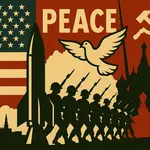
#ScienceDebate #Innovation #TechBreakthroughs #SpaceExploration #MedicalScience #TheInsightLens #RobotNews #KhalidOsman
When, Why and How the European Paradise Became Hell on Earth?: Dynamics of Press Media 1 Construct Press Ethics through Intelligentsia Editions as a New Style of Journalism...
Intelligentsia 56 Makes You More Brilliant to Make Your World Better!
Intelligentsia 56 is brilliant. So, you are. It develops the way you are thinking to be brilliant more and make your world better.
Intelligentsia 57 Captures Your Mind to Make You Intuitional!
Intelligentsia 57 captures your mind to develop your thinking capacities, so you can see what's wrong in the world and make it right.
Intelligentsia 58 Opens Your Mind into the Late Eighties Up to Now!
Intelligentsia 58 opens your mind into the period from the late eighties until now and rebuilds the capabilities of your mind, so you can see what's gone wrong with the world.
Intelligentsia 59 Shows You How to Ally Yourself with Socialism & Why?
Intelligentsia 59 Shows You How to Ally Yourself with Socialism. Is it because it's Humane & we're all humans, or what? A process to rebuild your mind capability to save yourself & the world & rebuild it.
Intelligentsia 60 Actions to Do When World Crises Knock on Your Door!
Intelligentsia 60 Actions to Do When World Crises Knock on Your Door! World crises reflect at home, unfolding how to act globally, think locally.
Intelligentsia 61 from Danish Injustice to American War Abortion of
Intelligentsia 61 from Danish Injustice to American War Abortion of Iranian Revolution and Media Stupidity, world people fall into the trap of manipulation.
When, Why and How the European Paradise Became Hell on Earth?: Dynamics of Press Media 2 Criticise the Illusion of Traditional Media, Even the Recent Ones...
How Does Political Illusion of Mass Media Deteriorate our World?
The Political Illusion of Mass Media is a political game played by the power of the capital in regimes that deteriorate the world. Do you know how to manage it?
Intelligentsia Multimedia Newspaper Revolutionizes Knowledge!
Intelligentsia Multimedia Newspaper revolutionizes knowledge. It develops your mind prudently to know the real reasons of world disasters & teaches you how to tackle them.
Principles of Press Media that Make You a Professional Journalist!
What are the Principles of Press Media that Make You a Professional Journalist? They are ethical and professional. You should know them, before even thinking of doing journalism.
Citizen Journalism Can Save the World From Political Catastrophes!
Citizen Journalism Can Save the World From Political Catastrophes! How can CJ save the world from political catastrophes?
Ethical Journalism Combats Dominant Narratives! Your Pen is Authority!
Ethical Journalism Combats Dominant Narratives! Press freedom is essential, as long as the press is the fourth power that focuses on the truth. You're powerful
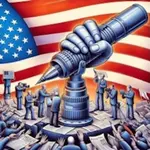
News Robot Anchors: The Future of News Reporting [on The Insight Lens]
When, Why and How the European Paradise Became Hell on Earth?: Dynamics of ´Journalistic Investigations Crystallize Your Thoughts About Injustice & Violations of Law in Denmark...
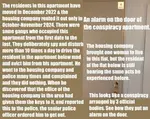
Are Odense Municipality, CIVICA Housing Company & the Police Corrupt?
Are Odense Municipality, CIVICA Housing Company & the Police Corrupt? More than seventy years of foreigners presence in Denmark has corrupted Denmark.
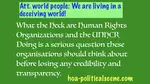
What the Heck are Human Rights Organizations and the UNHCR Doing?
What the Heck are Human Rights Organizations and the UNHCR Doing is a serious question these organisations should think about before losing any credibility and transparency.
In Denmark They Violate Human Rights for Money
In Denmark They Violate Human Rights for Money! This is a real time report you can call real life story that expose privacy and thus human rights violations in Denmark.
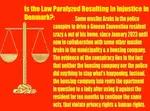
Is the Law Paralyzed Resulting in Injustice in Denmark?
Is the Law Paralyzed Resulting in Injustice in Denmark? This question exposes how some people from a specific culture can make things worse, when they are employed in the police forces.
Political News: No Political Borders Should Exist Between Humans!
Political News to dynamically minimize the political borders between humans. The mind is ours and you learn from a century of persistence.
Refugees in the Long Run to Survive!
Hot times refugees will emerge whenever there's crisis on Earth. What should we do for them? Best answer: Give them new homes & warm feelings. Unfortunately...
Refugees in Denmark Lacking the Bright Future!
The situations of refugees in Denmark impose the question why Denmark is tough with the UN Convention political refugees? This is the toughest question I have been asked!


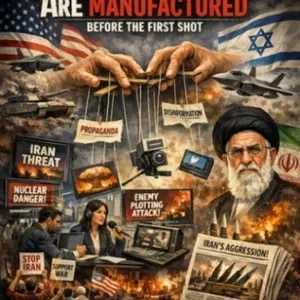
When, Why and How the European Paradise Became Hell on Earth?: Dynamics of War Narratives Cultivate Facts about Global Powers' Economies, Technologies & Wars...
How War Narratives Form Before the First Shot: U.S., Israel, and Iran!
How War Narratives Form Before the First Shot: U.S., Israel & Iran - an analysis of how strategic storytelling targets public consent & prepares societies for conflict.
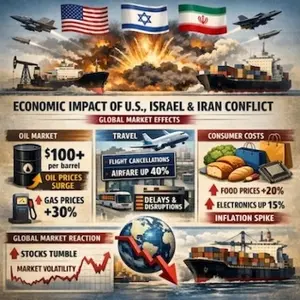
War Economy Dynamics Structures Before, During and After Conflict!
War Economy Dynamics Structures Before, During and After Conflict - an analytical examination of war‑economy mechanisms - U.S., Israel & Iran as a case study.
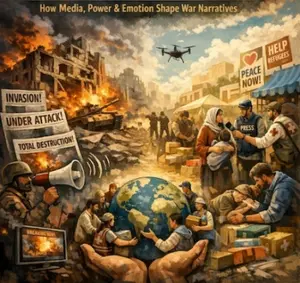
Architecture of War News Headlines: Media, Power, Emotional Narratives
Architecture of War News Headlines: How Media, Power & Emotion Shape War Narrative? Explore, Understand & Respond positively to emergencies within your society.
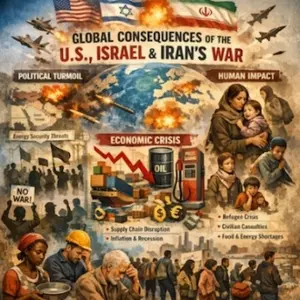
Global Consequences of the United States, Israel and Iran War!
Global Consequences of the United States, Israel and Iran War: Its political, economic & human impacts reveal how ordinary people worldwide are affected.
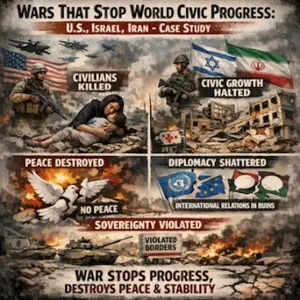
Wars that Stop World Civic Progress: U.S., Israel, Iran - Case Study!
Wars that Stop World Civic Progress: U.S., Israel, Iran - Case Study: Wars kill civilians, halt civic growth, destroy peace, int. relations, violate sovereignty.
Biovians Speak: Trade Wars & Climate Crisis Through Nature’s Voice [The Insight Lens]
When, Why and How the European Paradise Became Hell on Earth?: Dynamics of Mapping the HOA's Network Curate a System with Clarifying Ethical Values Cutting through Geopolitical Fog...
The Horn Africas Network is for the Horn of Africa's Friends to Meet!
The Horn Africas Network aims to help friends who are burning from the political disasters to come together, share political ideas, read for knowledge & unite.
HOA Indexes Some Sacred Literary and Political Stories!
The HOA Index Network indexes literary & political stories that may change the way you look to politics in your area & develop your life from such new look and feel.
Horn Africas Political Tragedy As Seen On Apple iTunes To Fund Your...
Horn Africas Political Tragedy as seen on Apple iTunes to fund your tragedies! The book uncover the political tragedy in the Horn of Africa through decades of oppression. Every country is covered thoroughly, just to learn and know.


What Thoughts Have you Got From "When, Why and How the European Paradise Became Hell on Earth"?
The better ways to reach a convincing ground for such topic is to discuss. Begin your discussion, or simply comment with your impression, or even write your disagreement on what you read about through "When, Why and How the European Paradise Became Hell on Earth".
Have A Great Story About This Topic?
Do you have a great story about this? Share it!
Concerned about Conflicts Fact that Never Been Disclosed?
Get Horn Africa's Political Tragedy.
Recent Articles


-
HOA's Interval with Wisdom Nuggets of Inspiring Ethical Proverbs!
Sep 09, 26 04:59 AM
 HOA's Interval with Wisdom Nuggets of Inspiring Ethical Proverbs! You can see your ethics & the ethics of the surroundings clearly to develop & enhance your own.
 -
Intelligentsia 61 from Danish Injustice to American War Abortion of
Aug 29, 26 11:14 AM
 Intelligentsia 61 from Danish Injustice to American War Abortion of Iranian Revolution and Media Stupidity, world people fall into the trap of manipulation.
 -
When, Why and How the European Paradise Became Hell on Earth?
Aug 23, 26 10:20 AM
 When, Why and How the European Paradise Became Hell on Earth? This one in the dynamics will make your mind spin and reflect with clarity to address this matter.
Some Support is Appreciated so Much!
When I get a new information, or a good read, my conscience tells me to be obliged to whom has added a drop of knowledge with some values in my life by doing some good deeds to him. Some links here get me a little power to support some people in need, indeed, by paying my subscription to international human organizations I am part of their generous good deeds. Like this at Awassa.
A Friend in Need is A Friend Indeed!
How many times have you fallen like a mountain, because you were great with your inspirations, guidance and professional teaching and later on found some people you made professional drawn in luxuries and never cared about you?
A hand up is better than a hand down. Share a link of a page you liked in great sites, but please not FACEBOOK. I am a man of principles.
A Man is Known by the Company he Keeps!
True, don't you think so? I can tell you stories and stories about that. Can you tell me one in details with the original cultures of the world it refers to? Take the cultural section by a huge and write that in the comments form.
Healthy Citizens are the Greatest Asset any Country can have!
It's true. But, he didn't know what ill governance can do for healthy citizens, or how ill monarchies can bring healthy citizens into miseries, or why great powers play by the fates of so many healthy citizens in the world.
Know any similar situations where healthy citizens are broken by the ruling elites in any country? Bring that into readers' attention through the comments form at Are You Intellectual?
Global Dynamics to Make Everyone Intellectual
Look for the top 100 Google most searched terms globally in 2021. You will not find any single thing that any person looks for and wants to know about, or use in daily life, such as food, health, education, cinema, tv, news, developing qualities and qualifications, playing, traveling, and even what causes Coronavirus and other pandemics, which are real threats to all people lives etc... You will find only search terms used for top social media, Youtube, search engines and Amazon. Political illiteracy is what matters to me to educate. See Global Dynamics & signup for the newsletter.
Did you get any of my books from Apple Books?
Click here to tell me & get some free books. Fill the form.
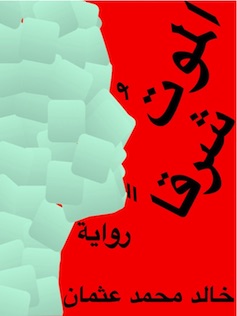
رواية "الموتُ شرقاً" تكشف لك سرّ الموت الشرقي التراجيدي المستمر للإنسان
احصل علي الرواية الآن واكتشف إنهيار القواسم المشتركة، واستلهم إبداعا يشبه الأسطورة في النص الروائي
"Follow", "like", "tweet", or "pin" the pictures to express your love! Thanks
TweetHorn Africa's Political Tragedy

Love in the Internet Time on Apple Books

Rising of the Phoenix Poetry on Apple Books

Free Poetry Picture Book
Free poetry picture book on Apple Books. You can use the images on public places for your customers to enjoy, while taking coffee.

The French & Spanish Versions
You can work the French versions and the Spanish versions of the two books above with me on, one on one bases. Contact Us.
HOAs Political Poetry Imaged
I'll be thankful, if you get one of my books.
My Books!