Exile Archive Spine of Meaning!
The Exile Archive Spine of Meaning began as the emotional anchor I carried while fleeing across borders more than fifty years ago escaping Islamic military dictatorships, secular military regimes, and the hierarchical family systems that reproduced the same patterns of domination. That pain travelled with me, and when I arrived in a place in Europe imagined to be modern and just, I found the same violations repeating themselves: human rights denied, privacy dismissed, dignity treated as optional.
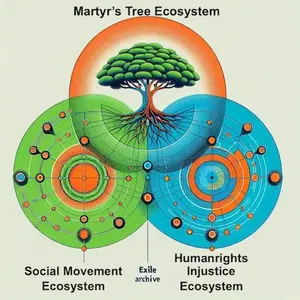
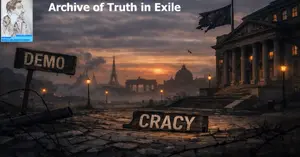
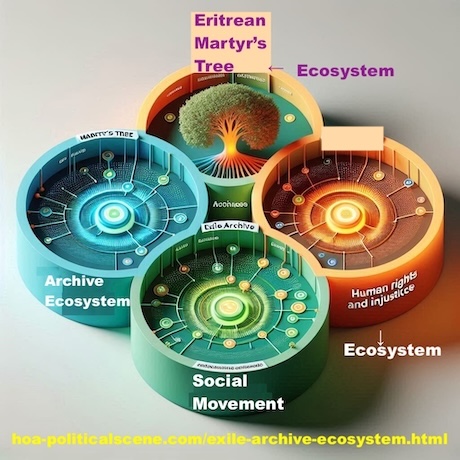 Exile Archive Spine of Meaning: Illustrating a-three diagram circles for the Martyr's Tree Ecosystem, the human rights and injustice ecosystem and the Exile Archive Ecosystem. These systems are inspired by my idea "The Eritrean Martyr's Tree", which is the proof of success.
The spine of meaning did not dissolve in this new landscape; it hardened. The pain that travelled with me became a shared pain, a recognition that these patterns are not confined to one region but echo across borders. This is where the concept "Pain Travels With Us" was born: the understanding that our experiences connect us, and that this connection, when we allow it, becomes a form of resistance.
The Height of the Witness:
The Spine of Meaning in the Exile Archive did not begin as a project; it began as living experiences of refusal to let meaning collapse to let meaning collapse under the weight of institutional silence and harassment. Its spine was formed in the moment testimony had to stand upright on its own, without permission, without protection, without the luxury of waiting for justice to arrive.
In such struggle, a person becomes taller than any representative of any institution... because he stands for the truth while courts and authority representatives protect the system of conspiracies, corruption, forgery, framing, injustice, lies, manipulation and worse conscience that does not feel dishonesty and shame.
What lives here is not nostalgia for what was lost, but the structural memory of how truth survives displacement: through witness, through naming, through the disciplined act of arranging fragments into coherence. This Exile Archive Spine of Meaning traces that origin, not as mythology, but as the architectural logic that holds the entire archive in its posture of resistance.
Exile Archive Spine of Meaning: The Triad Structure (Emotional / Ethical / Symbolic)
These are three pillars that form the archive's spine.
The Logic of the Triad:
The Spine of Meaning in the Exile Archive did not emerge from a single moment or a single wound. It formed through a triad of beginnings: emotional, ethical, and symbolic... each carrying its own weight, each shaping the posture of the archive in a different way. These beginnings do not compete with one another; they interlock, forming the structural rhythm through which testimony stands upright.
Why Three Beginnings Were Necessary?
No single narrative could hold the complexity of displacement, resistance, and witness. The emotional beginning carries the lived experiences that shaped your political consciousness. The ethical beginning confronts the moral failures of institutions and the refusal to surrender truth.
The symbolic beginning reveals how meaning survives across borders, even when everything else is stripped away. Together, they form the architecture that allows the archive to speak with clarity and dignity.
What follows is not a chronology but a constellation. Each beginning illuminates a different facet of how the archive came into being. The emotional beginning traces the path of witness shaped in struggle.
The ethical beginning exposes the moral terrain where truth had to defend itself. The symbolic beginning reveals the deeper logic that binds the archive into coherence. This triad is the foundation upon which the Exile Archive Spine of Meaning stands.
Before anything else, the archive begins in the terrain of feeling in the lived tensions, political awakenings, and cross‑border ruptures that shaped the earliest contours of witness. This emotional beginning is not nostalgia; it is the ground from which your political consciousness took direction.
Emotional Beginning: Where Witness and Politics Converged!
This was an emotional beginning with conceptual anchor.
Eritrea was not an experience. It was a conscience, it was the result that reflects our failure in Sudan. It was a conscience where liberation was necessary to take that hard shape to regain the nation, something Sudanese never consider to regain their nation from sectarian and religious parties, even when they plot military coups. That big political difference led my steps to the Eritrean People's Liberation Front (EPLF) in the late seventies. This was not only emotional, but it was political too.
The differences between the two people are shocking. The contrast between the political cultures of Sudan and Eritrea was impossible for me to ignore. Many facts of such belonging were hurting. They still are. The Eritrean liberation practices united the Eritrea, the Sudanese Intifada practices fragmented Sudan. Eritrea succeeded because the people hear. The Sudan fragmented because the people don't hear, despite the advice not to compromise with killers.
In Sudan, public discourse often revolved around personal and national pride, individual stories, and the constant performance of bravery, even as the nation remained trapped in cycles of sectarianism, military manipulation, and self‑interest.
Eritrea, in those early years of the struggle and even in the period immediately after independence in 1991, carried a different ethos. People did not speak about themselves; they acted. Their sense of duty was collective, disciplined, and oriented toward the nation rather than the individual.
Even when Sudanese movements rose against Omar al‑Bashir, the actions were fragmented, reactive, and often undermined by the same patterns that had weakened the country for decades.
By contrast, Eritreans approached national struggle with precision, sacrifice, and a clarity of purpose that placed the country above personal or familial gain. That difference, in political culture and national consciousness was the force that drew my steps toward the Eritrean cause.
It reached a point where many Eritreans treated me as one of their own. While working at the official newspaper, I would hear people who didn't know me ask whether I was Sudanese or Eritrean. They saw the difference between nations in their orientations and political behaviours. They lived for so long years in Sudan, acquired Sudanese nationalities and considered as Sudanese... that is why they knew Sudan better.
After independence, even senior Eritrean officials would joke about it, pointing to others who insisted I must be Eritrean. Their comments were not about identity; they were about alignment and political vision... about recognizing in me the values of national duty, collective struggle, and principled commitment that they associated with their own movement.
When we gathered the Sudanese opposition in Asmara, even within the political circles I joined, I heard people describe me as "the one who claims to be Eritrean," as if national commitment were a matter of performance rather than principle. I never responded. Ignorance, even when dressed in academic degrees such as PhD, does not deserve engagement.
What mattered to me was not their opinion or the lack of political vision, but the values that shaped my path: the belief that a nation must come before personal gain, and that liberation requires discipline, sacrifice, and a collective conscience.
Even while supporting the Eritrean struggle in those early years and after the independence, I could not support the backward tendencies of certain Eritrean fronts in the diaspora whose vision of national identity was fundamentally misaligned with the idea of Eritrea as a distinctly African nation.
Their internal political culture leaned toward an Arab‑Islamic orientation not in the diplomatic sense, but in the way they imagined the nation from within. That orientation stood in direct conflict with the Africanist identity that many of us believed was essential for Eritrea's liberation and future.
Diplomatic relations are not the issue; nations can build alliances wherever they choose. The problem arises when geopolitical orientation becomes an internal compass, when a liberation movement begins shaping its national identity around external cultural or ideological frameworks rather than its own African foundations.
That was the point of divergence for me. My support was always for the Eritrean struggle as an African liberation project, not for fronts whose internal practices contradicted that vision.
Yet emotional formation alone could not sustain the archive. The path from struggle to witness demanded an ethical posture... a moment when truth had to stand upright against institutions that had already abandoned their own conscience. It is here that the ethical beginning takes shape.
Ethical Beginning: Where Truth Refuse to Bow - The Height of the Witness!
Human rights and justice were the forces from which my resistance took shape, long years ago, before many generations were born. That shape grew across borders, first in Sudan, then through the Middle East, the Horn of Africa, and later Europe.
What struck me was how the same patterns of lived experience repeated themselves in exile after exile. When compared, they did not raise questions or exclamations; they revealed a deeper problem in the ethical conscience of institutions. When authorities close their moral awareness to protect their own power, the innocent becomes the inevitable victim.
Great states are often praised for their infrastructure, their systems, and their administrative order. But when those systems break, the average person rarely sees the fractures, because the myth of greatness remains stronger than the evidence of harm.
What is needed is a deeper look into the stories that expose these hidden breaks... stories that show how closing one's eyes to institutional mistakes does not advance human development, but instead sacrifices the vulnerable for the sake of comforting assumptions.
Foreigners... and especially refugees pay the highest price for this neglect. Many flee from one land to another believing they have reached safety, only to find themselves facing new forms of marginalization.
Some die, whether through despair, suicide, or the slow erosion of dignity. Others see their families scattered by social welfare systems, or find themselves silenced, medicated, or pushed into psychological collapse.
When these ethical failures and human rights violations are reported to international organizations, they are often dismissed. The logic is always the same: there are "bigger crises" elsewhere, and refugees in Europe are assumed to be safe simply because they crossed a border.
But safety is not guaranteed by geography. Refugee‑receiving states in Europe do not always uphold the ethical treatment expected of them. Organizations like the UNHCR often assume that once refugees are resettled, their mandate ends assuming that European nationality will eventually solve everything.
Yet the reality is different. Many refugees never obtain nationality, especially when political pressures harden naturalization processes. Their struggles do not end simply because institutions believe they should.
This is why the mandates of organizations like the UNHCR must be renewed and re‑examined. Europe is not always the opposite of the places refugees fled. Sometimes, it mirrors them in ways that expose the same ethical fractures... fractures that demand witness, not silence.
When the archive enters these ethical phenomena... examining them, naming them, and tracing their consequences, it aligns itself with human ethics, not only the ethics of the archive but also the ethical expectations of the societies in which refugees live.
Refugees carry many challenges with them, including the weight of their inherited beliefs and cultural backgrounds. Some European states overlook these realities from the beginning. They place large numbers of refugees from the same cultural or religious background into concentrated areas, creating dense enclaves rather than integrating them into nationally inhabited neighborhoods.
Later, these same authorities claim to have strong integration programs.They don't knew the necessary prospectives and implementation of well-thought scientific integration.
In such concentrated environments, inherited behaviors and collective memories reinforce one another... repeating the same behaviours that signify their old behaviours at their old homes.
When individuals from these communities gain positions inside local systems or authorities, some use their roles in ways shaped by their own unresolved experiences. Criticism is taken personally, and authority becomes a tool for settling cultural or psychological scores.
The oppression they once faced reappears in a new form, an inverted hierarchy where the trauma of the past becomes aggression in the present. Ethical consciousness disappears in sudden acts.
From this ethical height, the archive moves into its symbolic dimension. What emerges is not merely memory, but the deeper architecture of meaning: the way truth survives displacement, crosses borders, and arranges itself into coherence even when everything around it collapses. This is where the symbolic beginning unfolds.
Symbolic Beginning: The Architecture of Meaning - How Truth Survives Across Borders?
What the Symbolic Architecture of Meaning Does?
Given what you have already read:
- Rises above biography.
- Rises above institutional critique.
- Names the logic of the archive.
- Shows how meaning travels, survives, and reorganizes itself.
- Ties my lived experiences into a symbolic structure.
The symbolic beginning of the archive emerges from the patterns that repeat themselves across borders. In every place I lived in Sudan, the Middle East, the Horn of Africa, and Europe, the same fractures appeared in different forms:
- The collapse of institutional conscience,
- The quiet suffering of the innocent,
- The invisibility of refugees, and...
- The ethical blindness of systems that believe themselves too advanced to fail.
These repetitions were not coincidences; they were signals.
They revealed that truth does not belong to geography, and injustice is not confined to the places we flee. Meaning survives by crossing borders, carrying with it the memory of what institutions refuse to see.
This is why the archive takes the shape of an architecture rather than a memoir. It is built from the structural memory of these repeated experiences:
- The way truth rearranges itself when systems collapse,
- The way witness becomes a spine when institutions lose theirs, and...
- The way meaning persists even when nations fail to protect the vulnerable.
The symbolic beginning is not about nostalgia or loss; it is about the deeper logic that holds the archive upright. It is the recognition that truth, once carried across borders, becomes sharper, clearer, and more resistant than any system that tries to silence it.
Exile Archive Spine of Meaning: Dynamics - Ecology
HOA Climate Change Requires Governments Change!
For the HOA Climate Change, which requires governments change, the masses should do the climate math. How? Get my mind free of charge. You'll never regret.
Climate Change Should Lead to Classic Systems Change!
Climate Change is product of the ruling elites of classic political parties and their classic systems. That requires changing classic systems to masses systems.
What's HOA's Common Goal? How It Solves Your Global Disaster?
HOA's Common Goal helps you realize that the saying "that is the way it is" & the "obvious" are manipulated politically to accept the failure of your government.
Climate Justice Must Be Done by the Masses, Not by Calling Governments
Climate Justice should be done by world masses, not by calling governments to do so. Governments will not put themselves into trials for climate, or anything.
Environmental Scene's 2 Dangerous Characteristics with Health Effects!
Environmental Scene has two characteristics, the announced & hidden scenes. Both foretell of dangers that are intolerable to humans and intolerable to the Earth.


Exile Archive Spine of Meaning: Dynamics - Environment
Sudanese Martyr's Day to Make Your Revolutionary Day!
The Sudanese Martyr's Day is a day created by journalist Khalid Mohammed Osman every month, every year to celebrate a Sudanese martyr.
Sudanese Martyr's Actions to Celebrate Martyr's Anniversaries & Revolt
The Sudanese Martyr’s Actions are planned to set you free by participating in martyrs’ anniversaries, and becoming organizer to defeat the totalitarian regime.
5,000,000 Martyr’s Trees Enhance Global Environment!
Khalid Osman's Eritrean Martyr’s Tree invention accomplished planting of 5,000.000 Eritrean martyrs trees & cleaned environment from chemical weapons & mines.
Environmental Scene's 2 Dangerous Characteristics with Health Effects!
Environmental Scene has two characteristics, the announced & hidden scenes. Both foretell of dangers that are intolerable to humans and intolerable to the Earth.
Exile Archive Spine of Meaning: Dynamic Archive Ecosystem 2
Exile Archive Practical Philosophy Paves the Way to Social Movement!
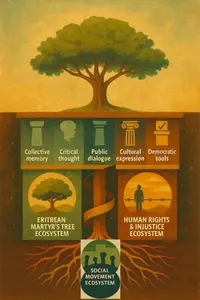
Exile Archive Practical Philosophy was in the Eritrean Martyr's Tree. It was initiated from the plant, grew from the ground with its trunk, branches & leaves.
Exile Archive Five Pillars Structural and Operational!
Exile Archive Five Pillars Structural and Operational! They function as both structure and practice, turning the archive’s public architecture into living, operational pathways.
Exile Archive Spine of Meaning: Dynamic Archive Truth Exile
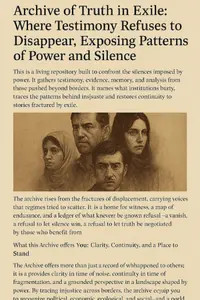
Archive of Truth in Exile: A Living Record of Power and Witness!
The Archive of Truth in Exile: Mapping silence, power, and survival. Testimony against erasure. Making an archive a living witness for you to claim justice.
Archive of Truth in Exile - Testimony Matters!
Archive of Truth in Exile - Testimony Matters: A foundational document on witness, erasure, and the moral architecture guiding the entire archive & raising societies.

Exile Archive Spine of Meaning: Dynamics Hub
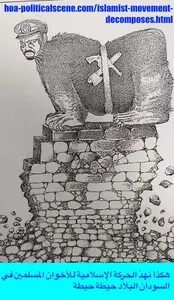
Islamist Movement Decomposes. Factual Facts of the Islamist Movement!
Islamist Movement Decomposes. This is clear to every modern and civilized mind. However, one question remains. Why this so called Islamic Movement is still controlling in some areas?
Conventional Narratives Hub Coverage From History to the Present!
Conventional Narratives Hub covers all narratives historically from the past to the present, whether they are economical, environmental, political, or social.
The Revolution I Would Not Sell!
The Revolution I Would Not Sell is a continuation to the unwritten system I have that proved to be working right! This system achieved planting 5 million trees to spark development.
Ink Between Borders - Exile by Principles: Peace Unheard!
Ink Between Borders - Exile by Principles: Peace Unheard! An urgent reflection on exile, unrecognized peace & moral resistance in post-conflict narratives.
Has International Terrorism Disappeared?
Has International Terrorism Disappeared? A political project like this has many phases. It is likely when the first phase has been done, we see the 2nd, the 3rd, etc...


Exile Archive Spine of Meaning: Dynamics Narratives Hub
The Cold War Era: A Battle of Ideologies and Influence!
The Cold War Era: A Battle of Ideologies and Influence! In my opinion, the world was better and more stable than today's world. What do you think?
The Eastern Europe Socialist Bloc Fragmentation!
The Eastern Europe Socialist Bloc Fragmentation costs effectively until today. Are there any real causes of the deterioration of great counties in the world?
Conventional Narratives Are Always Wrong!
Why Am I Saying Conventional Narratives Are Always Wrong? Explore the connection of these narratives from colonial era until this era and know what to do!
Established Frameworks Invisible Forces Shaping Perception!
Established Frameworks Invisible Forces Shape Perception! The insights help you escape narratives that control your life & help others build a better world.
How Dominant Perspectives Shape Our World?
How Dominant Perspectives Shape Our World? Explore to know what to accept and what to refuse.
Exile Archive Spine of Meaning: Injustice to Challenge
Are Odense Municipality, CIVICA Housing Company & the Police Corrupt?
Are Odense Municipality, CIVICA Housing Company & the Police Corrupt? More than seventy years of foreigners presence in Denmark has corrupted Denmark.
What the Heck are Human Rights Organizations and the UNHCR Doing?
What the Heck are Human Rights Organizations and the UNHCR Doing is a serious question these organisations should think about before losing any credibility and transparency.
In Denmark They Violate Human Rights for Money
In Denmark They Violate Human Rights for Money! This is a real time report you can call real life story that expose privacy and thus human rights violations in Denmark.
Is the Law Paralyzed Resulting in Injustice in Denmark?
Is the Law Paralyzed Resulting in Injustice in Denmark? This question exposes how some people from a specific culture can make things worse, when they are employed in the police forces.


Exile Archive Spine of Meaning: Injustice to Confront
Political News: No Political Borders Should Exist Between Humans!
Political News to dynamically minimize the political borders between humans. The mind is ours and you learn from a century of persistence.
Refugees in the Long Run to Survive!
Hot times refugees will emerge whenever there's crisis on Earth. What should we do for them? Best answer: Give them new homes & warm feelings. Unfortunately...
Refugees in Denmark Lacking the Bright Future!
The situations of refugees in Denmark impose the question why Denmark is tough with the UN Convention political refugees? This is the toughest question I have been asked!
Exile Archive Spine of Meaning: Pain Travels With Us
Substack Exile Archive Presents Fragments of Resistance!
Substack Exile Archive Presents Fragments of Resistance... poetic testimony, legal critique, and public witness from the margins of exile and defiance.
Substack Exile Archive - Ethics of Proximity - Shadow Beneath State!
Substack Exile Archive - Ethics of Proximity - Shadow Beneath State explores how some authorities manipulate and break the system of fairness and justice.
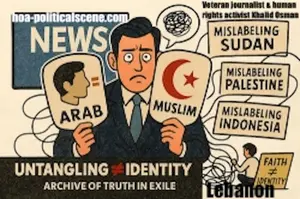
Arab - Muslim: Untangling Faith Identity!
Arab - Muslim: Untangling Faith Identity!


The Action Guide of the Global Dynamics Constructs the Grassroots!
The starting actions through which the "Exile Archive Spine of Meaning" are outlined to save your society from all of these disturbances you watch in the news:
They are all here at the Action Guide with the following steps to join the Horn Africa's Network to be acquainted with it, the basic foundation of the Principles of Citizen Journalism that Can Save the World From Political Catastrophes and they let you know in additional to all of that more basic information about the press media principles that encouraged me to create the LPE of the Masses' Era with its mind-blowing solutions to global political catastrophes.
Not withstanding this, the generator of the Action Guide itself is the Global Dynamics. The Global Dynamics are actually generated with the first step I started to examine how these dynamics which I have invented can change the world. The Eritrean Martyr's Tree was the foundational base. The proofs of optimal success lie in the success of the experimental project:
It was evolved into the Infrastructure, and the architecture of the martyr's tree, which have led to the creation of the martyr's tree ecosystem, as you can explore through the Archive of Truth in Exile Constructs a Social Ecosystem!
This social ecosystem has in turn developed into 3 ecosystems, when the Archive of Truth in Exile explored world conflicts, human rights violation and injustice in many places that fracture societies and end up producing many victims. These 3 systems are essential as you can understand from the Archive of Truth in Exile Builds 3 Ecosystems! For Civic Movements!
To become a good activist and maybe a leader of one of the associations of the world masses, as you learned from the resources on "Exile Archive Readers Guide" and "Exile Archive - Support Without Money", fill out the 'Contact Us' form. Be sure to let me know that you've read "Archive of Truth in Exile Builds 3 Ecosystems! For Civic Movements", as well as the Global Dynamics.
Show me that you understood what you read on "Asking You" along with the highlighted solutions through the sections of the "Exile Archive - Support Without Money" and you would like to create, or join one of the global masses associations. Let me know more about that you have learned well and so you are willing to join and create the ERA OF THE MASSES.
Sign up for "Intelligentsia Multimedia Newspaper Revolutionizes Knowledge" by filling the form on this section of the "Exile Archive - Support Without Money" and submit it. This is a double-opt-in list to prevent someone who knows your email address from subscribing you, without having you to know about it. Check an email with a confirmation link, I'll send to you. If you didn't find it in your incoming emails box, please check your junk folder and move it to your inbox folder.
Forward HOA Political Scene to your friends, including the link of "Exile Archive - Support Without Money", as follows: https://www.hoa-politicalscene.com/exile-archive-support-without-money.html. Motivate them to read it and join the pioneering solutions to global crises, and take the same actions outlined in the "Action Guide".
You make your move, they make their moves with you. The point is that it is so important to work with them, so that more friends and “friends of their friends” join the discussion about global crises, political shallowness, the lack of political depth in this Post-Cold War era and know the guidelines of the World Social Revolution, which is a reflection of what you read on "Post-Cold War Era a Shifting Global Landscape". You should at least make a few hundred friends as contacts to explain to them everything you have learned and understood from "Build Yourself a System of Power".
Setup a time to work in this project and arrange your contacts systematically into lists with basic information about each one of your contacts, such as name, age, gender, profession, email address and location. In this way, you will guide, organize and teach them how to "Breaking the Illusion of Truth" as you have been taught. You'll enable them this way to carry out the process to build everyone a system of power, inspired by the ecosystem on "Exile Archive - Support Without Money". I will let you know the specifications of these groups. Upon completion, please use the contact form to forward this information to me. You should have their consent, first. Then use the same "Contact Us" form to tell me you've done the first process and wait for further instructions.
Write your comments on "Exile Archive Practical Philosophy Paves the Way to Social Movement" - The comments form is at the end of the page - and provide details on them. Don't feel that you can't write good, even if your language isn't good. Just write your comments in any language and I will edit and translate them for you to become a global writer and you will see a better result in the process of participating in the Global Peaceful Revolution. Such revolution doesn't need a weapon, it needs minds. Share your page when it is published.
Share the links on "Exile Archive Practical Philosophy Paves the Way to Social Movement" and share the pictures of the global political campaigns on good websites. These images are on "Climate Change Disrupts Dominant Narratives" and the first pages of the Global Dynamics I published earlier. Please don't do this on the social media of Facebook because it is a capitalist umbrella and more and if you want to know what's more, I will tell you, only when you ask and I will even show you methods to conquer any big social media, except Twitter.
Distribute the links of the videos you watch on "Doctor Feeling Good" and hang the posters of the Global Revolution in public places. It will be good if you or your friends have public places such as bars, cafes, cafeterias, clubs, hotels, mini-market places, public companies and restaurants.
Read about the nature problems that affect the world badly, including the effects of global warming on many countries and on people, as you read on the posters of "Citizen Journalism that Can Save the World From Political Catastrophes" at 100-beautiful-sites-in-the-world.com/100-beautiful-sites-blog.html. This is a site dedicated to the effects of global warming that you read about politically on "How Sudan Lost Its African Soul - The Disappearance of Joy".
Watch historical and political documentaries and films about the crises of environment and nature caused by classical regimes and open market big companies, and documentaries about some of the topics you read on the sections of "Exile Archive Practical Philosophy Paves the Way to Social Movement" at tvcinemaapp.com/tv-cinema-app-blog.html. This is another site oriented to the cinema and television that offers among documentaries cinematic analyzes movies and television series and lessons on how to install channels and watch movies free, so you don't need to pay for that.
** Please, if you find anything that does not make sense to you on "Exile Archive Practical Philosophy Paves the Way to Social Movement", use the feedback form to write about it. I will answer your questions and reward you for that by offering you some good books to read and learn more about how to improve your life.
What Do You Think of "Exile Archive Spine of Meaning"?
Your insight matters. While you're here, you gain facts that expand your understanding. Now it's your turn to share your appreciation: add your thoughts in the comment form. If you want to become a leader in your community, connect with the Exile Ecosystem. Follow the Action Guide as outlined, and together we can help every society move forward.
Have A Great Story About This Topic?
Do you have a great story about this? Share it!
Concerned about Conflicts Fact that Never Been Disclosed?
Get Horn Africa's Political Tragedy.
Recent Articles


-
HOA's Interval with Wisdom Nuggets of Inspiring Ethical Proverbs!
Sep 09, 26 04:59 AM
 HOA's Interval with Wisdom Nuggets of Inspiring Ethical Proverbs! You can see your ethics & the ethics of the surroundings clearly to develop & enhance your own.
 -
Intelligentsia 61 from Danish Injustice to American War Abortion of
Aug 29, 26 11:14 AM
 Intelligentsia 61 from Danish Injustice to American War Abortion of Iranian Revolution and Media Stupidity, world people fall into the trap of manipulation.
 -
When, Why and How the European Paradise Became Hell on Earth?
Aug 23, 26 10:20 AM
 When, Why and How the European Paradise Became Hell on Earth? This one in the dynamics will make your mind spin and reflect with clarity to address this matter.
Some Support is Appreciated so Much!
When I get a new information, or a good read, my conscience tells me to be obliged to whom has added a drop of knowledge with some values in my life by doing some good deeds to him. Some links here get me a little power to support some people in need, indeed, by paying my subscription to international human organizations I am part of their generous good deeds. Like this at Awassa.
A Friend in Need is A Friend Indeed!
How many times have you fallen like a mountain, because you were great with your inspirations, guidance and professional teaching and later on found some people you made professional drawn in luxuries and never cared about you?
A hand up is better than a hand down. Share a link of a page you liked in great sites, but please not FACEBOOK. I am a man of principles.
A Man is Known by the Company he Keeps!
True, don't you think so? I can tell you stories and stories about that. Can you tell me one in details with the original cultures of the world it refers to? Take the cultural section by a huge and write that in the comments form.
Healthy Citizens are the Greatest Asset any Country can have!
It's true. But, he didn't know what ill governance can do for healthy citizens, or how ill monarchies can bring healthy citizens into miseries, or why great powers play by the fates of so many healthy citizens in the world.
Know any similar situations where healthy citizens are broken by the ruling elites in any country? Bring that into readers' attention through the comments form at Are You Intellectual?
Global Dynamics to Make Everyone Intellectual
Look for the top 100 Google most searched terms globally in 2021. You will not find any single thing that any person looks for and wants to know about, or use in daily life, such as food, health, education, cinema, tv, news, developing qualities and qualifications, playing, traveling, and even what causes Coronavirus and other pandemics, which are real threats to all people lives etc... You will find only search terms used for top social media, Youtube, search engines and Amazon. Political illiteracy is what matters to me to educate. See Global Dynamics & signup for the newsletter.
Did you get any of my books from Apple Books?
Click here to tell me & get some free books. Fill the form.
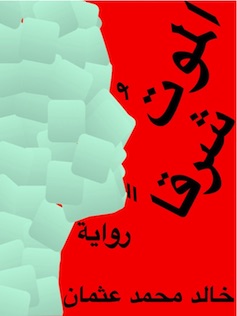
رواية "الموتُ شرقاً" تكشف لك سرّ الموت الشرقي التراجيدي المستمر للإنسان
احصل علي الرواية الآن واكتشف إنهيار القواسم المشتركة، واستلهم إبداعا يشبه الأسطورة في النص الروائي
"Follow", "like", "tweet", or "pin" the pictures to express your love! Thanks
TweetHorn Africa's Political Tragedy

Love in the Internet Time on Apple Books

Rising of the Phoenix Poetry on Apple Books

Free Poetry Picture Book
Free poetry picture book on Apple Books. You can use the images on public places for your customers to enjoy, while taking coffee.

The French & Spanish Versions
You can work the French versions and the Spanish versions of the two books above with me on, one on one bases. Contact Us.
HOAs Political Poetry Imaged
I'll be thankful, if you get one of my books.
My Books!