Wars that Stop World Civic Progress: U.S., Israel & Iran - Case Study!
Wars that Stop World Civic Progress taking the U.S., Israel & Iran's war as a case study follows the primary deep analyses of the war. The four existing chambers of the joint American and Israeli war from one side and Iran from the other side are specifically about the concept of war itself:
- Page 1 dissects narrative formation before conflict.
- Page 2 maps war economy structures.
- Page 3 traces global consequences.
- Page 4 exposes headline architecture and media choreography.
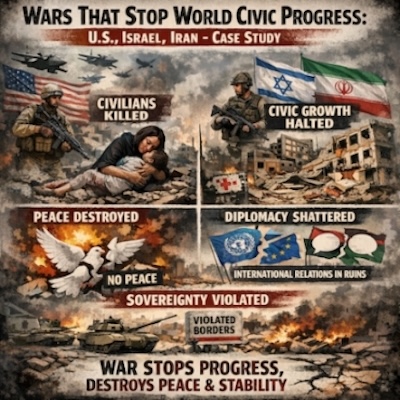 Wars that Stop World Civic Progress: U.S., Israel, Iran - Case Study: An image illustrating how wars kill civilians, cause psychological affects, damage national integrity, violate human rights, halt civic growth, destroy peace and international relations and violate sovereignty.
This fifth page titled "Wars that Stop World Civic Progress: U.S., Israel, and Iran as a Case Study" become a new conceptual altitude, not about how wars form, or how they are financed, or how they echo globally, but about how they freeze, reverse, or distort the civic evolution of societies.
🏛️ Architectural Positioning in My Atlas!
This is where you start to sense the content of the page, before reading the depth of the insights that follow.
This fifth page becomes the bridge between:
The mechanics of war (Pages 1–4)
And the human future that war obstructs.
It's the ethical and civic chamber (but, still related to the narratives)... the one that asks:
What kind of world becomes impossible when these wars continue?
- This is new terrain.
- This is my voice.
- This is the page that continues the Ethical Archive Arc and continues at the same time the related narratives.
It is a different lens entirely: not the mechanics of war, but the civic future that wars interrupt.
1. It defines "Civic Progress" as a measurable, global phenomenon.
It introduces a framework of:
- Civic literacy,
- Institutional accountability,
- Public imagination,
- Social contracts,
- Collective rights and...
- Intergenerational stability.
This becomes the metric through which the case study is evaluated.
2. Shows how the U.S.–Israel–Iran triangle creates a "Civic Freeze Zone" through analyses:
- How militarized alliances distort domestic civic priorities?
- How fear-based governance replaces participatory governance?
- How propaganda ecosystems shrink civic imagination?
- How regional populations lose decades of civic development?
This is a civic cost analysis, not a war analysis.
3. It introduces my concept of "Civic Time Theft", as a powerful, original idea:
Wars don't only destroy infrastructure, they steal decades of civic evolution.
- Lost reforms,
- Delayed rights expansions,
- Interrupted democratic movements,
- Youth disempowerment and...
- Intellectual migration.
This is entirely new material for you to think about and then take the lessons further to step into a civil resistance movement that makes positive world's changes possible..
4. Contrast "Potential Civic Futures" vs. "War-Driven Realities", as a before / after structure:
- What civic progress could have looked like?
- What war narratives forced instead?
This is speculative, architectural, and deeply aligned with my archive's mission: TO MAKE THIS WORLD BETTER.
5. Introduces a new analytic tool: "Civic Progress Index Under Conflict Pressure" as a conceptual model I invented:
- Civic Agency,
- Media Autonomy,
- Institutional Integrity,
- Economic Justice,
- Social Cohesion and...
- Cultural Continuity.
I then apply it to the U.S., Israel, and Iran from within a scientific views. Other war-case-studies will follow soon.
6. Ending?... No, In fact beginning with a universal thesis like:
- Wars don't only redraw borders; they redraw the boundaries of what societies are allowed to imagine.
This becomes the gravitational center of the "Wars that Stop World Civic Progress: U.S., Israel and Iran Case Study!".
The Bridge Between War's Machinery and Humanity's Future!
The previous pages in this cluster exposed the machinery of war: how narratives are engineered, how economies are weaponized, how global systems absorb the shockwaves, and how headlines choreograph public perception. But none of those chambers answer the deeper civic question: What happens to the world we are trying to build when these wars persist?
This page enters that space.
It stands at the threshold between the mechanics of conflict and the possibilities that conflict erases. It looks beyond the battlefield, beyond the budgets, beyond the propaganda cycles, and asks what societies lose when they are forced to orbit war instead of progress.
War does not only destroy lives.
It destroys trajectories.
It interrupts the long, slow work of civic evolution: the building of institutions, the expansion of rights, the cultivation of public imagination, the strengthening of social contracts. It freezes the civic future in place, trapping entire populations in a perpetual present defined by fear, exceptionalism, and emergency logic.
In the entanglement between the U.S., Israel, and Iran, this interruption becomes global. These states do not merely shape their own civic destinies; they shape the civic possibilities of regions, alliances, and international norms. Their conflicts create a gravitational field that pulls civic progress backward... not only at home, but across the world.
This page is the chamber where that truth is named.
It is the ethical hinge of the atlas: the place where witness shifts from describing war to describing the world that war prevents. It is the space where you confront the civic future that becomes unreachable when conflict becomes the organizing principle of political life.
- This is new terrain.
- This is the voice my archive has been moving toward.
- This is the page that completes the arc, not by summarizing the previous chambers, but by revealing what they all point to: the cost of the future that never arrives.
Defining Civic Progress as a Measurable, Global Phenomenon!
Civic progress is not an abstract ideal; it is a measurable, observable trajectory in which societies expand the capacities, rights, and imaginations of their people. It is the long arc through which communities build institutions that serve the public, cultivate cultures of accountability, and create conditions where individuals and generations can thrive.
To understand how wars halt or reverse this trajectory, we must first define the components that make civic progress visible and measurable across different political systems. The following six dimensions form the analytical framework for this page... a framework that has not appeared in the previous chambers of the atlas and therefore opens new conceptual ground.
1. Civic Literacy
Civic literacy is the foundation of any society's ability to govern itself ethically and collectively. It encompasses the public's understanding of rights, responsibilities, institutional structures, and the mechanisms through which power is exercised and contested. Pay attention: CONTESTED... This is your dynamics, as an asset of world development. It is your responsibility.
A civically literate population can identify manipulation, resist authoritarian drift, and participate meaningfully in shaping public life. When war narratives dominate national discourse, civic literacy is displaced by security literacy: citizens are taught to fear, to obey, to rally, rather than to question, deliberate, or imagine alternatives.
In the U.S., Israel, and Iran, prolonged conflict environments have produced generations whose political education is filtered through the lens of threat, exceptionalism, and national survival.
- This erosion of civic literacy is not incidental; it is a structural consequence of societies organized around conflict rather than civic empowerment.
2. Institutional Accountability
Institutional accountability is the degree to which public institutions, from courts to parliaments to ministries, remain answerable to the people they serve. It is the mechanism that prevents power from becoming predatory. In times of peace, accountability expands through transparency, oversight, and public participation.
In times of war or prolonged conflict, accountability contracts. Emergency powers become normalized, secrecy becomes justified, and institutions begin to answer not to citizens but to security imperatives.
In the U.S., Israel, and Iran, conflict has repeatedly been used to justify the weakening of checks and balances, the expansion of executive authority, and the shielding of military and intelligence sectors from scrutiny.
- When accountability collapses, civic progress becomes impossible, because progress requires institutions that can be corrected, challenged, and reformed by the public.
3. Public Imagination
Public imagination is the collective capacity of a society to envision futures beyond the constraints of the present. It is the engine of reform movements, social innovation, and cultural transformation. Without imagination, societies stagnate; they repeat old patterns and reproduce old harms.
War narratives shrink the horizon of imagination by framing the future as a continuation of conflict, threat, and survival.
In the U.S., Israel, and Iran, entire generations have grown up with political imaginations shaped by militarized identities and existential narratives.
- When the public imagination is colonized by fear, the possibility of civic transformation disappears. The future becomes a defensive posture rather than a creative project. This is one of the most profound and least discussed casualties of prolonged conflict.
4. Social Contracts
A social contract is the implicit agreement between a state and its people: the state provides security, rights, and services; the people provide legitimacy, participation, and adherence to shared norms. Civic progress strengthens this contract by expanding rights, improving services, and deepening public trust.
War, however, rewrites the social contract in ways that privilege the state's coercive power over its civic obligations. Security becomes the primary currency of legitimacy. Citizens are asked to sacrifice rights, resources, and freedoms in the name of national survival.
In the U.S., Israel, and Iran, the social contract has been repeatedly reshaped by conflict ... often in ways that reduce the state's accountability while increasing its demands on the public.
- A weakened social contract is a weakened civic future.
5. Collective Rights
Collective rights refer to the protections and freedoms that belong not only to individuals but to communities: minorities, workers, refugees, indigenous groups, and other social formations. Civic progress expands these rights by recognizing the dignity and agency of all groups within a society.
War, however, creates hierarchies of belonging. It elevates some communities as patriotic and loyal while casting others as suspect, dangerous, or expendable.
In the U.S., Israel, and Iran, conflict has repeatedly been used to justify the suppression of minority rights, the securitization of dissenting communities, and the erosion of protections for vulnerable groups.
- When collective rights are undermined, civic progress is not merely stalled, it is reversed.
6. Intergenerational Stability
Intergenerational stability is the assurance that future generations will inherit a society more just, more stable, and more capable than the one before it. It is the long-term horizon of civic progress: the idea that children will grow up with greater opportunities, stronger institutions, and a more inclusive civic culture.
War disrupts this horizon by creating cycles of trauma, displacement, economic instability, and political fragmentation.
In the U.S., Israel, and Iran, decades of conflict have produced generational ruptures: youth who inherit fear instead of possibility, instability instead of continuity, and militarized identities instead of civic ones.
- Intergenerational stability is the clearest measure of civic progress and the clearest indicator of how profoundly war can halt it.
This becomes the metric through which the case study is evaluated.
How the U.S. Israel & Iran's Triangle Creates a Civic Freeze Zone? (Regional)
The entanglement between the U.S., Israel, and Iran does more than shape military strategy or geopolitical alignments. It creates a structural condition in which civic progress becomes suspended, not only within these states, but across the regions and alliances that orbit them.
This "Civic Freeze Zone" is not a battlefield; it is a political climate, a psychological atmosphere, and an institutional posture that halts the evolution of civic life. It is the space where societies stop building futures and begin managing perpetual emergencies.
- The freeze is not accidental; it is the predictable outcome of systems organized around militarized alliances, fear-based governance, propaganda ecosystems, and the long-term erosion of civic development.
How Militarized Alliances Distort Domestic Civic Priorities?
Militarized alliances reshape national priorities by elevating security above all other civic obligations. When states define themselves through conflict, their budgets, institutions, and political narratives become aligned with military imperatives rather than public needs.
In the U.S., Israel, and Iran, this dynamic manifests as a chronic diversion of resources away from education, healthcare, social welfare, and civic infrastructure. The political imagination becomes tethered to defense spending, strategic deterrence, and alliance maintenance.
Civic priorities, such as reducing inequality, strengthening democratic participation, or expanding social protections are reframed as luxuries that can only be pursued "after the threat is contained." But the threat is never contained; it is continually reproduced through the logic of militarized alliances.
- As a result, domestic civic agendas remain perpetually deferred, creating societies that invest heavily in war readiness while underinvesting in the civic foundations that sustain long-term stability.
How Fear-Based Governance Replaces Participatory Governance?
Fear is the most effective solvent of civic participation. When governments frame national identity around existential threat, citizens are encouraged to rally rather than question, obey rather than deliberate, and sacrifice rather than demand accountability.
In the U.S., Israel, and Iran, fear-based governance becomes a political technology: it simplifies complex civic debates into binary choices of loyalty versus danger. Public dissent is recast as vulnerability; oversight becomes obstruction; and political pluralism is treated as a risk rather than a democratic asset.
Participatory governance, which requires transparency, debate, and shared decision-making cannot thrive in an atmosphere where fear is the primary organizing principle.
- The result is a civic environment where citizens are mobilized for war but demobilized for democracy, where the public voice is amplified in moments of crisis but muted in moments of civic deliberation.
Fear becomes the architecture of political life, and participation becomes conditional rather than foundational.
How Propaganda Ecosystems Shrink Civic Imagination?
Propaganda is not merely the distortion of information; it is the narrowing of possibility. In conflict-driven states, media ecosystems become saturated with narratives that justify militarization, normalize exceptionalism, and frame the future as a continuation of the present conflict.
In the U.S., Israel, and Iran, propaganda does not always appear as overt state messaging; it often emerges through commercial media, partisan networks, ideological institutions, and digital platforms that reward fear, outrage, and polarization.
These ecosystems shrink the civic imagination by crowding out alternative visions of society: visions grounded in justice, equality, cooperation, or shared humanity. When the public imagination is colonized by conflict narratives, the capacity to envision civic transformation diminishes.
People begin to believe that war is inevitable, that peace is naïve, and that civic progress is secondary to national survival.
- This is the deepest layer of the freeze: a society that cannot imagine a different future cannot build one.
How Regional Populations Lose Decades of Civic Development?
The civic freeze does not stop at national borders. The U.S., Israel & Iran's triangle exerts gravitational pressure across the Middle East, North Africa, and global alliances, creating ripple effects that stall civic development in neighboring societies.
Regional populations lose decades of civic progress as resources are redirected toward conflict management, political reforms are postponed, and social movements are suppressed under the pretext of security.
Youth inherit instability instead of opportunity; institutions inherit fragility instead of reform; and public discourse inherits polarization instead of pluralism. The freeze becomes generational: each cycle of conflict resets the civic clock, forcing societies to rebuild from the same starting point rather than advancing toward a more just and participatory future.
- This is the true cost of the triangle... not only the wars it threatens or the alliances it shapes, but the civic futures it prevents entire regions from reaching.
The Collapse of Institutional Accountability!
Institutional accountability is the backbone of civic progress. It is the mechanism through which power is restrained, public trust is maintained, and governments remain answerable to the people they serve. In societies where accountability is strong, institutions operate transparently, oversight bodies function independently, and citizens can challenge abuses without fear.
But in conflict‑driven states, especially those locked in long-term geopolitical antagonism accountability becomes one of the first casualties.
The U.S., Israel & Iran's triangle demonstrates how prolonged conflict environments systematically erode the structures that keep power in check, replacing civic oversight with security logic and transforming institutions from public servants into instruments of state survival.
How Security Logic Displaces Civic Logic?
In a healthy civic environment, institutions are designed to protect rights, deliver services, and uphold the rule of law. But when a state organizes itself around conflict, these institutions are gradually repurposed to serve security imperatives. The shift is subtle at first: a temporary emergency measure here, a classified decision there... but over time, the logic of security becomes the default operating system.
In the U.S., Israel, and Iran, this shift manifests in expanded executive authority, reduced transparency, and the normalization of exceptional powers. Institutions that once mediated between the state and the public begin mediating between the state and its perceived enemies.
- The civic mission is overshadowed by the security mission, and accountability becomes a secondary concern rather than a foundational principle.
How Oversight Mechanisms Become Symbolic Rather Than Functional?
Oversight bodies: courts, parliaments, audit offices, human rights commissions are designed to prevent the concentration of power. But in conflict-driven states, these mechanisms often become symbolic rather than functional. They exist on paper, but their ability to challenge the state is weakened by political pressure, legal constraints, or public narratives that frame oversight as a threat to national unity.
In the U.S., Israel, and Iran, oversight institutions frequently find themselves navigating a political landscape where questioning military decisions, intelligence operations, or security budgets is treated as disloyal or dangerous.
- As a result, the checks and balances that sustain civic progress become performative gestures rather than effective safeguards. The state becomes increasingly insulated from public scrutiny, and accountability becomes a ritual rather than a reality.
How Emergency Powers Become Permanent?
One of the most enduring consequences of prolonged conflict is the normalization of emergency powers. Measures introduced as temporary responses to crisis gradually become embedded in the legal and political fabric of the state.
In the U.S., Israel, and Iran, emergency frameworks have been extended, renewed, or repurposed across decades, creating a political environment where exceptional authority is treated as ordinary governance. This permanence erodes the principle that power must be limited, reversible, and accountable. When emergency powers become the norm, citizens lose the ability to challenge state actions, and institutions lose the ability to restrain them.
- The civic sphere contracts, and the state's coercive capacity expands... a dynamic that freezes civic progress and entrenches authoritarian tendencies even within nominally democratic systems.
How Public Trust Erodes Under Militarized Governance?
Accountability is not only a structural principle; it is also a psychological one. It depends on public trust: the belief that institutions act in the public interest and can be corrected when they do not.
But in conflict-driven states, trust erodes as institutions become increasingly opaque, politicized, or aligned with military agendas. Citizens begin to view institutions not as protectors of rights but as extensions of the state’s security apparatus.
In the U.S., Israel, and Iran, this erosion of trust manifests in declining faith in courts, legislatures, and public agencies.
- When trust collapses, civic participation weakens, reform movements lose momentum, and the public becomes disengaged or cynical. Without trust, accountability cannot function and without accountability, civic progress becomes impossible.
How the Collapse of Accountability Freezes Civic Evolution?
The erosion of institutional accountability creates a political environment where civic progress cannot take root. Reforms stall, rights stagnate, and public institutions lose their capacity to evolve. The state becomes locked in a defensive posture, prioritizing survival over transformation.
In the U.S., Israel & Iran's triangle, this dynamic produces a long-term civic freeze: institutions that should be engines of progress become guardians of the status quo, and the public's ability to shape the future is diminished.
- The collapse of accountability is not merely a governance failure; it is a civic catastrophe. It halts the evolution of democratic norms, weakens the social contract, and ensures that conflict, rather than civic aspiration, remains the organizing principle of political life.
The Erosion of Civic Agency!
Civic agency is the capacity of people to shape the direction of their society through participation, dissent, imagination, and collective action. It is the living force behind civic progress, the energy that pushes institutions to evolve and compels governments to remain accountable.
When civic agency is strong, societies grow more inclusive, more just, and more resilient. But in states organized around conflict, civic agency becomes one of the first and most enduring casualties.
The U.S., Israel & Iran's triangle demonstrates how prolonged antagonism and militarized governance systematically weaken the public's ability to influence political life.
The erosion is not sudden; it unfolds slowly, through cultural conditioning, legal restrictions, and psychological exhaustion. Over time, citizens become spectators rather than participants, and the civic sphere contracts until only the logic of conflict remains.
How Protest Becomes Suspect?
In a healthy civic environment, protest is a sign of vitality: a mechanism through which the public corrects the state and expands the boundaries of justice. But in conflict-driven states, protest is reframed as a threat. Demonstrations are scrutinized for signs of foreign influence, disloyalty, or destabilization.
In the U.S., Israel, and Iran, public dissent is often interpreted through a security lens rather than a civic one. Protesters are monitored, delegitimized, or criminalized, and their demands are dismissed as dangerous distractions from national survival.
- This reframing does not merely suppress individual actions; it reshapes the cultural meaning of dissent. Citizens internalize the idea that challenging the state is risky, inappropriate, or unpatriotic. When protest becomes suspect, civic agency withers — because agency requires the freedom to confront power without fear.
How Dissent Becomes Criminalized?
Dissent is the heartbeat of civic evolution. It is the force that exposes injustice, demands reform, and expands rights. But in states locked in perpetual conflict, dissent is often treated as a liability. Legal frameworks are tightened, surveillance expands, and the boundaries of permissible speech narrow.
In the U.S., Israel, and Iran, dissenting voices: journalists, activists, academics, minority communities frequently face legal, social, or institutional consequences for challenging dominant narratives. The criminalization may be overt, through arrests or prosecutions, or subtle, through professional retaliation, digital harassment, or social stigmatization.
- The effect is the same: dissent becomes costly, and the public learns to self-censor. When dissent is criminalized, civic agency collapses, because agency requires the ability to speak truth without punishment.
How Minorities Become Securitized?
Civic agency is not evenly distributed; it depends on whether communities are recognized as legitimate participants in public life. In conflict-driven states, minority groups often become securitized: framed as potential threats rather than equal members of the civic body.
In the U.S., Israel, and Iran, minority communities are frequently subjected to heightened surveillance, discriminatory policies, or public suspicion. Their political demands are interpreted not as civic contributions but as security risks.
- This securitization erodes their agency by limiting their ability to organize, advocate, or influence policy. It also fractures the broader civic sphere by creating hierarchies of belonging. When minorities are securitized, civic agency becomes selective rather than universal and selective agency is not civic progress; it is civic regression.
How Public Debate Becomes Polarized Into Loyalty Tests?
Civic agency thrives in environments where debate is pluralistic, nuanced, and grounded in shared civic values. But in conflict-driven states, public debate becomes polarized into loyalty tests. Complex issues are reduced to binary choices: patriot or traitor, ally or enemy, protector or threat.
In the U.S., Israel, and Iran, political discourse is often shaped by narratives that demand alignment with state positions on conflict. Citizens are pressured to demonstrate loyalty through silence, conformity, or support for militarized policies.
- This polarization suffocates nuance, discourages critical thinking, and transforms civic dialogue into a battlefield of identity rather than a forum for collective problem-solving. When debate becomes a loyalty test, civic agency is replaced by performative allegiance and the public loses its ability to shape the future.
How the Erosion of Agency Freezes Civic Futures?
The cumulative effect of suspect protest, criminalized dissent, securitized minorities, and polarized debate is a profound erosion of civic agency. Citizens lose the tools, spaces, and psychological freedom required to influence political life. The state becomes the sole architect of the future, and the public becomes a passive audience.
In the U.S., Israel & Iran's triangle, this erosion creates a long-term civic freeze: societies that cannot imagine alternatives, cannot challenge power, and cannot build futures beyond the logic of conflict.
- The loss of agency is not merely a democratic deficit; it is a generational wound. It ensures that civic progress remains stalled, that institutions remain unchallenged, and that conflict... rather than civic aspiration... continues to define the trajectory of public life.
The Global Civic Freeze: How Conflict Halts World Civic Progress (International)
The U.S., Israel & Iran's triangle does not only shape the civic trajectories of the states directly involved. Its gravitational pull extends outward, creating a global civic freeze: a condition in which international institutions, regional alliances, and transnational civic movements lose momentum, coherence, and transformative capacity.
This freeze is not the result of a single war or a single crisis; it is the cumulative effect of decades of militarized narratives, geopolitical antagonisms, and the normalization of emergency logic in global governance. The world becomes trapped in a cycle of crisis management rather than civic advancement.
This section examines how the triangle's conflict pressure radiates outward, reshaping global civic possibilities and halting the evolution of international civic norms.
How International Institutions Become Paralyzed?
Global institutions: the UN, regional bodies, human rights mechanisms, international courts rely on consensus, legitimacy, and shared civic principles to function. But when major powers are locked in conflict, these institutions become arenas of geopolitical rivalry rather than engines of civic progress.
The U.S., Israel & Iran's triangle contributes to this paralysis by exporting its antagonisms into global forums, turning debates about rights, justice, and accountability into proxy battles for influence. As a result, institutions that should protect civilians, mediate conflicts, and advance global norms become gridlocked.
- Their inability to act erodes public trust and weakens the global civic architecture. The freeze becomes structural: institutions exist, but their capacity to shape the world diminishes.
How Global Norms Are Rewritten Around Militarized Exceptions?
Civic progress at the global level depends on norms: shared expectations about human rights, sovereignty, accountability, and the limits of state power. But prolonged conflict among influential states rewrites these norms around militarized exceptions. Actions that once required justification become routine: targeted killings, extraterritorial operations, mass surveillance, emergency laws, and the erosion of due process.
The U.S., Israel & Iran's triangle normalizes these exceptions by framing them as necessary responses to existential threats. Other states adopt similar practices, citing the same logic. Over time, the global civic order shifts from rights‑based governance to security‑based governance.
- The world becomes more tolerant of coercion and less committed to civic principles. This is the global freeze: a world where civic norms stop evolving and begin eroding.
How Transnational Civic Movements Lose Momentum?
Civic movements for climate justice, gender equality, labor rights, and democratic reform rely on global solidarity, shared attention, and sustained public engagement. But conflict narratives consume the world’s emotional and political bandwidth.
The U.S., Israel & Iran's triangle generates cycles of crisis that dominate global media, redirect diplomatic energy, and overshadow civic struggles elsewhere. Movements that require long-term focus lose visibility. Activists face shrinking international support. Funding shifts from civic initiatives to security priorities.
- The result is a global civic fatigue: societies become reactive rather than visionary, and movements that once pushed the world forward struggle to maintain momentum. The freeze is not only institutional; it is emotional and psychological.
How Resources for Global Justice Are Diverted to Conflict Management?
Civic progress requires investment in education, public health, climate adaptation, human rights monitoring, and democratic capacity-building. But global resources are finite, and conflict absorbs them at an accelerating rate.
The U.S., Israel & Iran's triangle drives massive expenditures on military alliances, sanctions regimes, intelligence operations, and crisis response. Funds that could support global civic development are redirected toward managing instability. International aid becomes politicized, development budgets shrink, and long-term civic projects are postponed or abandoned.
- The world becomes locked in a cycle where conflict consumes the resources needed to prevent future conflict. This is the economic dimension of the global freeze: a world that spends more on managing crises than on building civic futures.
How the Global Civic Imagination Contracts?
Perhaps the most profound effect of the global freeze is the contraction of the global civic imagination. The world stops imagining what it could become and begins accepting what it is. Conflict narratives dominate global consciousness, shaping how societies understand possibility, risk, and identity.
The U.S., Israel & Iran's triangle reinforces a worldview in which cooperation is naïve, justice is negotiable, and peace is unrealistic. This contraction affects not only policymakers but also artists, educators, youth, and civic thinkers.
- The future becomes a defensive posture rather than a creative project. The global civic imagination... the engine of human progress slows, dims, and narrows.
The Global Consequence: A World Stuck in Place!
The global civic freeze is not a metaphor; it is a measurable condition. It manifests in stalled reforms, weakened institutions, fragmented movements, and a shrinking horizon of possibility.
The U.S., Israel & Iran's triangle is not the sole cause, but it is a central node in the architecture of global stagnation. Its conflicts radiate outward, shaping the civic climate of entire regions and influencing the trajectory of global governance.
- The world becomes stuck in place unable to move forward, unable to imagine alternatives, unable to build the civic future that humanity requires.
This section reveals the regional layer you read above reflects on the argument of the international layer: wars do not only halt the civic progress of nations — they halt the civic progress of the world.
The World That Becomes Impossible When These Wars Continue!
Every section before this one has traced a different dimension of civic erosion: the collapse of agency, the distortion of institutions, the narrowing of imagination, the freezing of regional and global civic progress. But these are not isolated injuries. Together, they form a larger truth... a truth that is rarely articulated in geopolitical analysis because it cannot be measured in military terms or economic indicators.
The deepest cost of perpetual conflict is the world that never arrives.
This section confronts that cost directly. It is not about what war destroys, but about what war prevents: the civic futures that become unreachable, the reforms that never materialize, the generations that inherit diminished horizons, and the global possibilities that collapse before they can take shape.
It is the chamber where you must face the full ethical weight of the U.S., Israel & Iran's conflict architecture: not the violence it produces, but the futures it erases.
A World Without Expanding Rights
When conflict becomes the organizing principle of political life, rights stop expanding. They stagnate, contract, or become conditional. The world that becomes impossible is one where:
minority protections strengthen rather than weaken.
gender equality advances rather than stalls.
civic freedoms deepen rather than shrink.
legal systems evolve toward fairness rather than exceptionalism.
Conflict freezes rights in place. It creates societies where rights are framed as vulnerabilities, where protections are sacrificed for security, and where entire communities live in suspended civic animation. The world that becomes impossible is a world where rights grow with each generation.
A World Without Democratic Renewal
Democracy is not a static system; it requires constant renewal: reforms, accountability, participation, and institutional evolution. But conflict halts this renewal. It creates political climates where:
- executive power expands unchecked.
- oversight becomes symbolic.
- dissent becomes dangerous.
- elections become loyalty rituals rather than civic expressions.
The world that becomes impossible is a world where democracy regenerates itself: where institutions adapt, where public trust grows, and where governance becomes more inclusive over time.
A World Without Regional Cooperation
Regions shaped by conflict cannot build cooperative futures. The U.S., Israel & Iran's triangle prevents the emergence of:
- shared economic frameworks.
- cross‑border civic initiatives.
- regional climate strategies.
- cultural and educational exchanges.
- collective security architectures based on diplomacy rather than deterrence.
The world that becomes impossible is a world where regions solve problems together: where cooperation replaces rivalry, and where shared prosperity replaces mutual suspicion.
A World Without Global Civic Momentum
Global civic progress depends on the ability of societies to focus on long-term challenges: climate change, inequality, technological ethics, human rights, and democratic resilience. But conflict consumes the world's attention, resources, and emotional bandwidth. It creates a global environment where:
- crisis management replaces long-term planning.
- militarized norms overshadow civic norms.
- international institutions lose legitimacy.
- global movements lose momentum.
- humanity becomes reactive rather than visionary.
The world that becomes impossible is a world where global civic progress accelerates: where humanity builds rather than merely survives.
A World Without Intergenerational Hope
Perhaps the most devastating loss is the loss of intergenerational continuity. Conflict creates generations who inherit:
- trauma instead of stability.
- fear instead of possibility.
- polarization instead of civic identity.
- economic precarity instead of opportunity.
- cultural fragmentation instead of continuity.
The world that becomes impossible is a world where each generation inherits a more just, more stable, more imaginative society than the one before it.
The Ethical Center of the Page
This section is the ethical hinge of the entire page. It reveals that the true cost of the U.S., Israel & Iran's conflict architecture is not measured in casualties, budgets, or diplomatic crises. It is measured in lost civic futures... the futures that humanity needed, the futures that were possible, the futures that conflict erased.
This is the world that becomes impossible when these wars continue:
- a world of expanding rights.
- a world of democratic renewal.
- a world of regional cooperation.
- a world of global civic momentum.
- a world of intergenerational hope.
This is the civic horizon that conflict collapses.
This is the heart of the page.
Potential Civic Futures vs. War‑Driven Realities - A Comparative Logic!
Civic progress is not only measured by what societies build... it is also measured by what they could have built if they were not trapped in cycles of conflict.
The the U.S., Israel & Iran's triangle reveals a profound truth: wars do not merely destroy the present; they erase entire civic futures before they can be born. This section examines the divergence between two trajectories: the civic futures that were possible, and the war‑driven realities that took their place.
It is a speculative architecture grounded in civic logic, not military logic. It asks the reader to imagine the world that conflict prevented, and to confront the civic losses that do not appear in casualty counts or economic reports. These are the futures that remain invisible because they never had the chance to exist.
What Civic Progress Could Have Looked Like?
In a world not dominated by conflict narratives, each of these societies had the potential to cultivate expansive civic futures... futures defined by inclusion, accountability, creativity, and intergenerational stability.
A U.S. Civic Future Rooted in Domestic Renewal
The United States could have invested its immense resources into strengthening democratic institutions, reducing inequality, expanding public education, and rebuilding civic trust. A post‑Cold War civic renaissance was possible... one where the country shifted from global militarization to domestic transformation.
Instead of fear‑driven politics, the U.S. could have nurtured a culture of civic literacy, pluralistic dialogue, and participatory governance. The potential was there for a society that led the world not through military dominance but through civic innovation and democratic resilience.
An Israeli Civic Future Grounded in Equality and Shared Belonging
Israel had the potential to build a civic future rooted in equality, coexistence, and regional integration. A society that embraced pluralism, expanded rights for all communities, and reimagined security through diplomacy rather than perpetual conflict could have emerged.
Civic progress could have taken the form of constitutional protections, inclusive governance, and a regional role defined by cooperation rather than militarized exceptionalism. The possibility existed for Israel to become a model of civic coexistence in a region hungry for stability.
An Iranian Civic Future Built on Cultural Richness and Democratic Aspiration
Iran possessed the cultural, intellectual, and demographic foundations for a vibrant civic future... one defined by democratic participation, institutional reform, and regional leadership through diplomacy.
A society that invested in education, women's rights, scientific advancement, and civic freedoms could have transformed the Middle East. Iran's youth, one of the most educated populations in the region, could have driven a civic renaissance grounded in creativity, innovation, and global engagement.
A Regional Civic Future of Cooperation and Shared Prosperity
Beyond individual states, the region could have moved toward cooperative frameworks, cross‑border civic initiatives, and shared economic development. Civic progress could have been regional rather than isolated... a collective movement toward stability, rights expansion, and intergenerational opportunity.
- These futures were not utopian; they were structurally possible. They were within reach... until war narratives intervened.
What War Narratives Forced Instead?
War narratives do not simply redirect policy; they reshape the entire civic architecture of societies. They force states into defensive postures, distort public priorities, and create political climates where civic progress becomes secondary to survival.
A U.S. Reality Defined by Polarization and Militarized Identity
Instead of domestic renewal, the U.S. entered decades of polarization, surveillance expansion, and militarized foreign policy. Civic trust eroded, public institutions weakened, and political discourse became dominated by fear and identity conflict.
- Resources that could have strengthened civic life were absorbed by endless security commitments. The civic future was replaced by a war‑driven reality where democracy became fragile and public imagination narrowed.
An Israeli Reality Shaped by Perpetual Emergency
Instead of equality and shared belonging, Israel became locked in a permanent state of emergency. Civic rights contracted, minority communities were securitized, and democratic institutions became increasingly strained.
- The possibility of a pluralistic civic future was replaced by a reality where security overshadowed justice, and where civic progress was continually postponed in the name of national survival.
An Iranian Reality Constrained by Isolation and Repression
Instead of democratic evolution, Iran became trapped in cycles of sanctions, militarization, and internal repression. Civic movements were suppressed under the pretext of external threat, and institutional reform became impossible.
- The potential for a civic renaissance was replaced by a reality where authoritarian reflexes hardened and public agency diminished.
A Regional Reality of Fragmentation and Lost Generations
Instead of regional cooperation, the Middle East inherited fragmentation, displacement, and generational trauma. Civic development stalled across borders, and societies lost decades of progress as conflict narratives dominated political life.
- The region's civic future was replaced by a reality defined by instability, mistrust, and interrupted development.
The Architectural Truth of the Divergence
The contrast between potential civic futures and war‑driven realities reveals a deeper architectural truth: wars do not only destroy what exists... they destroy what could have existed.
- They erase civic possibilities, silence reform movements, and freeze the evolution of institutions.
- They replace civic imagination with fear, civic agency with obedience, and civic progress with perpetual emergency.
This section exposes the cost of those lost futures... the futures that remain invisible because they were never allowed to unfold.
Civic Progress Index Under Conflict Pressure!
To understand how conflict reshapes civic life, we need a tool that measures not military strength or geopolitical influence, but the civic health of societies under prolonged pressure.
The Civic Progress Index Under Conflict Pressure (CPI‑CP) is a conceptual model designed for this page... a framework that evaluates how war narratives, militarized governance, and regional antagonisms distort the civic evolution of states.
It examines six core dimensions: Civic Agency, Media Autonomy, Institutional Integrity, Economic Justice, Social Cohesion, and Cultural Continuity.
Together, these dimensions reveal how deeply conflict penetrates the civic fabric of societies, and how far each state drifts from its potential civic trajectory.
This index is not a ranking. It is a diagnostic instrument... a way to see the civic injuries that conflict inflicts, the civic capacities that remain resilient, and the civic futures that become compromised.
Civic Agency
Civic agency measures the public's ability to influence political life through participation, dissent, and collective action. Under conflict pressure, agency contracts as fear, polarization, and securitization reshape the boundaries of permissible civic behavior.
United States: Civic agency is fragmented by polarization and identity conflict. Citizens retain formal freedoms, but the civic sphere is dominated by fear-driven narratives that reduce participation to partisan alignment rather than collective problem‑solving. Agency exists, but it is fractured and often redirected toward cultural conflict rather than civic transformation.
Israel: Civic agency is stratified. Some communities exercise robust political influence, while others, particularly Palestinians and dissenting Jewish groups face structural barriers, surveillance, or delegitimization. Conflict pressure creates a hierarchy of agency, where belonging determines the right to participate.
Iran: Civic agency is heavily constrained by state repression and the securitization of dissent. Public participation is shaped by risk, and civic movements face severe consequences. Agency persists through underground networks, cultural expression, and youth activism, but it operates under constant threat.
Media Autonomy
Media autonomy reflects the ability of journalists, editors, and public communicators to operate independently of state or partisan control. Under conflict pressure, media ecosystems become battlegrounds for narrative dominance.
United States: Media autonomy exists but is distorted by commercial incentives, partisan fragmentation, and algorithmic amplification of conflict narratives. The result is not censorship but saturation... a media environment where civic information competes with fear, outrage, and spectacle.
Israel: Media autonomy is limited by national security frameworks, military censorship, and political pressure. Journalists operate within boundaries shaped by conflict, and coverage of sensitive issues is often filtered through security considerations.
Iran: Media autonomy is severely restricted. State control, censorship, and surveillance shape the information environment, and independent journalism operates at significant personal risk. Conflict pressure reinforces the state's narrative monopoly.
Institutional Integrity
Institutional integrity measures the resilience of public institutions: courts, legislatures, ministries against corruption, politicization, and security capture.
United States: Institutions retain structural strength but face erosion through polarization, executive overreach, and the normalization of emergency powers. Conflict pressure accelerates institutional fragility by framing oversight as obstruction.
Israel: Institutional integrity is strained by prolonged emergency governance, judicial politicization, and the expansion of security prerogatives. Conflict pressure weakens checks and balances and narrows the space for institutional reform.
Iran: Institutional integrity is deeply compromised by authoritarian governance, security dominance, and the fusion of political and religious authority. Conflict pressure reinforces institutional rigidity and suppresses reformist impulses.
Economic Justice
Economic justice evaluates how resources, opportunities, and protections are distributed across society. Under conflict pressure, economies become distorted by militarization, sanctions, and inequality.
United States: Economic justice is undermined by vast inequality and the diversion of public resources toward military spending. Conflict pressure justifies budgets that prioritize global projection over domestic well‑being.
Israel: Economic justice is uneven, with disparities between Jewish and Palestinian communities and between center and periphery. Conflict pressure entrenches these inequalities by channeling resources into security rather than social investment.
Iran: Economic justice is severely impacted by sanctions, corruption, and state monopolies. Conflict pressure deepens poverty, restricts opportunity, and fuels economic despair, particularly among youth.
Social Cohesion
Social cohesion measures the degree to which communities trust one another, share civic identity, and participate in collective life. Conflict pressure fractures cohesion by creating hierarchies of belonging and narratives of threat.
United States: Social cohesion is weakened by polarization, racial tensions, and cultural fragmentation. Conflict pressure amplifies divisions by framing internal disagreements as existential threats.
Israel: Social cohesion is deeply segmented along ethnic, religious, and political lines. Conflict pressure reinforces these divisions by elevating security identities over civic ones.
Iran: Social cohesion is strained by generational divides, ideological fractures, and economic hardship. Conflict pressure suppresses unity by forcing communities into survival mode rather than civic collaboration.
Cultural Continuity
Cultural continuity reflects a society's ability to preserve, evolve, and transmit its cultural identity across generations. Conflict pressure disrupts continuity by creating trauma, displacement, and cultural politicization.
United States: Cultural continuity is challenged by rapid polarization and the politicization of national identity. Conflict pressure narrows cultural narratives into competing myths of loyalty and threat.
Israel: Cultural continuity is shaped by competing historical narratives and the unresolved tension between civic identity and ethnonational identity. Conflict pressure freezes cultural evolution by anchoring identity in perpetual emergency.
Iran: Cultural continuity is disrupted by censorship, repression, and generational disillusionment. Conflict pressure forces culture into survival mode, where expression becomes coded, symbolic, or underground.
The Diagnostic Value of the CPI‑CP
The Civic Progress Index Under Conflict Pressure reveals a shared pattern across the U.S., Israel, and Iran: conflict does not merely weaken civic life... it reorganizes it.
Each dimension shows how war narratives infiltrate the civic architecture of societies, reshaping:
- how people participate?
- how institutions function?
- how media communicates?
- how economies distribute?
- how communities relate?
- how cultures endure?
The Civic Progress Index - Under Conflict Pressure (CPI‑CP) exposes the civic injuries that conflict makes invisible: the slow, structural erosion that does not appear in headlines but determines the future of nations.
Universal Thesis!
Wars don't only redraw borders; they redraw the boundaries of what societies are allowed to imagine.
They constrict the civic horizon, shrink the public's sense of possibility, and replace the long arc of progress with the short breath of survival. They turn institutions inward, turn citizens against one another, and turn futures into defensive postures rather than creative projects.
- The deepest cost of conflict is not the destruction it inflicts on the present, but the futures it prevents from ever taking shape.
This is dangerous for everyone living in this world. So, what you should do about it?
Architectural Intelligence is Required for Positive World Social Movements Towards Progress. Explore it in between the pages on the Dynamics Sections.
Conclusion: Toward a System of Collective Resistance!
The wars examined in this chapter across the U.S., Israel, Iran, and the wider civic landscape reveal a single, recurring pattern: when states normalize violence, societies lose the very conditions required for global civic progress. In such moments, the question is not only what happens, but what should we do.
In situations of war, injustice, and escalating state power, individual acts of resistance are never enough. What is required is a system of resistance... one that is social rather than solitary, principled rather than reactive, and rooted in shared ethical commitments rather than scattered gestures.
Such a system strengthens:
- Human rights as a civic baseline, not a negotiable ideal.
- Media practices that refuse to glorify war, refuse to sanitize state violence, and refuse to manufacture consent.
- Social movements that build solidarity, not spectacle.
- Communal infrastructures that protect the vulnerable, amplify witness, and resist erasure.
The ethics and foundational methods of the Exile Archive - born from the social practices of the Martyr's Tree - offer a model for this kind of resistance. They teach that witness must be collective, memory must be protected, and justice must be practiced as a shared discipline. They show how communities can organize around principles rather than personalities, around care rather than coercion, and around truth rather than propaganda.
If wars seek to fragment societies, then resistance must be the opposite: a choreography of connection, a refusal to stand alone, and a commitment to building the civic architectures that make peace, dignity, and progress possible.
While There is a Great Vacuum in Worldwide Understanding, A Tree System Fills It Logically & Wisely!
Across the world, public understanding of war has collapsed into fragments... headlines without history, outrage without orientation, and narratives engineered to erase the civic consequences of conflict.
This vacuum is not accidental; it is produced, amplified, and weaponized by states whose wars interrupt, distort, or entirely halt the civic progress of nations and communities far beyond their borders.
In this widening absence of clarity, a Tree System becomes necessary. It does not claim to solve the world's crises, but it restores the logic that war deliberately removes: sequence, causality, proportion, and the civic stakes that connect one region's violence to another region's stagnation.
By mapping how the actions of the U.S., Israel, and Iran reverberate through global civic life, the Tree System offers a structured way to see what is otherwise obscured... not through ideology, but through disciplined architecture.
These sections invite you into that structure. They trace how wars that appear isolated are, in fact, interconnected interruptions of global civic development. They show how power, perception, and policy collide. And they demonstrate why understanding these dynamics is not optional for a world that hopes to move forward.
Wars that Stop World Civic Progress - U.S., Israel, Iran - Case Study: Dynamics of World Systems Dabble in Politics Superficially, and the Tree Dynamics Correct Their Trajectory…
The verb "Dabble" names the initial condition of world systems: 1. Superficial Engagement, 2. Illusion of Action, 3. Fragmented Attention, 4. Large‑scale Manipulation, 5. Harm Through Carelessness, 6. Distortion of Civic Reality, 7. Erosion of Public Understanding, 8. Delay of Civic Progress. I have already discussed many of these elements.
Global Dynamics are a Worldwide Projected Plans to Save the world!
The Global Dynamics are attracted by climate change and its outcome like epedimcs, along with many natural, economical and human crises that affect the world.
International Dynamics to Repair the Globe!
International Dynamics are planned to repair the globe and renovate the ecosystem to sustain climate, and to abolish classic systems and launch the mass systems.
Khalid Mohammed Osmans Dynamics Are Yours to Save Our Planet!
Khalid Mohammed Osmans Dynamics combined with systematical units ensure building the systems of the masses and launching the era of the masses.
Dynamic Revelation That Saves You and the Globe!
Dynamic Revelation expresses how reaching dynamics concerning the world's masses can solve worldwide problems and save you and the globe.
Dynamic Minds Help You Build a Mind that You Can Say It's Dynamic!
Dynamic Minds help you grow a mind that you can say it's dynamic. They also make you active to enlighten others & energize them to solve global problems.
From Colonial Empires to Space Frontiers: Are We Repeating Colonial Mistakes in Space? [Latest on The Insight Lens]
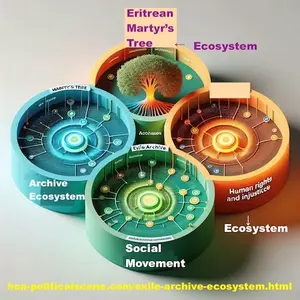
Wars that Stop World Civic Progress - U.S., Israel, Iran - Case Study: Dynamic Arc Ecosystem 2 Deactivates Illusionary & Superficial Policies that Deteriorate the World...
The verb "Deactivate" stops the processes illusionary, manipulative & superficial politics. Because "Dabble" names the superficial, illusionary, careless condition, so the second following verb is the first corrective action in my philosophical, alphabetical structure that stops the harm. This structure is the mosaics of the dynamics sections: each verb is a tile, Each dynamic is a color‑tone, each page is a panel, each cluster is a wall. And the alphabetical arc is the geometry that holds the whole verbs-architecture of the Exile Archive together.
Exile Archive Spine of Meaning!
What anchors the Exile Archive Spine of Meaning is the moment testimony stood alone, refusing erasure & forming the structure that holds every resistance upright.
Exile Archive Practical Philosophy Paves the Way to Social Movement!
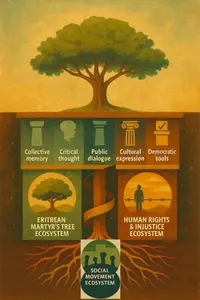
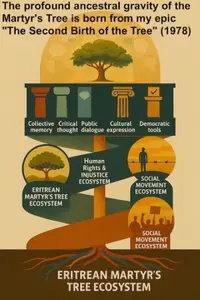
Exile Archive Practical Philosophy was in the Eritrean Martyr's Tree. It was initiated from the plant, grew from the ground with its trunk, branches & leaves.
Exile Archive Five Pillars Structural and Operational!
Exile Archive Five Pillars Structural and Operational! They function as both structure and practice, turning the archive’s public architecture into living, operational pathways.
From Colonial Empires to Space Frontiers: Lessons Unlearned [Latest on The Insight Lens]
Wars that Stop World Civic Progress - U.S., Israel, Iran - Case Study: Dynamic Arc Ecosystem 3 Deals with the Ethics & Methods that Architect Collective Social Movements...
The verb "Deal" engages with ethical foundation first, and then confronts unethical methods directly, negotiates collective public responsibility, processes social tensions, sorts harmful from constructive practices, mediates between social groups, organizes ethical action, and prepares the next verb in the movement. People, can you guess or feel this harmonised structure? It it makes sense to you with what you read below, connect with this poetic rhythm.
Exile Archive Action Guide Builds the Grassroots of Social Movement!
Exile Archive Action Guide Builds the Grassroots of Social Movement! It's the basics to solve crises, conflicts, economy, human rights violations & injustice.
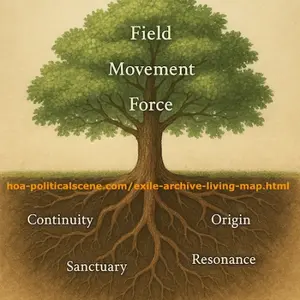
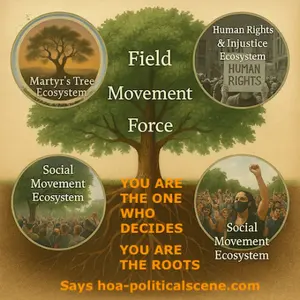
Exile Archive's Living Map - A Tree of Life! How It Changes Life?
Exile Archive's Living Map - A Tree of Life! It changes lives. A rooted journey from witness & creation to insight, guiding your path through life.
Exile Archive's Living Map - Tree of Creation for Meaning Changes Life
Exile Archive's Living Map - Tree of Creation for Meaning Changes Life: Reflect, inspire new work & deepen your journey through exile & witness.
Climate Change: Myths vs. Reality! [Latest on The Insight Lens]
Wars that Stop World Civic Progress - U.S., Israel, Iran - Case Study: Dynamics of Arc Ethics Declares the Human Ethics of the Global Resistance Movement...
The verb "Declare" is just like a rain fallen to wet a thirsty earth after the verb "Deal". While the previous verb engages in examining ethics & methods, this one comes with results to shape those ethics. It first converts analyses into position, architects ethical truth publicly, designs anti-harm strategies, establishes collective principles, anchors the movement in legitimacy, signals direction to the world, prepares the ground for action.
Exile Archive Emotional, Ethical and Symbolic Beginning! Origin Story!
Exile Archive Emotional, Ethical and Symbolic Beginning: Origin story with inspiration you need to know why social resistance is necessary & when & how to fuel it.
Exile Archive Power Denial and the Moral Architecture You Must Build!
Exile Archive Power Denial and the Moral Architecture You Must Build: A testimony on failing systems and how you reclaim agency to build moral architecture of life.
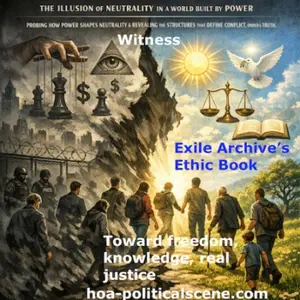
Exile Archive on the Illusion of Neutrality in a World Built by Power!
Exile Archive on the Illusion of Neutrality in a World Built by Power, probes how power shapes neutrality & reveals the structures that define conflict, order & truth.
Seeing Through the Noise: Four Ways to Read the World Without Falling!
Seeing Through the Noise: Four Ways to Read the World Without Falling Into the Trap! 4 how-to methods to understand power, uncertainty & chaos.
How to Setup International Revolution? Episode 1 - 22 by activist & journalist Khalid Mohammed Osman
Wars that Stop World Civic Progress - U.S., Israel, Iran - Case Study: Dynamics of Arc Poetic Define the Poetic Force Needed for Social Resistance...
The verb "Define" is the moment where poetry becomes instrumental. It calibrates the emotional register, identifies the necessary imaginative force, sets the tone for resistance, names the energy required to move from paralysis to agency.
Exile Archive Imagery Poetry Hub! How Social Resistance Becomes Poetic
Exile Archive Imagery Poetry Hub explores emotional and political poetry revealing exile's origins and early instincts that sharpen your political vision.
Exile Archive Voices Become Frontlines: Art & Literature for Justice!
Exile Archive Voices Become Frontlines: Art & Literature for Justice! The basics of the social movements voices are simple & the archive empowers the vulnerable.
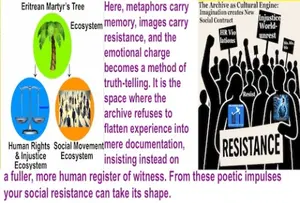
How to resist human rights violations, and injustice? Video lessons: Episode 11:
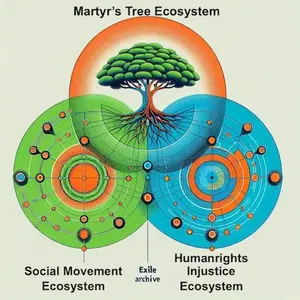
Wars that Stop World Civic Progress - U.S., Israel, Iran - Case Study: Dynamic Archive Ecosystem Delivers Together Three Social Systems...
The verb "Deliver" bridges analysis and imagination, moves ethics into expression, amplifies human dignity. generates collective resonance, activates the poetic engine of resistance, circulates meaning across borders, prepares the movement for embodied action. It is the moment verb where ethics become force, where articulation becomes transmission, where the movement gains poetic propulsion.
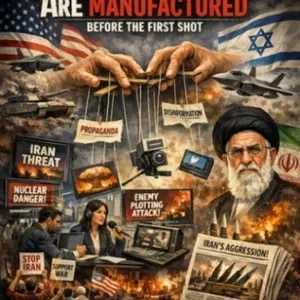
How War Narratives Form Before the First Shot: U.S., Israel, and Iran!
How War Narratives Form Before the First Shot: U.S., Israel & Iran - an analysis of how strategic storytelling targets public consent & prepares societies for conflict.
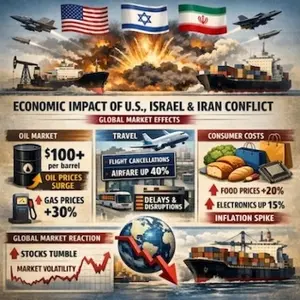
War Economy Dynamics Structures Before, During and After Conflict!
War Economy Dynamics Structures Before, During and After Conflict - an analytical examination of war‑economy mechanisms - U.S., Israel & Iran as a case study.
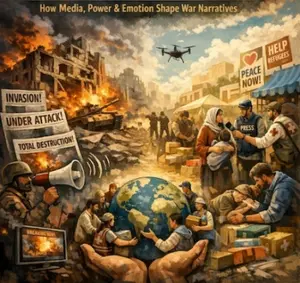
Architecture of War News Headlines: Media, Power, Emotional Narratives
Architecture of War News Headlines: How Media, Power & Emotion Shape War Narrative? Explore, Understand & Respond positively to emergencies within your society.
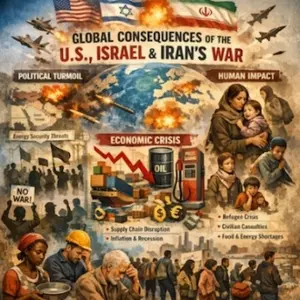
Global Consequences of the United States, Israel and Iran War!
Global Consequences of the United States, Israel and Iran War: Its political, economic & human impacts reveal how ordinary people worldwide are affected.
Exploring the Unknown: Life, Environment & Cybersecurity! [Latest on The Insight Lens]
Wars that Stop World Civic Progress - U.S., Israel, Iran - Case Study: Dynamic Archive of Truth in Exile Demonstrates the Fractures of the World Into Wars Since 1990...
The verb "Demonstrate" is the verb of embodied proof, collective visibility, and systemic showing. It first shows the three systems and how they are inspired by a living collective practice of the Martyr's Tree and how the same methods are organized in these systems. It makes invisible structure visible, provides evidence of successful public engagement, embodies ethical principles, points to possibilities of movements connection across borders, validates the Arc, creates a public archive of action, prepares the ground for structural transformation.
Archive of Truth in Exile: A Living Record of Power and Witness!
The Archive of Truth in Exile: Mapping silence, power, and survival. Testimony against erasure. Making an archive a living witness for you to claim justice.
Archive of Truth in Exile - Testimony Matters!
Archive of Truth in Exile - Testimony Matters: A foundational document on witness, erasure, and the moral architecture guiding the entire archive & raising societies.
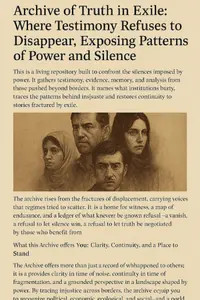

Wars that Stop World Civic Progress - U.S., Israel, Iran - Case Study: Dynamic Art of Journalism on Substack Describes Architecture Anti-Conflicts, Discrimination, Human Rights Violations & Injustice...
While the verb "Demonstrate" names the fractures, maps the historical terrain, documents exiled truth, the verb "Describe" connects events across time, reveals patterns of harm, fractures narrative integrity, grounds the Archive in evidence, prepares the ground for the next verb.
Substack Exile Archive Presents Fragments of Resistance!
Substack Exile Archive Presents Fragments of Resistance... poetic testimony, legal critique, and public witness from the margins of exile and defiance.
Substack Exile Archive - Ethics of Proximity - Shadow Beneath State!
Substack Exile Archive - Ethics of Proximity - Shadow Beneath State explores how some authorities manipulate and break the system of fairness and justice.
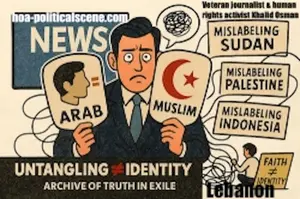
Arab - Muslim: Untangling Faith Identity!
Arab - Muslim: Untangling Faith Identity!


The World is Heating Amid Trade Wars – A Crisis Ignored! [Latest on The Insight Lens]
Wars that Stop World Civic Progress - U.S., Israel, Iran - Case Study: Dynamics Asiatic Designs Mutual Understanding of Geopolitical & Regional Realities...
The verb "Design" aligns poetic force with structural logic, constructs anti‑conflict architecture, crafts justice‑oriented methods, engineers anti‑discrimination structures, integrates journalism into ethics, prepares the ground for implementation, shapes human‑rights‑centered pathways, translates truth into structure...
Cosmopolitan Korean is an International Korean: 세계를 구하는 코스모폴리탄 코리안!
International Korean is a Cosmopolitan Korean: 세계적인 한국인들이 지구를 구합니다! 베테랑 활동가이자 저널리스트이자 시인인 칼리드 모하메드 오스만(Khalid Mohammed Ottoman)으로부터 지구를 구할 글로벌 역학에 대해 알아보세요.
Sekai no konton: 反駁できない事実は、世界的な混乱はスポーツの混乱ではなく、本当の道徳的な混乱であると言っています。 しかし
Sekai no konton: 反駁できない事実は、世界的な混乱はスポーツの混乱ではなく、本当の道徳的な混乱であると言っています。 しかし、これらの兆候は文化的および政治的であり、それは人々の不正行為の結果として混乱を引き起こします。
Shijie Hunluan -Shìjiè hǔnluàn: 世界政权制造世界混乱并伤害世界。在这里修复它
Shijie Hunluan - Shìjiè hǔnluàn: 世界政权通过不合理的政策制造世界混乱,这些政策导致全球变暖及其疾病,如冠状病毒、健康威胁、政治冲突和国际恐怖主义。 在这里学习修复世界
Woldeu Kaoseu - 월드 카오스: 세계체제는 세계에 혼란을 일으키고 세계를 해친다. 여기에서 수정하십시오!
Woldeu Kaoseu - 월드 카오스: 세계 정권은 코로나바이러스, 건강 위협, 정치적 갈등, 국제 테러와 같은 지구 온난화와 질병으로 이어지는 비합리적인 정책을 통해 세계를 혼란에 빠뜨립니다. 여기에서 세상을 고치는 법을 배우십시오!
Kekacauan Dunia: Rejim dunia merosakkan dunia. Betulkan di sini!
Kekacauan Dunia dicipta oleh kerajaan dengan dasar tidak rasional mereka yang telah menimbulkan banyak masalah. Inilah cara untuk membetulkan dunia.
Space Exploration: A Double-Edged Sword? [Latest on The Insight Lens]
Wars that Stop World Civic Progress - U.S., Israel, Iran - Case Study: Dynamics of Capitalists Develop Personal Interests Over National and Social Progress...
The verb "Develop" cultivates mutual understanding, expands regional awareness, integrates cultural and political knowledge, matures geopolitical literacy, nurtures long‑term civic capacity, prepares societies for ethical global engagement, strengthens cross‑border insight, stretches the stage for the next verb.
International Compliance is a Compliance to People, Not to Governments
International Compliance should be your government's compliance and commitment to you who voted for it to make your life better, not worse.
Space Exploration vs. Earth's Survival: The Real Dilemma! [Latest on The Insight Lens]
Wars that Stop World Civic Progress - U.S., Israel, Iran - Case Study: Dynamics of Communists Devise Proper National and Social Development of the World...
The verb "Devise" is the verb of civic planning, conceptual engineering, method creation, resistance innovation, strategic imagination & invention, system planning. It is the moment where the system begins to formulate new methods, not just understand or design them.
Multikulturelle Kultur zur Korrektur politischer Praktiken und Kultur!
Multikulturelle Kultur, um politische Praktiken zu korrigieren, eine neue Kultur politischer Systeme aufzubauen und das Leben auf der Erde zu retten.
Ein Kosmopolitischer Mensch ist erleuchtet & interessiert an der Welt!
Ein Kosmopolitischer Mensch interessiert sich normalerweise für die Welt und ihre probleme. Sie wird immer steigen, wenn die globale krise eskaliert, um den Globus zu retten.
Cosmopolitan Korean is an International Korean: 세계를 구하는 코스모폴리탄 코리안!
International Korean is a Cosmopolitan Korean: 세계적인 한국인들이 지구를 구합니다! 베테랑 활동가이자 저널리스트이자 시인인 칼리드 모하메드 오스만(Khalid Mohammed Ottoman)으로부터 지구를 구할 글로벌 역학에 대해 알아보세요.
Cosmopolitan Chinese: 全世界华人拯救地球
Cosmopolitan Chinese: 呼吁全球华人拯救地球! 了解资深活动家、记者和诗人哈立德·穆罕默德·奥斯曼 (Khalid Mohammed Osman) 拯救地球的全球动态。
Politikai Bajok Világ rezsimjei tönkreteszik a világot. Javítsd ki itt
Politikai Bajok: A világ klasszikus rendszerei tönkreteszik a világot. Rögzítse a világot tudományos folyamattal, hogy kiszolgálja az összes embert a bolygón.
The Age of Gold: How Trade Wars and Economic Policies Shape the Future? [Latest on The Insight Lens]
Wars that Stop World Civic Progress - U.S., Israel, Iran - Case Study Dynamics of Concepts Diffuse Knowledge to Dismantle the Illusion of Politics...
The verb "Diffuse" is the verb that widens what has been created. It is the moment where: architecture becomes shared, conflict pressure is reduced, knowledge moves across borders, resistance becomes distributed, strategies spread, tension is softened, understanding circulates.
Learn Dynamics Through Dynamic Perspectives to Solve Global Problems!
The learning curve of Dynamic Perspectives provides you with a rare opportunity to better understand today's global problems and share the solution with others.
HOA's Dynamic Concept for You to Think Well of Your World!
I reached HOA's Dynamic Concept through close observation to two serious changes that affect our world badly. It is for you, to make the world better.
Dynamic Critique to Global Political History Being Forged, or Plotted!
Dynamic Critique gets in the heart of global political history to criticize it as being forged and even plotted, which has resulted in massive human disasters!
Dynamic Remarks Indicate that Classic Systems are Over Practically!
Dynamic Remarks about why classic systems are over and what is the alternatives to classic political parties. That also means what are the new systems we need.
Dynamic Statement Reveals Serious Global Matters to Deal With!
Dynamic Statement reveals serious matters that affect our lives daily & suggests the solution of complicated matters through basic process to shift all systems.
Are We Repeating Colonial Mistakes in Space? [Latest on The Insight Lens]
Wars that Stop World Civic Progress - U.S., Israel, Iran - Case Study: Dynamics of Ecology Digest Leading Processes to Combat Global Warming...
The verb "Digest" is the verb of deep internal integration, and conceptual transformation. It is the moment where the system: absorbs what has been spread, processes what has been developed, integrates what has been designed, metabolizes what has been described. transforms complexity into clarity. The Experiences of the Martyr's Tree are the foundation of these dynamics.
HOA Climate Change Requires Governments Change!
For the HOA Climate Change, which requires governments change, the masses should do the climate math. How? Get my mind free of charge. You'll never regret.
Climate Change Should Lead to Classic Systems Change!
Climate Change is product of the ruling elites of classic political parties and their classic systems. That requires changing classic systems to masses systems.
What's HOA's Common Goal? How It Solves Your Global Disaster?
HOA's Common Goal helps you realize that the saying "that is the way it is" & the "obvious" are manipulated politically to accept the failure of your government.
Climate Justice Must Be Done by the Masses, Not by Calling Governments
Climate Justice should be done by world masses, not by calling governments to do so. Governments will not put themselves into trials for climate, or anything.
Environmental Scene's 2 Dangerous Characteristics with Health Effects!
Environmental Scene has two characteristics, the announced & hidden scenes. Both foretell of dangers that are intolerable to humans and intolerable to the Earth.

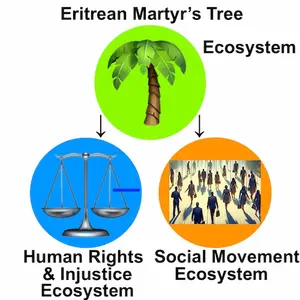
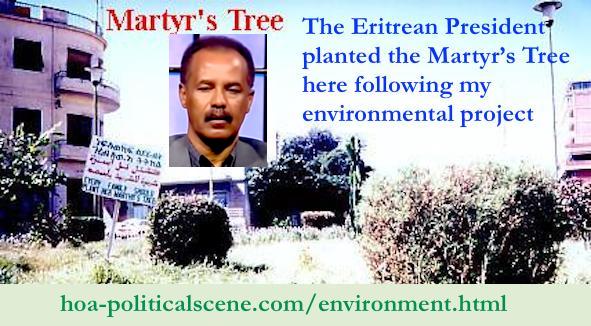 Wars that Stop World Civic Progress / U.S., Israel, Iran - Case Study: This is from where the Tree System is built - "I started the project of the Eritrean Martyr's Tree presenting the idea with its plans to the president of the National Union of Eritrean Women (NUEW) , Askalu Menkerios and the programme started. Here is a martyr's tree planted by the Eritrean President Asaias Afwerki in my national & environmental project in one the activities during the Eritrean Martyrs' Day. I planted its banner beside it during the activity. I oriented the Eritrean Teachers Association to follow my plans & illustrate the banners." Veteran activist and journalist Khalid Mohammed Osman. I haven't done this to gain any privileges.
Wars that Stop World Civic Progress - U.S., Israel, Iran - Case Study: Dynamics of Economies Direct Towards Managing Economical & Technological Wars...
The verb "Direct" is the verb of guidance, intentional movement, leadership, & orientation. This is the moment where the Martyr's Tree system takes everything it has learned, absorbed, designed, diffused and aims it. This is the first verb of strategic outward motion: 1. Direct = Guide Collective Energy: It channels the poetic, ethical, and civic force into a coherent path. 2. Direct = Orient Movements Toward Purpose: It gives resistance a trajectory, not just emotion or analysis. 3. Direct = Coordinate Social Systems: It aligns actors, institutions, and publics toward shared goals. 4. Direct = Lead Geopolitical Understanding Into Action: It transforms regional insight into strategic international orientation. 5. Direct = Shape the Flow of Public Consciousness: It guides how societies interpret events and respond to them. 6. Direct = Move From Internal Processing to External Motion: It is the pivot from "Digest" (internal) to "Direct" (external). 7. Direct = Establish Civic Navigation: It becomes the compass of the movement... the directional logic. 8. Direct = Prepare the Ground for Deployment: It sets up the next verb... the one that will move from guidance to execution, defense, or distribution, depending on my alphabetical arc.
HOA's Economical Forums: COVID-19 Proves the Failure of Governments!
HOA's Economical Forums: How Do COVID-19, conflicts & economy prove the failure of international governments? The global mass must take classic systems down.
The Capital Power Complicated Our Lives!
The Capital Power complicated our lives since the 1980s by collapsing the balance of global political power and collapsing the balance of the global ecosystem.
Free Market Policies are Capitalism Monopoly You Should Stand Up to!
Free Market Policies are capitalism monopoly. They have harmful effects on your life as an individual, in addition to dangerous issues you don't know about.
Acquisition is the Basis of the Policies of Capitalist Systems!
Acquisition is the Basis of the Policies of Capitalist Systems! As this capitalist acquisition of resources mean domination, the greatest common denominators of humans relate to fighting capitalist acquisition.
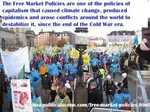
The Age of Gold: How Trade Wars and Economic Policies Shape the Future? [Latest on The Insight Lens]
Wars that Stop World Civic Progress - U.S., Israel, Iran - Case Study: Dynamics Hub Dismantle Historical Narratives that Worsen Our World Through Analyzing...
The verb "Dismantle" is a verb of destruction that's done for repair / reform: 1. Taking Apart Harmful structure: It breaks down the political, ideological, and institutional machinery that produces injustice. 2. Expose the Architecture of Mayhem. 3. Remove the Mechanisms of Instability: It identifies and deactivates the systems that generate civic deterioration. 4. Break the Illusion of Inevitability: It shows that injustice is constructed, not natural and therefore can be undone. 5. Deconstruct Propaganda Frames: It takes apart the narratives that justify war, discrimination, and geopolitical manipulation. 6. Disassemble Power Concentrations: It breaks apart the monopolies of violence, information, and legitimacy. 7. Clear Space for Reconstruction: It prepares the ground for the next verb... the one that will build what comes after the collapse. 8. Transform Ideas Into Tools: It turns analysis into action by using ideas as instruments of structural change.
Islamist Movement Decomposes. Factual Facts of the Islamist Movement!
Islamist Movement Decomposes. This is clear to every modern and civilized mind. However, one question remains. Why this so called Islamic Movement is still controlling in some areas?
Conventional Narratives Hub Coverage From History to the Present!
Conventional Narratives Hub covers all narratives historically from the past to the present, whether they are economical, environmental, political, or social.
The Revolution I Would Not Sell!
The Revolution I Would Not Sell is a continuation to the unwritten system I have that proved to be working right! This system achieved planting 5 million trees to spark development.
Ink Between Borders - Exile by Principles: Peace Unheard!
Ink Between Borders - Exile by Principles: Peace Unheard! An urgent reflection on exile, unrecognized peace & moral resistance in post-conflict narratives.
Has International Terrorism Disappeared?
Has International Terrorism Disappeared? A political project like this has many phases. It is likely when the first phase has been done, we see the 2nd, the 3rd, etc...
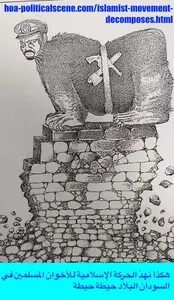
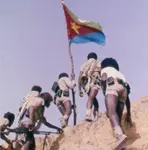
How to resist human rights violations, and injustice, Poetically? Video lessons: Episode 12
Wars that Stop World Civic Progress - U.S., Israel, Iran - Case Study Dynamic Ideas Disperse the Mayhem World in Which Chaotic Politics Creates Injustice & Instability...
The verb "Disperse" essentially is the verb that distributes, scatters and spreads. Its job here is transitional: 1. Break Apart the Illusion Field: It dissolves the fog of propaganda, deception, and political chaos. 2. Return Falsehoods to Their Creators It sends the lies, distortions, and manipulations back to the systems that produced them. 3. Clear the Civic Atmosphere: It removes the toxic residue of misinformation, fear, and engineered confusion. 4. Scatter the Tools of Manipulation: It breaks the mechanisms that sustain illusion - narrative control, secrecy, distortion. 5. Undo the Architecture of Mayhem: It dissolves the structures that “Dismantle” has already taken apart. 6. Restore Visibility: It clears the air so societies can see reality without distortion. 7. Release Captured Truth: It frees the truths that were trapped inside illusion systems. 8. Prepare the Ground for Repair: It creates the clean conceptual space needed for the next verbs - repair, reform, rebuild - to take root. "Antillusion" is not a spelling mistake. It's intentional linguistic invention that breaks the "familiar form of the verb" and it is more musical with its phonetics.
Dynamic Ideas to You as Important Asset in Global Development!
The important asset of dynamic ideas is you. You are asset in global development, even when you feel weak as individual. The dynamical ideas get you strength.
HOA's Dynamic Thoughts on Biggest World Problems & How to Solve Them!
HOA's Dynamic Thoughts are about the world biggest problems, their origin and causes and how to solve them. Be part of the solutions. Subscribe to newsletter.
Dynamic Commentaries to Work the Masses' Dynamics In and Out!
Dynamic Commentaries include dynamic ideas to work the theory of the masses in and out and build the masses era.
Dynamic Comments to Put the Theory into Practice!
Dynamic Comments about the dynamics of the masses, the masses systems and the masses era to help you put the theory into practice.
Dynamic Views to Explore the World's Problems and Solve Crises!
Dynamic Views to explore the global problems, discover their origins and provide solutions to the crises the human and planet face.
The Next Frontier! [Latest on The Insight Lens]
Wars that Stop World Civic Progress - U.S., Israel, Iran - Case Study: Dynamics of Illusion Displace Dynamics of (Antillusion) by dispersing Them Back to Their Creators...
The verb "Displace" is a counter‑propaganda verb: It breaks the spell. It semantically removes illusions from the civic sphere, returns them to their originators, and clears conceptual space for the emergence of Antillusion ➡️ This is not a spelling error, it is a new word I invented with its musical tone, breaking the language rules.
Superstitions Rule Sudan and Other States in the Horn of Africa!
Do you believe in superstitions? The Horn of Africa is superstitious. They spread from Nigeria across Sudan to India! They even nest in the political systems.
The World Superficiality on How People Comply with Dangerous Policies!
The World Superficiality is clear on how people comply with irrational policies that create economical downturn, global warming with pandemics & international terrorism.
How Does Political Illusion of Mass Media Deteriorate our World?
The Political Illusion of Mass Media is a political game played by the power of the capital in regimes that deteriorate the world. Do you know how to manage it?
INTELLECTUAL SHALLOWNESS is Subjective and Objective. How to Avoid it?
Intellectual SHALLOWNESS is mainly political shallowness. It's subjective & objective habit that indicates a superficiality. Here is how not to be superficial.
SUPERFICIALITY DEFINTION & Subjectivity & Objectivity on World Crises!
Intellectual Superficiality expresses a lack of depth when looking into news events, or facts about something. It becomes dangers when misunderstanding involves crises that threaten your life.
The Hidden Dangers of Space Exploration: Are We Going Too Far? [Latest on The Insight Lens]
Wars that Stop World Civic Progress / U.S., Israel, Iran - Case Study -
How Does Expressive Writing Relieve Stress? #WellnessTravels_3080
Wars that Stop World Civic Progress - U.S., Israel, Iran - Case Study: Dynamics of Martyr's Tree Dissolve the Issues that Cause Global Warming & Make People Sick...
The verb "Dissolve" is the verb of managing crises of conflicts, denial & misconducts of justice, discrimination, economical & geopolitical wars, harmful systems, intentional violations of rights, political inertia, pollution. It connects the methods of the Martyr's Tree through which crises are analysed and followed by steps to solve them within the Tree System with its triad and 5 pillars.
Sudanese Martyr's Day to Make Your Revolutionary Day!
The Sudanese Martyr's Day is a day created by journalist Khalid Mohammed Osman every month, every year to celebrate a Sudanese martyr.
Sudanese Martyr's Actions to Celebrate Martyr's Anniversaries & Revolt
The Sudanese Martyr’s Actions are planned to set you free by participating in martyrs’ anniversaries, and becoming organizer to defeat the totalitarian regime.
5,000,000 Martyr’s Trees Enhance Global Environment!
Khalid Osman's Eritrean Martyr’s Tree invention accomplished planting of 5,000.000 Eritrean martyrs trees & cleaned environment from chemical weapons & mines.
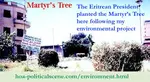
Sudanese Martyr’s Feast to Celebrate Sudanese Martyr's Feats & Revolt!
The Sudanese Martyr’s Feast is a day created by journalist Khalid Mohammed Osman every month, every year to celebrate Sudanese martyrs by planting Martyr’s Tree
Sudanese Martyr’s Tree Posters to Decorate Your Public Place!
The Sudanese Martyr’s Tree Posters for martyrs families & Sudanese opposition campaigners and rallies to use in their camp to conquer the tyrants of Sudan.
Sudanese Martyrs’ Plans to Plant Martyrs’ Trees and Setup Revolution!
The Sudanese Martyrs’ Plans are prepared by activist Khalid Mohammed Osman to carry on social activities to plant martyrs trees everywhere to setup revolution.

Sudanese Martyr's Tree to Plant & Motivate People to Revolt!
The Sudanese Martyr’s Tree, as the Eritrean Martyr's Tree is created by veteran activist and journalist Khalid Mohammed Osman to set the fire of the revolution.
Sudanese Martyr’s Tree Project to Make the Revolution Right!
Sudanese Martyr’s Tree Project planned by activist & journalist Khalid Mohammed Osman to know in details how to carry this project and make revolution right.

Climate Change: Myths vs. Reality! [Latest on The Insight Lens]
Wars that Stop World Civic Progress - U.S., Israel, Iran - Case Study: Dynamics of "Mind You" Distribute the Connectivity Between Your Mind & Heart to Rationalize Why Wars Break through History Until Now...
The verb "Distribute" is the verb that: 1. Carries & Shares the Preserved Wisdom Worldwide: Everything conserved under Martyr's Tree - history, ethics, accountability - must now be carried outward. 2. Spreads the HOA Dynamics Across Borders: HOA becomes a global curriculum: History → Origins → Accountability. Distribute ensures these dynamics reach every community. 3. Transforms Memory Into Global Learning: Martyrs do not die for one nation. Their lessons belong to the world. 4. Seeds Ethical Knowledge in New Soil: It plants the preserved truths in new regions, cultures, and civic movements. 5. Empowers People to Implement What They Learn: This is not passive sharing, it is active empowerment. 6. Prevents the Re‑Concentration of Harm: When knowledge is widely distributed, no single power can monopolize truth. 7. Expands the Reach of Reconstruction: Rebuilding is not local, it is global. 8. Prepares the Ground for Reform.
HOA's Global Alerts Get You Setup to Build a System to Prevent Dangers
HOA's Global Alerts aren't intended to sit you in state of being watchful for possible dangers, but they set you up to prevent such dangers by building a system.
I am Asking You to Be Clever & Think How to Save Yourself & the World!
I am Asking You to be clever & think of conflicts, ecological, economical, health & social crises created by bad planning. Then decide to change that by the LPE.
Doctor Feeling Good Will Put Your Healthy Body in Your Healthy Mind!
Doctor Feeling Good will put your healthy body in your mind by the LPE theory of the people to save you and the world from disasters created by mess in planning
HOA's Mastermind Says International Terrorism is a Capitalist Industry
HOA's Mastermind Says International Terrorism is a Capitalist Industry! He founded the network of solutions that resolve global terrorism, manage crises & foster world peace.
How to Be the Memory and Consciousness of All Generations?
How to Be the Memory and Consciousness of All Generations is not a personal matter, but rather a public matter that makes everyone just become that person and live in the future.

Space Exploration: Worth the Risk or Too Costly? [Latest on The Insight Lens]
Wars that Stop World Civic Progress - U.S., Israel, Iran - Case Study Dynamics of Narratives Hub Disrupt Narratives That Repeat Violent History...
The verb "Disrupt" is the verb that cuts the loop: It breaks the cycles of repetition, interrupts inherited scripts, prevents the normalization of violence, stops the recycling of trauma. It interferes with the machinery of storytelling.It is surgical, ethical, and civic‑poetic.
The Cold War Era: A Battle of Ideologies and Influence!
The Cold War Era: A Battle of Ideologies and Influence! In my opinion, the world was better and more stable than today's world. What do you think?
The Eastern Europe Socialist Bloc Fragmentation!
The Eastern Europe Socialist Bloc Fragmentation costs effectively until today. Are there any real causes of the deterioration of great counties in the world?
Conventional Narratives Are Always Wrong!
Why Am I Saying Conventional Narratives Are Always Wrong? Explore the connection of these narratives from colonial era until this era and know what to do!
Established Frameworks Invisible Forces Shaping Perception!
Established Frameworks Invisible Forces Shape Perception! The insights help you escape narratives that control your life & help others build a better world.
How Dominant Perspectives Shape Our World?
How Dominant Perspectives Shape Our World? Explore to know what to accept and what to refuse.
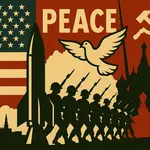
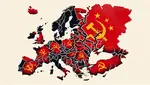
Climate Change vs Trade Wars: A Futuristic Warning! [Latest on The Insight Lens]
Wars that Stop World Civic Progress - U.S., Israel, Iran - Case Study Dynamics of Press Media 1 Dive into the Essence of Editorial Dynamics in Intelligentsia Newspaper...
The verb "Dive" is a verb of immersion, depth, and investigative descent. It is the verb of entering the depths of a system to understand its inner workings. It descends into the logic of decision‑making, enters the editorial bloodstream, examines the ethics behind every editorial choice, understands how narratives are shaped. Dive is the verb that crosses the surface and immerses in the Craft of Intelligentsia Newspaper.
Intelligentsia 56 Makes You More Brilliant to Make Your World Better!
Intelligentsia 56 is brilliant. So, you are. It develops the way you are thinking to be brilliant more and make your world better.
Intelligentsia 57 Captures Your Mind to Make You Intuitional!
Intelligentsia 57 captures your mind to develop your thinking capacities, so you can see what's wrong in the world and make it right.
Intelligentsia 58 Opens Your Mind into the Late Eighties Up to Now!
Intelligentsia 58 opens your mind into the period from the late eighties until now and rebuilds the capabilities of your mind, so you can see what's gone wrong with the world.
Intelligentsia 59 Shows You How to Ally Yourself with Socialism & Why?
Intelligentsia 59 Shows You How to Ally Yourself with Socialism. Is it because it's Humane & we're all humans, or what? A process to rebuild your mind capability to save yourself & the world & rebuild it.
Intelligentsia 60 Actions to Do When World Crises Knock on Your Door!
Intelligentsia 60 Actions to Do When World Crises Knock on Your Door! World crises reflect at home, unfolding how to act globally, think locally.
Robot Debate: Science & Innovation Breakthroughs! [Latest on The Insight Lens]
Wars that Stop World Civic Progress - U.S., Israel, Iran - Case Study Dynamics of Press Media 2 Diversify Citizenship Rhythm as Required in Citizen's Ethical Media...
The verb "Diversify" is a verb of expansion, multiplicity, and ethical plurality. It multiplies civic possibility in what I have created as Citizen's Ethical Media, calling journalist to join. Citizenship is not one rhythm: it is a polyphonic civic music and it requires multiple tempos, voices, and ethical registers. The media must reflect this plurality. Diversify is the verb that opens the civic soundscape. It is the verb that prevents civic rigidity.
How Does Political Illusion of Mass Media Deteriorate our World?
The Political Illusion of Mass Media is a political game played by the power of the capital in regimes that deteriorate the world. Do you know how to manage it?
Intelligentsia Multimedia Newspaper Revolutionizes Knowledge!
Intelligentsia Multimedia Newspaper revolutionizes knowledge. It develops your mind prudently to know the real reasons of world disasters & teaches you how to tackle them.
Principles of Press Media that Make You a Professional Journalist!
What are the Principles of Press Media that Make You a Professional Journalist? They are ethical and professional. You should know them, before even thinking of doing journalism.
Citizen Journalism Can Save the World From Political Catastrophes!
Citizen Journalism Can Save the World From Political Catastrophes! How can CJ save the world from political catastrophes?
Ethical Journalism Combats Dominant Narratives! Your Pen is Authority!
Ethical Journalism Combats Dominant Narratives! Press freedom is essential, as long as the press is the fourth power that focuses on the truth. You're powerful
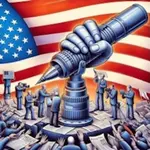
News Robot Anchors: The Future of News Reporting [Latest on The Insight Lens]
Wars that Stop World Civic Progress - U.S., Israel, Iran - Case Study: Dynamics of Violations in Journalistic Investigations that Document Human Rights Violations & Injustice in Denmark & Elsewhere Across Borders...
The verb "Document" is one of the most ethically charged verbs. Many practices vent including justice systems proved that documentation is unethical. So, this is why this verb sits here in this cluster. In fact, it is not just sitting, but trembling with the clarity it has that exposes the failure of an entire system. It is a verb that challenges and interrupts erasure. It establishes a cross‑border archive of harm, transforms suffering into evidence, protects the vulnerable through visibility.
Are Odense Municipality, CIVICA Housing Company & the Police Corrupt?
Are Odense Municipality, CIVICA Housing Company & the Police Corrupt? More than seventy years of foreigners presence in Denmark has corrupted Denmark.
What the Heck are Human Rights Organizations and the UNHCR Doing?
What the Heck are Human Rights Organizations and the UNHCR Doing is a serious question these organisations should think about before losing any credibility and transparency.
In Denmark They Violate Human Rights for Money
In Denmark They Violate Human Rights for Money! This is a real time report you can call real life story that expose privacy and thus human rights violations in Denmark.
Is the Law Paralyzed Resulting in Injustice in Denmark?
Is the Law Paralyzed Resulting in Injustice in Denmark? This question exposes how some people from a specific culture can make things worse, when they are employed in the police forces.
Human Rights Violations and Injustice Across Borders: Strategies for Resisting Injustice in Denmark - Video Lessons, Episode 14
Wars that Stop World Civic Progress - U.S., Israel, Iran - Case Study: Dynamics of War Narratives Dominate World Powers, Drag Nations into Bloodshed & Destroy World Peace...
The verb "Dominate" is not a soft verb, not neutral & not observational. It is a verb of control, coercion, and narrative occupation. It describes how power behaves when it wants to shape the world in its own image, not the image of those who elect it in the first place. It seizes narrative territory. War narratives don't just "exist." They take over: diplomatic framing, historical memory, media, political discourse, public imagination. Dominate is the verb that expresses this seizure of narrative space.
How War Narratives Form Before the First Shot: U.S., Israel, and Iran!
How War Narratives Form Before the First Shot: U.S., Israel & Iran - an analysis of how strategic storytelling targets public consent & prepares societies for conflict.
War Economy Dynamics Structures Before, During and After Conflict!
War Economy Dynamics Structures Before, During and After Conflict - an analytical examination of war‑economy mechanisms - U.S., Israel & Iran as a case study.
Architecture of War News Headlines: Media, Power, Emotional Narratives
Architecture of War News Headlines: How Media, Power & Emotion Shape War Narrative? Explore, Understand & Respond positively to emergencies within your society.
Global Consequences of the United States, Israel and Iran War!
Global Consequences of the United States, Israel and Iran War: Its political, economic & human impacts reveal how ordinary people worldwide are affected.
Wars that Stop World Civic Progress - U.S., Israel, Iran - Case Study: Dynamics of Mapping the HOA's Network - Drive Thousands of Learned Experiences in the Horn of Africa & the World Political Landscape...
The verb "Drive" is one of the most energetically charged verbs. It's a verb of force, motion, and civic acceleration. It pushes the system forward. experiences are not static, they must be activated, mobilized, put into circulation. Drive is the verb that turns knowledge into movement. It is the verb of civic propulsion.
The Horn Africas Network is for the Horn of Africa's Friends to Meet!
The Horn Africas Network aims to help friends who are burning from the political disasters to come together, share political ideas, read for knowledge & unite.
HOA Indexes Some Sacred Literary and Political Stories!
The HOA Index Network indexes literary & political stories that may change the way you look to politics in your area & develop your life from such new look and feel.
Horn Africas Political Tragedy As Seen On Apple iTunes To Fund Your...
Horn Africas Political Tragedy as seen on Apple iTunes to fund your tragedies! The book uncover the political tragedy in the Horn of Africa through decades of oppression. Every country is covered thoroughly, just to learn and know.

Biovians Speak: Trade Wars & Climate Crisis Through Nature’s Voice [The Insight Lens]
Are You Still Reading "Wars that Stop World Civic Progress: U.S., Israel, Iran - Case Study"?
I appreciate your commitment to understanding, questioning, and seeking deeper knowledge. This kind of seriousness ... this hunger for clarity and civic intelligence is what makes progressive change possible. When readers engage with complexity rather than turn away from it, the world becomes a little more just, a little more livable for everyone.
Your voice matters here. If this chapter stirred questions, disagreements, or recognitions in you, I invite you to share them below. Thoughtful dialogue strengthens our collective ability to resist the narratives that normalize war and weaken civic life. Your reflections help shape a more just, attentive public sphere.
Important call: If you reached this, I take it as a sign of interest. So, I am calling you to share the link of the page widely for others to learn more and for students to cite what they want from it in their academic thesis.
Have A Great Story About This Topic?
Do you have a great story about this? Share it!
Concerned about Conflicts Fact that Never Been Disclosed?
Get Horn Africa's Political Tragedy.
Recent Articles


-
HOA's Interval with Wisdom Nuggets of Inspiring Ethical Proverbs!
Sep 09, 26 04:59 AM
 HOA's Interval with Wisdom Nuggets of Inspiring Ethical Proverbs! You can see your ethics & the ethics of the surroundings clearly to develop & enhance your own.
 -
Intelligentsia 61 from Danish Injustice to American War Abortion of
Aug 29, 26 11:14 AM
 Intelligentsia 61 from Danish Injustice to American War Abortion of Iranian Revolution and Media Stupidity, world people fall into the trap of manipulation.
 -
When, Why and How the European Paradise Became Hell on Earth?
Aug 23, 26 10:20 AM
 When, Why and How the European Paradise Became Hell on Earth? This one in the dynamics will make your mind spin and reflect with clarity to address this matter.
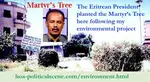
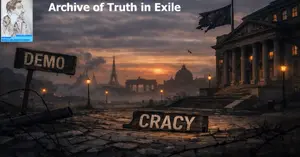
Some Support is Appreciated so Much!
When I get a new information, or a good read, my conscience tells me to be obliged to whom has added a drop of knowledge with some values in my life by doing some good deeds to him. Some links here get me a little power to support some people in need, indeed, by paying my subscription to international human organizations I am part of their generous good deeds. Like this at Awassa.
A Friend in Need is A Friend Indeed!
How many times have you fallen like a mountain, because you were great with your inspirations, guidance and professional teaching and later on found some people you made professional drawn in luxuries and never cared about you?
A hand up is better than a hand down. Share a link of a page you liked in great sites, but please not FACEBOOK. I am a man of principles.
A Man is Known by the Company he Keeps!
True, don't you think so? I can tell you stories and stories about that. Can you tell me one in details with the original cultures of the world it refers to? Take the cultural section by a huge and write that in the comments form.
Healthy Citizens are the Greatest Asset any Country can have!
It's true. But, he didn't know what ill governance can do for healthy citizens, or how ill monarchies can bring healthy citizens into miseries, or why great powers play by the fates of so many healthy citizens in the world.
Know any similar situations where healthy citizens are broken by the ruling elites in any country? Bring that into readers' attention through the comments form at Are You Intellectual?
Global Dynamics to Make Everyone Intellectual
Look for the top 100 Google most searched terms globally in 2021. You will not find any single thing that any person looks for and wants to know about, or use in daily life, such as food, health, education, cinema, tv, news, developing qualities and qualifications, playing, traveling, and even what causes Coronavirus and other pandemics, which are real threats to all people lives etc... You will find only search terms used for top social media, Youtube, search engines and Amazon. Political illiteracy is what matters to me to educate. See Global Dynamics & signup for the newsletter.
Did you get any of my books from Apple Books?
Click here to tell me & get some free books. Fill the form.
رواية "الموتُ شرقاً" تكشف لك سرّ الموت الشرقي التراجيدي المستمر للإنسان
احصل علي الرواية الآن واكتشف إنهيار القواسم المشتركة، واستلهم إبداعا يشبه الأسطورة في النص الروائي
"Follow", "like", "tweet", or "pin" the pictures to express your love! Thanks
TweetHorn Africa's Political Tragedy

Love in the Internet Time on Apple Books

Rising of the Phoenix Poetry on Apple Books

Free Poetry Picture Book
Free poetry picture book on Apple Books. You can use the images on public places for your customers to enjoy, while taking coffee.

The French & Spanish Versions
You can work the French versions and the Spanish versions of the two books above with me on, one on one bases. Contact Us.
HOAs Political Poetry Imaged
I'll be thankful, if you get one of my books.
My Books!