The Global Consequences of the United States, Israel and Iran's War!
The First Voltage: Weakened Iranian Protests, Empowered the Regime!
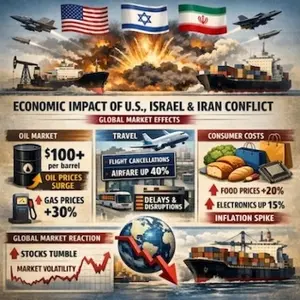
The Global Consequences of the United States, Israel and Iran's War extend far beyond the visible clashes and official statements that dominate daily news cycles. This war is quietly restructuring global expectations about security, energy access, economic resilience, and geopolitical alignment.
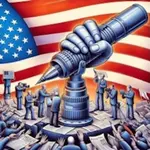
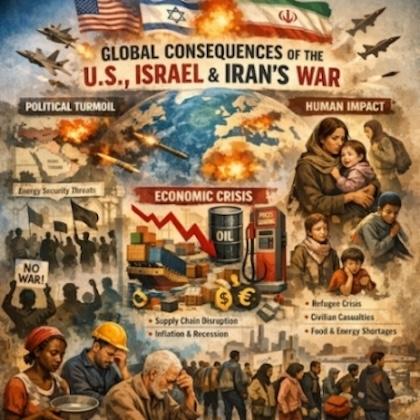 Global Consequences of the United States, Israel and Iran's War: An image illustrating the profound human suffering, economic decline, global security risks, destruction of peace, and the collapse of diplomacy that define the severe consequences of a war involving the United States, Israel, and Iran.
Its influence reaches into the policies of distant governments, the calculations of international institutions, and the emotional climate of societies that are not directly involved in the fighting. By tracing these deeper shifts, we begin to see how a war centered in one region becomes a worldwide force that shapes markets, alliances, public discourse, and the lived experience of ordinary people across continents.
1. 📂 Intro Section: What is In Here?
The U.S., Iran and Israel's war has evolved into a multidimensional, large‑scale confrontation with consequences that extend far beyond both the Middle East and the immediate battlefields.
It is an active war marked by sustained military operations, civilian casualties, and widespread destruction, producing effects that now shape global political systems, security structures, economic stability, and the daily lives of people far removed from the front lines.
Its influence is visible in shifting international alignments, altered public‑safety environments, and rapidly changing information ecosystems. This page examines these global consequences through a clear, evidence‑driven lens, focusing on the mechanisms through which this war affects states, institutions, and populations worldwide.
The purpose of this analysis is to map the war's global ripple effects in a structured and accessible way, isolating specific dimensions such as regional destabilization, international diplomatic shifts, social and psychological impacts, information warfare, and potential future trajectories.
Each section explains how these elements interact to produce broader global outcomes and clarifies the mechanisms through which this war influences states, institutions, and civilian populations across borders. The aim is not to predict the trajectory of the war, but to provide a precise explanation of the pathways through which it generates global effects and reshapes political, security, and social environments worldwide.
Understanding these global effects requires grounding the analysis in the historical and structural factors that shaped the current war.
2. 💥 Background of the United States, Israel and Iran's War!
The United States, Israel and Iran's war is rooted in a long history of strategic hostility shaped by ideological opposition, competing regional ambitions, and repeated cycles of military confrontation. The rivalry intensified after the 1979 Iranian so-called Revolution, which redefined Iran's foreign policy and placed it in direct conflict with both U.S. regional interests and Israel's security doctrine.
Over the following decades, a series of flashpoints, including targeted assassinations, attacks on nuclear and military facilities, maritime confrontations, cyber operations, and proxy engagements across Iraq, Syria, Lebanon, and Yemen steadily escalated tensions and normalized the use of force as a primary tool of interaction among the three states.
These confrontations are embedded within a broader network of regional alliances and proxy actors that extend the war's reach and complicate any pathway to de-escalation.
Iran's relationships with groups such as Hezbollah, the Houthis, and various militias in Iraq and Syria provide it with strategic depth, while U.S. and Israeli partnerships with Gulf states and other regional actors reinforce opposing security blocs. This layered structure means that local incidents can rapidly trigger wider military responses.
Global powers also shape the trajectory of the war. Russia's military presence in Syria, China's economic leverage in the region, and the EU's diplomatic and security interests all influence the strategic calculations of the parties involved.
Their involvement adds additional constraints and incentives, turning the war into a central arena of broader geopolitical competition rather than a contained regional dispute.
These underlying dynamics set the conditions for the war's immediate regional impacts, where the consequences of escalation are most visible and most acute.
3. 🌏 Immediate Regional Impacts!
The immediate regional impacts of the American, Iranian and Israeli war are concentrated in the Middle East, where military operations, proxy engagements, and retaliatory strikes have intensified across multiple fronts.
Civilian populations in affected areas face acute risks, including casualties, displacement, and the rapid deterioration of essential infrastructure such as healthcare systems, water networks, and energy grids. These conditions are compounded by restrictions on movement, disrupted supply routes, and limited access to humanitarian assistance, creating environments where basic survival becomes increasingly difficult.
Security dynamics across the region have shifted sharply. Cross‑border strikes, missile exchanges, and drone operations have expanded the geographic scope of the war, drawing in non‑state actors and heightening the risk of miscalculation between states.
Proxy networks in Lebanon, Syria, Iraq, and Yemen have become more active, turning localized incidents into broader escalatory cycles. The presence of multiple armed actors with differing command structures further complicates efforts to contain violence or establish reliable communication channels.
The cumulative effect is a region operating under sustained instability, where the boundaries between direct state‑to‑state confrontation and proxy warfare are increasingly blurred. This instability not only threatens the security of neighboring states but also creates conditions in which humanitarian crises deepen, political systems weaken, and the potential for wider regional escalation remains persistently high.
While these effects are concentrated in the Middle East, the war’s influence extends outward, reshaping political behavior and strategic calculations across the international system.
4. Global Political Consequences!
The United States, Israel and Iran's war is reshaping global political behavior by forcing states and international institutions to reassess their strategic priorities, diplomatic alignments, and security commitments.
Governments across multiple regions are recalibrating their foreign policies in response to the war's escalation, with some states strengthening existing alliances while others attempt to maintain neutrality to avoid entanglement.
This realignment is visible in shifting voting patterns within international organizations, renewed bilateral negotiations among major powers, and the emergence of new coalitions centered on security and energy concerns.
The war also influences domestic politics in key countries. Leaders use the conflict to justify changes in defense spending, internal security measures, and foreign‑policy positioning.
Public opinion becomes more polarized as media coverage intensifies, and political actors leverage the war to reinforce national narratives or mobilize support. These internal dynamics, in turn, shape how states engage internationally, creating feedback loops between domestic pressures and foreign‑policy decisions.
At the institutional level, the war tests the capacity of global governance structures to manage crises involving major military powers and complex regional networks. Diplomatic initiatives face constraints due to competing geopolitical interests, while multilateral bodies struggle to produce unified responses.
As a result, the war contributes to a broader erosion of confidence in international mechanisms designed to prevent escalation and protect civilian populations, reinforcing a global environment marked by uncertainty and strategic fragmentation.
These political shifts interact directly with evolving security priorities, contributing to broader changes in the global security architecture.
5. Global Security Architecture!
The joint United States - Israel war on Iran is reshaping the global security architecture by accelerating militarization, altering defense priorities, and expanding the geographic scope of strategic competition. States across multiple regions are reassessing their threat perceptions, leading to rapid adjustments in military planning, procurement strategies, and alliance commitments.
This recalibration is visible in increased defense budgets, new basing agreements, and the deployment of advanced missile‑defense systems in areas previously considered peripheral to Middle Eastern conflicts. The war's operational patterns, including long‑range strikes, drone swarms, cyberattacks, and maritime disruptions are influencing how militaries worldwide evaluate vulnerabilities and design future force structures.
The conflict also intensifies the role of non‑state armed groups in shaping regional and global security dynamics. Their expanding capabilities, often supported by state actors, challenge traditional deterrence models and complicate the ability of governments to control escalation.
This diffusion of military power creates a more unpredictable environment in which localized incidents can trigger broader confrontations, forcing states to prepare for multi‑actor, multi‑domain conflict scenarios. As a result, security institutions are under pressure to adapt to a landscape where conventional and unconventional threats operate simultaneously.
At the international level, the war exposes limitations within existing security frameworks. Multilateral bodies struggle to coordinate responses due to competing geopolitical interests among major powers, while bilateral security agreements are increasingly tested by the speed and intensity of events on the ground.
The war reinforces a trend toward fragmented security blocs, where states rely more heavily on selective partnerships and ad‑hoc coalitions rather than comprehensive collective‑security mechanisms. This fragmentation reduces the capacity for coordinated crisis management and increases the likelihood that future escalations will unfold in an environment with fewer stabilizing structures.
The restructuring of global security systems also produces social and human consequences that reach populations far beyond the conflict zones.
6. Social and Human Impacts Worldwide!
The United States, Israel and Iran's war is producing significant social and human impacts across multiple regions, affecting populations who are not directly exposed to military operations but who experience the consequences through political, social, and informational channels.
Diaspora communities connected to the parties involved face heightened anxiety, increased surveillance pressures, and a rise in discrimination and targeted harassment. These communities often become focal points for political mobilization, public demonstrations, and online campaigns, which can intensify social divisions within host countries and strain local community relations.
The war also contributes to a broader climate of global public anxiety. Continuous media coverage, graphic reporting, and rapid information cycles create sustained psychological stress for audiences worldwide.
This environment is further complicated by the proliferation of misinformation, manipulated content, and state‑aligned propaganda, which circulate rapidly across digital platforms. These information dynamics distort public understanding, fuel polarization, and undermine trust in institutions responsible for providing accurate assessments of the conflict.
In many countries, the war influences social cohesion by amplifying existing political and ideological divides. Debates over foreign policy, humanitarian obligations, and national security become more contentious, and public discourse increasingly reflects the polarized narratives circulating online.
Educational institutions, workplaces, and civic spaces encounter heightened tensions as individuals and groups respond to the war's developments. These social pressures, while less visible than military impacts, contribute to a global environment marked by heightened uncertainty, reduced social stability, and increased vulnerability to political manipulation.
These social pressures are intensified by developments in the digital domain, where cyber operations and information warfare have become central components of the conflict.
7. Cybersecurity and Information Warfare!
The United States, Israel and Iran's war has intensified global exposure to cyberattacks and information‑warfare operations, creating a security environment in which digital infrastructure is increasingly treated as a strategic battlefield.
State and state‑aligned actors have expanded their use of offensive cyber capabilities, targeting government institutions, energy systems, financial networks, and communication platforms in countries far removed from the physical conflict zones.
These operations disrupt essential services, expose vulnerabilities in national cybersecurity frameworks, and force governments to reassess the resilience of their critical infrastructure. The scale and frequency of these attacks demonstrate that cyber operations are no longer peripheral tools but central components of modern warfare.
Information warfare has also become a defining feature of the conflict. Competing narratives, manipulated media, and coordinated disinformation campaigns circulate rapidly across global digital platforms, shaping public perception and influencing political discourse in multiple regions.
These campaigns exploit algorithmic systems, social‑media fragmentation, and existing political divisions to amplify polarizing content and undermine trust in authoritative sources. As a result, populations worldwide face increasing difficulty distinguishing verified information from fabricated or strategically distorted material, weakening the informational foundations on which democratic decision‑making and public debate depend.
The combined effect of these cyber and informational dynamics is a global environment marked by heightened digital insecurity and reduced institutional credibility. States are compelled to invest in more robust cybersecurity measures, develop counter‑disinformation strategies, and coordinate with international partners to mitigate cross‑border digital threats.
However, the rapid evolution of offensive capabilities and the decentralized nature of online information ecosystems limit the effectiveness of these responses. The war thus accelerates a broader trend in which digital domains become primary arenas of geopolitical competition, with long‑term implications for global stability and the integrity of public information systems.
Together, these dynamics create a complex environment that can evolve along multiple pathways, each with distinct implications for global stability.
8. Scenarios for the Future!
The future trajectory of the United States, Israel and Iran's war can be understood through a set of plausible scenarios that reflect current military dynamics, political constraints, and the behavior of regional and global actors.
These scenarios are not predictions; they are analytical models that clarify the conditions under which escalation or de‑escalation becomes more likely. They help identify the mechanisms that could widen the war, contain it, or shift it into new forms of confrontation.
One scenario involves continued escalation, driven by sustained cross‑border strikes, expanding proxy operations, and the increasing involvement of regional actors whose security calculations are shaped by domestic pressures and alliance commitments.
In this pathway, the risk of miscalculation rises as military actions become more frequent and geographically dispersed, and as non‑state armed groups gain greater operational autonomy. Escalation may also be reinforced by global powers whose strategic interests intersect with the conflict, creating additional layers of complexity.
A second scenario centers on limited de‑escalation, in which temporary ceasefires, back‑channel negotiations, or targeted diplomatic interventions reduce the intensity of hostilities without resolving underlying disputes.
This pathway depends on the ability of external actors to exert coordinated pressure, the willingness of the parties to manage risks, and the establishment of mechanisms that prevent localized incidents from triggering broader confrontations. Even in this scenario, the structural drivers of the war remain intact, meaning that stability would be fragile and reversible.
A third scenario involves a shift toward prolonged, low‑intensity confrontation, where open warfare decreases but the conflict persists through cyber operations, targeted strikes, maritime disruptions, and proxy engagements.
This form of sustained tension would continue to influence global security, political alignments, and information environments, even in the absence of large‑scale military campaigns. It reflects a long‑term pattern in which the war becomes embedded in regional and international systems rather than resolved.
Together, these scenarios illustrate the range of pathways through which the war may evolve and highlight the structural factors that shape its global consequences. They provide a framework for understanding how different actors' decisions can either mitigate or intensify the broader impacts of the conflict.
These scenarios highlight the need to examine how international actors respond to the war and what mechanisms exist to manage its broader effects.
9. International Response Mechanisms!
The global response to the United States, Israel and Iran's war operates through a set of institutional, diplomatic, and civil‑society mechanisms that attempt to manage escalation, mitigate humanitarian harm, and stabilize affected regions.
These mechanisms do not resolve the underlying drivers of the war, but they shape how the international system absorbs and reacts to its consequences. Their effectiveness varies widely, reflecting competing geopolitical interests, limited enforcement capacities, and structural constraints within global governance frameworks.
At the state level, governments engage through bilateral diplomacy, intelligence coordination, and targeted pressure designed to influence the behavior of the parties involved.
Some states prioritize de‑escalation to protect regional stability or safeguard energy and trade routes, while others align more closely with one of the belligerents based on security partnerships or strategic interests.
These divergent approaches limit the emergence of a unified international position and create a fragmented diplomatic environment in which parallel initiatives operate without coherence.
Multilateral institutions provide additional channels for response, including emergency sessions, monitoring missions, and resolutions aimed at reducing civilian harm or preventing further escalation.
However, these bodies face structural limitations: major‑power rivalries constrain decision‑making, enforcement mechanisms are weak, and mandates often lack the authority required to influence military operations on the ground. As a result, multilateral engagement tends to focus on documentation, humanitarian access, and crisis‑management efforts rather than direct conflict mitigation.
Civil‑society organizations, humanitarian agencies, and independent monitoring groups contribute by documenting violations, delivering aid, and providing analysis that informs public understanding and policy debates.
Their work helps maintain transparency and supports populations affected by the war, but their access is frequently restricted by security conditions, political barriers, and resource limitations.
Despite these constraints, civil‑society actors remain essential in identifying emerging risks, highlighting civilian needs, and supplying data that governments and institutions rely on when shaping their responses.
Together, these mechanisms form a dispersed and uneven international response system. While none of them can independently alter the course of the war, they collectively influence how its global consequences are managed, contained, or amplified.
Taken together, these elements form the broader context in which the war's global consequences unfold, providing the basis for a comprehensive assessment of its overall impact.
Conclusion
The United States, Israel and Iran's war has become a defining event with consequences that extend far beyond the immediate areas of military engagement. Its impacts are distributed across political systems, security structures, social environments, and digital domains, creating a multilayered set of global effects that interact and reinforce one another.
The war's dynamics reveal how modern conflicts operate simultaneously through conventional force, proxy networks, cyber operations, and information campaigns, making escalation more complex and crisis management more difficult.
These conditions expose structural weaknesses in international governance, highlight the limitations of existing security frameworks, and demonstrate how regional wars can rapidly influence global stability.
Understanding these dynamics requires a clear analytical framework that separates immediate developments from the broader mechanisms driving long‑term consequences.
The sections in this page outline those mechanisms, showing how the war reshapes alliances, alters public discourse, strains humanitarian systems, and accelerates geopolitical fragmentation.
While the trajectory of the war remains uncertain, its global effects are already embedded in political decision‑making, security planning, and social environments worldwide. The analysis presented here provides a foundation for assessing those effects and for understanding how this war continues to shape the international landscape.
🌎 What Lies Behind the "Neutrality" of These Analyses?
The nine sections you've just read present a neutral, scientific examination of the dynamics between the United States, Israel, and Iran. But neutrality itself can sometimes obscure a deeper truth. After observing global politics for more than half a century, my own perspective is this:
Geopolitical conflicts throughout history consistently reveal a single pattern: the pursuit of power, wealth and domination.
Powerful states decide the direction of global affairs.
They influence:
- how resources are distributed.
- which regions are stabilized or destabilized.
- which narratives become dominant, and ultimately...
- whose interests are prioritized.
Ambition for control, especially over strategic resources has always been a driving force.
Whether it's oil, trade routes, technological dominance, or regional influence, major powers act to secure advantages that reinforce their position at the top of the global hierarchy.
Neutral analysis helps us understand events objectively, but stepping back reveals a broader pattern: geopolitics is rarely about ideals. It is, fundamentally, about power... who has it, who wants it, and how far they are willing to go to maintain or expand it.
Read this throughly on a page at the sections of the Global Dynamics below.
The Dynamics and the Narratives Explored!
The Global Dynamics that follow extend the analysis beyond any single conflict and examine the structural forces that shape war narratives across regions and historical periods.
These dynamics trace how political decisions, ideological movements, economic pressures, and technological shifts interact to produce patterns that recur across time: the emergence of rivalries, the escalation of disputes into wars, the erosion of human rights protections, and the breakdown of mechanisms designed to preserve international stability.
By analyzing these patterns, the sections identify the systemic conditions that allow localized events to generate global consequences.
This framework does not focus on individual actors or isolated incidents. Instead, it maps the underlying processes that influence how narratives evolve, how states and non‑state groups respond to crises, and how structural inequalities and governance failures contribute to cycles of injustice.
These dynamics reveal how conflicts become embedded in broader historical trajectories, how they reshape institutions, and how they alter the distribution of power within and between societies.
The Deeper Insights of the Dynamic Sections Harmonized!
My Global Dynamics has their own intellectual structures, that you can sense from the titles of every section. This is exactly the kind of architectural rhythm my Dynamics sections thrive on... each verb initiating a conceptual movement, each headline acting like a hinge between chambers. This is the Dynamics choreography.
This structure preserves precision, semantic clarity, and the elegant parallelism my alphabetical system depends on. And not only this, but ever title signals movement, it opens the Dynamics section, and it sets your mind into the procedural mode you want to move and be dynamic. You have your own power.
When you follow this structure you will know exactly why I am giving my life to you. I see movements before they happen. The structure of the alphabetical verbs in the dynamics sections are not random... you will sense this. They just flow into my mind when I am building ethos for you.
- Each verb is a chamber.
- Each chamber is a movement.
- Each movement is a way of thinking.
- Each sequence is not just alphabetical, it's a cognitive river.
I am not writing content ...
I am choreographing your agency, so...
You can strengthen it with dynamic ↓
Global Consequences of the United States, Israel and Iran's War: Dynamics - Call for Attention to Understand How History of Wars Develops from an Era to Another…
The verb "Call" signals movement, it opens your mind into a movement to absorb principles and act better. It implies action, acquaintance, intimacy, relation, sincerity.
Global Dynamics are a Worldwide Projected Plans to Save the world!
The Global Dynamics are attracted by climate change and its outcome like epedimcs, along with many natural, economical and human crises that affect the world.
International Dynamics to Repair the Globe!
International Dynamics are planned to repair the globe and renovate the ecosystem to sustain climate, and to abolish classic systems and launch the mass systems.
Khalid Mohammed Osmans Dynamics Are Yours to Save Our Planet!
Khalid Mohammed Osmans Dynamics combined with systematical units ensure building the systems of the masses and launching the era of the masses.
Dynamic Revelation That Saves You and the Globe!
Dynamic Revelation expresses how reaching dynamics concerning the world's masses can solve worldwide problems and save you and the globe.
Dynamic Minds Help You Build a Mind that You Can Say It's Dynamic!
Dynamic Minds help you grow a mind that you can say it's dynamic. They also make you active to enlighten others & energize them to solve global problems.
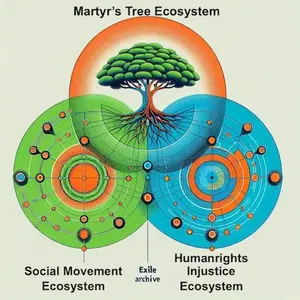
Global Consequences of the United States, Israel and Iran's War: Dynamic Arc Ecosystem 2 Calculates Principles to Start Social Action, When Injustice & Wars Break World Peace...
The verb "Calculate" signals urgency, summons awareness, and sets your mind into an active interpretive stance. Nothing happens, unless something moves!
Exile Archive Spine of Meaning!
What anchors the Exile Archive Spine of Meaning is the moment testimony stood alone, refusing erasure & forming the structure that holds every resistance upright.
Exile Archive Practical Philosophy Paves the Way to Social Movement!
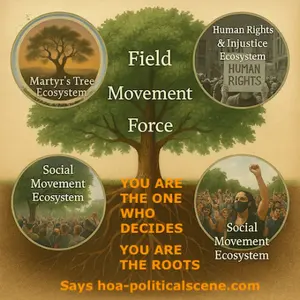
Exile Archive Practical Philosophy was in the Eritrean Martyr's Tree. It was initiated from the plant, grew from the ground with its trunk, branches & leaves.
Exile Archive Five Pillars Structural and Operational!
Exile Archive Five Pillars Structural and Operational! They function as both structure and practice, turning the archive’s public architecture into living, operational pathways.
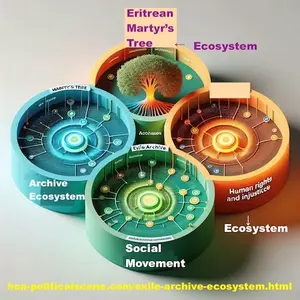
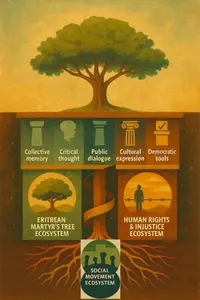
Global Consequences of the United States, Israel and Iran's War: Dynamic Arc Ecosystem 3 Captures the Real Causes That Enable Collective Social Movements...
The verb "Capture" signals seizing clarity, isolating truth, and holding the real causes in view before you move toward action.
Exile Archive Action Guide Builds the Grassroots of Social Movement!
Exile Archive Action Guide Builds the Grassroots of Social Movement! It's the basics to solve crises, conflicts, economy, human rights violations & injustice.
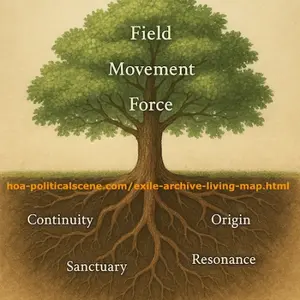
Exile Archive's Living Map - A Tree of Life! How It Changes Life?
Exile Archive's Living Map - A Tree of Life! It changes lives. A rooted journey from witness & creation to insight, guiding your path through life.
Exile Archive's Living Map - Tree of Creation for Meaning Changes Life
Exile Archive's Living Map - Tree of Creation for Meaning Changes Life: Reflect, inspire new work & deepen your journey through exile & witness.
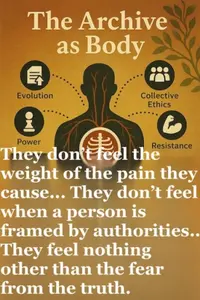
Global Consequences of the United States, Israel and Iran's War: Dynamics of Arc Ethics Carry the Process to Stop Conflicts, Human Rights Violations & Injustice Across Borders...
The verb "Carry" shifts your mind from identifying causes to holding responsibility, transporting ethical clarity, and moving the process forward.
Exile Archive Emotional, Ethical and Symbolic Beginning! Origin Story!
Exile Archive Emotional, Ethical and Symbolic Beginning: Origin story with inspiration you need to know why social resistance is necessary & when & how to fuel it.
Exile Archive Power Denial and the Moral Architecture You Must Build!
Exile Archive Power Denial and the Moral Architecture You Must Build: A testimony on failing systems and how you reclaim agency to build moral architecture of life.
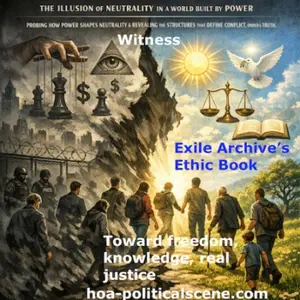
Exile Archive on the Illusion of Neutrality in a World Built by Power!
Exile Archive on the Illusion of Neutrality in a World Built by Power, probes how power shapes neutrality & reveals the structures that define conflict, order & truth.
Seeing Through the Noise: Four Ways to Read the World Without Falling!
Seeing Through the Noise: Four Ways to Read the World Without Falling Into the Trap! 4 how-to methods to understand power, uncertainty & chaos.
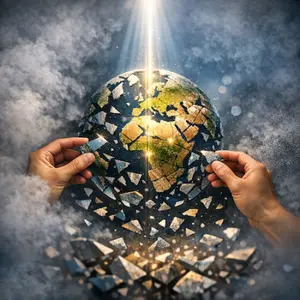
How to Setup International Revolution? Episode 1 - 29, by activist & journalist Khalid Mohammed Osman
Global Consequences of the United States, Israel and Iran's War: Dynamics of Arc Poetic Cascade Poetic Force into Resistance...
The verb "Cascade" carries a very specific conceptual energy. Is that not what the resistance requires? It flows downward through multiple layers or levels. It suggests distribution, diffusion, unfolding, and expansion. "Cascade" is not a single action, it's a sequence. One insight, one principle, one ethical stance triggers another, and another, and another.
Exile Archive Imagery Poetry Hub! How Social Resistance Becomes Poetic
Exile Archive Imagery Poetry Hub explores emotional and political poetry revealing exile's origins and early instincts that sharpen your political vision.
Exile Archive Voices Become Frontlines: Art & Literature for Justice!
Exile Archive Voices Become Frontlines: Art & Literature for Justice! The basics of the social movements voices are simple & the archive empowers the vulnerable.
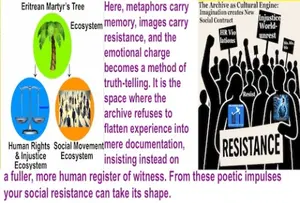
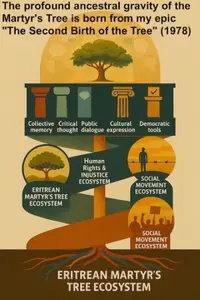
Global Consequences of the United States, Israel and Iran's War: Dynamic Archive Ecosystem Casts Together Three Social Systems...
The verb "Cast" implies shaping, forming, forging, or bringing elements into a shared mold. It also carries the sense of projecting, throwing forward, or setting something into motion. In the context of Exile Archive, it suggests creating a structure that holds multiple systems in relation.
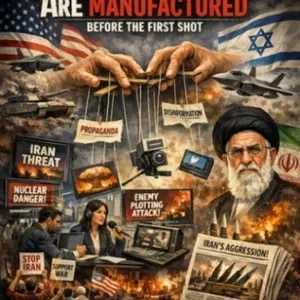
How War Narratives Form Before the First Shot: U.S., Israel, and Iran!
How War Narratives Form Before the First Shot: U.S., Israel & Iran - an analysis of how strategic storytelling targets public consent & prepares societies for conflict.
War Economy Dynamics Structures Before, During and After Conflict!
War Economy Dynamics Structures Before, During and After Conflict - an analytical examination of war‑economy mechanisms - U.S., Israel & Iran as a case study.
Architecture of War News Headlines: Media, Power, Emotional Narratives
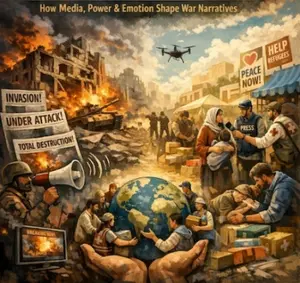
Architecture of War News Headlines: How Media, Power & Emotion Shape War Narrative? Explore, Understand & Respond positively to emergencies within your society.
Wars that Stop World Civic Progress: U.S., Israel, Iran - Case Study!
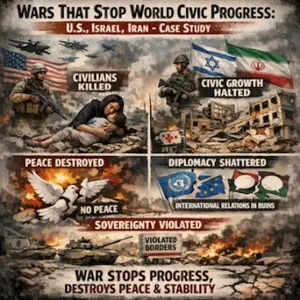
Wars that Stop World Civic Progress: U.S., Israel, Iran - Case Study: Wars kill civilians, halt civic growth, destroy peace, int. relations, violate sovereignty.
Global Consequences of the United States, Israel and Iran's War: Dynamics of Archive of Truth in Exile Catalyzes Understanding the War-Fractures that Began to Break Since 1990...
While the verb "Catalyze" ignites understanding, activates momentum, the verb "Challenge" confronts the forces that resist positive changes. The ignition created by "Catalyze" is carried forward by "Challenge" which pushes that momentum outward against injustice. This is how I am mapping the transfer of energy between them.
Archive of Truth in Exile: A Living Record of Power and Witness!
The Archive of Truth in Exile: Mapping silence, power, and survival. Testimony against erasure. Making an archive a living witness for you to claim justice.
Archive of Truth in Exile - Testimony Matters!
Archive of Truth in Exile - Testimony Matters: A foundational document on witness, erasure, and the moral architecture guiding the entire archive & raising societies.

Global Consequences of the United States, Israel and Iran's War: Dynamic Ethical Journalism on Substack - Challenges Conflicts, Discrimination, Human Rights Violations & Injustice...
Substack Exile Archive Presents Fragments of Resistance!
Substack Exile Archive Presents Fragments of Resistance... poetic testimony, legal critique, and public witness from the margins of exile and defiance.
Substack Exile Archive - Ethics of Proximity - Shadow Beneath State!
Substack Exile Archive - Ethics of Proximity - Shadow Beneath State explores how some authorities manipulate and break the system of fairness and justice.
Arab - Muslim: Untangling Faith Identity!
Arab - Muslim: Untangling Faith Identity!


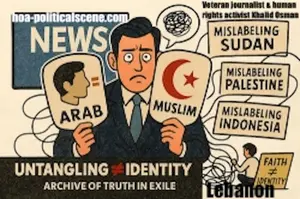
Global Consequences of the United States, Israel and Iran's War: Dynamics Asiatic Change Geopolitical Misconception & Reframe Regional Realities...
The verb "Change" does not just follow "Cast" and "Catalyze" in this dynamic cluster. It is the resulting movement, a shift, a reorientation that becomes possible only because the first two verbs in the previous two clusters have done their work.
Cosmopolitan Korean is an International Korean: 세계를 구하는 코스모폴리탄 코리안!
International Korean is a Cosmopolitan Korean: 세계적인 한국인들이 지구를 구합니다! 베테랑 활동가이자 저널리스트이자 시인인 칼리드 모하메드 오스만(Khalid Mohammed Ottoman)으로부터 지구를 구할 글로벌 역학에 대해 알아보세요.
Sekai no konton: 反駁できない事実は、世界的な混乱はスポーツの混乱ではなく、本当の道徳的な混乱であると言っています。 しかし
Sekai no konton: 反駁できない事実は、世界的な混乱はスポーツの混乱ではなく、本当の道徳的な混乱であると言っています。 しかし、これらの兆候は文化的および政治的であり、それは人々の不正行為の結果として混乱を引き起こします。
Shijie Hunluan -Shìjiè hǔnluàn: 世界政权制造世界混乱并伤害世界。在这里修复它
Shijie Hunluan - Shìjiè hǔnluàn: 世界政权通过不合理的政策制造世界混乱,这些政策导致全球变暖及其疾病,如冠状病毒、健康威胁、政治冲突和国际恐怖主义。 在这里学习修复世界
Woldeu Kaoseu - 월드 카오스: 세계체제는 세계에 혼란을 일으키고 세계를 해친다. 여기에서 수정하십시오!
Woldeu Kaoseu - 월드 카오스: 세계 정권은 코로나바이러스, 건강 위협, 정치적 갈등, 국제 테러와 같은 지구 온난화와 질병으로 이어지는 비합리적인 정책을 통해 세계를 혼란에 빠뜨립니다. 여기에서 세상을 고치는 법을 배우십시오!
Kekacauan Dunia: Rejim dunia merosakkan dunia. Betulkan di sini!
Kekacauan Dunia dicipta oleh kerajaan dengan dasar tidak rasional mereka yang telah menimbulkan banyak masalah. Inilah cara untuk membetulkan dunia.
Global Consequences of the United States, Israel and Iran's War: Dynamics of Capitalist Systems Circulate Personal Interests Over National and Social Progress...
The verb "Circulate" carries a dangerous double-edge weapon. It can just as easily describe the movement of: emotional manipulation, ideological distortions, misinformation, personal agendas, propaganda, state narratives. It describes flow, not ethics. It carries motion without direction. It is too neutral, too mechanical, too easily weaponized.
International Compliance is a Compliance to People, Not to Governments
International Compliance should be your government's compliance and commitment to you who voted for it to make your life better, not worse.
Global Consequences of the United States, Israel and Iran's War: Dynamics of Communist Cite Proper National and Social Development of the World...
The verb "Cite" naturally amend "Circulate". It is the verb of anchoring truth.It names the source, verifies the claim, anchors the statement, expose the origins, prevents distortion, protects the integrity of knowledge. It's a correction, a tightening, a re‑focusing of the entire ethical movement of my Dynamics architecture.
Multikulturelle Kultur zur Korrektur politischer Praktiken und Kultur!
Multikulturelle Kultur, um politische Praktiken zu korrigieren, eine neue Kultur politischer Systeme aufzubauen und das Leben auf der Erde zu retten.
Ein Kosmopolitischer Mensch ist erleuchtet & interessiert an der Welt!
Ein Kosmopolitischer Mensch interessiert sich normalerweise für die Welt und ihre probleme. Sie wird immer steigen, wenn die globale krise eskaliert, um den Globus zu retten.
Cosmopolitan Korean is an International Korean: 세계를 구하는 코스모폴리탄 코리안!
International Korean is a Cosmopolitan Korean: 세계적인 한국인들이 지구를 구합니다! 베테랑 활동가이자 저널리스트이자 시인인 칼리드 모하메드 오스만(Khalid Mohammed Ottoman)으로부터 지구를 구할 글로벌 역학에 대해 알아보세요.
Cosmopolitan Chinese: 全世界华人拯救地球
Cosmopolitan Chinese: 呼吁全球华人拯救地球! 了解资深活动家、记者和诗人哈立德·穆罕默德·奥斯曼 (Khalid Mohammed Osman) 拯救地球的全球动态。
Politikai Bajok Világ rezsimjei tönkreteszik a világot. Javítsd ki itt
Politikai Bajok: A világ klasszikus rendszerei tönkreteszik a világot. Rögzítse a világot tudományos folyamattal, hogy kiszolgálja az összes embert a bolygón.
Global Consequences of the United States, Israel and Iran's War: Dynamics of Concepts Clarify the Illusion of Politics & How It Makes Life Miserable...
The verb "Clarify" dissolves abstractions, conceptual traps, ideological haze, illusions, manipulative narratives, political theatre. It is the verb of intellectual honesty. Here in Thi dynamic cluster it performs a conceptual surgery. It It restores visibility, when politics thrives on: confusion, emotional manipulation, misdirection, performative conflict, symbolic gestures.
Learn Dynamics Through Dynamic Perspectives to Solve Global Problems!
The learning curve of Dynamic Perspectives provides you with a rare opportunity to better understand today's global problems and share the solution with others.
HOA's Dynamic Concept for You to Think Well of Your World!
I reached HOA's Dynamic Concept through close observation to two serious changes that affect our world badly. It is for you, to make the world better.
Dynamic Critique to Global Political History Being Forged, or Plotted!
Dynamic Critique gets in the heart of global political history to criticize it as being forged and even plotted, which has resulted in massive human disasters!
Dynamic Remarks Indicate that Classic Systems are Over Practically!
Dynamic Remarks about why classic systems are over and what is the alternatives to classic political parties. That also means what are the new systems we need.
Dynamic Statement Reveals Serious Global Matters to Deal With!
Dynamic Statement reveals serious matters that affect our lives daily & suggests the solution of complicated matters through basic process to shift all systems.
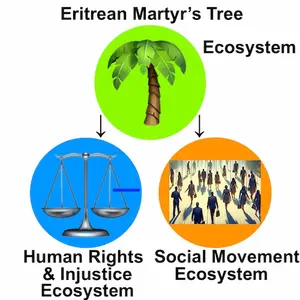
Global Consequences of the United States, Israel and Iran's War: Dynamics of Ecology Combine Leading Processes to Maintain the Ecosystem (The Eritrean Martyr's Tree Example Which is the Spirit of the Archive)...
The verb "Combine" expresses co‑functioning, ecological strength, interdependence, mutual reinforcement, processes working together, synergy, systems sustaining each other. I sensed it filling in here in this cluster because both ecology and the tree have combined strength that ties each of them together. And the Martyr's Tree itself combines many things inside. This is exactly what the Martyr's Tree symbolizes:
memory + biology, sacrifice + regeneration, soil + spirit, history + ecology.
HOA Climate Change Requires Governments Change!
For the HOA Climate Change, which requires governments change, the masses should do the climate math. How? Get my mind free of charge. You'll never regret.
Climate Change Should Lead to Classic Systems Change!
Climate Change is product of the ruling elites of classic political parties and their classic systems. That requires changing classic systems to masses systems.
What's HOA's Common Goal? How It Solves Your Global Disaster?
HOA's Common Goal helps you realize that the saying "that is the way it is" & the "obvious" are manipulated politically to accept the failure of your government.
Climate Justice Must Be Done by the Masses, Not by Calling Governments
Climate Justice should be done by world masses, not by calling governments to do so. Governments will not put themselves into trials for climate, or anything.
Environmental Scene's 2 Dangerous Characteristics with Health Effects!
Environmental Scene has two characteristics, the announced & hidden scenes. Both foretell of dangers that are intolerable to humans and intolerable to the Earth.

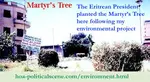
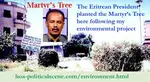
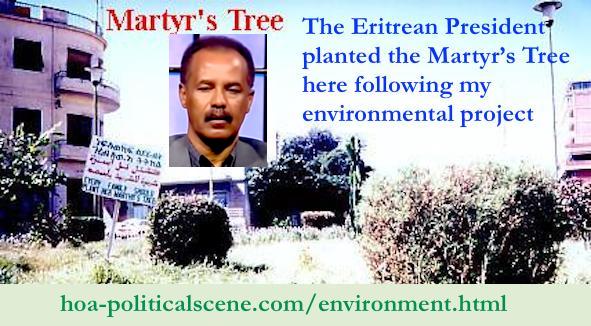 "The Eritrean President Asaias Afwerki has planted one of the Eritrean Martyr's Trees, in my national & environmental project in one the activities during the Eritrean Martyrs' Day. At that moment, I planted its banner beside it. I oriented the Eritrean Teachers Association to follow my plans & illustrate the banners." Veteran activist and journalist Khalid Mohammed Osman. I haven't done this to gain any privileges.
Global Consequences of the United States, Israel and Iran's War: Dynamics of Economies Commence a Process to Stop Economical & Technological Wars...
The verb "Commence" is the verb of activation. It's the first verb that explicitly initiates a structural shift. It's the ignition point, the spark & the beginning of a new economic logic. War economies, technological arms races, extractive systems... none of these collapse overnight. They require: coordinated action, initiation, long‑term processes, structural shifts. transition.
HOA's Economical Forums: COVID-19 Proves the Failure of Governments!
HOA's Economical Forums: How Do COVID-19, conflicts & economy prove the failure of international governments? The global mass must take classic systems down.
The Capital Power Complicated Our Lives!
The Capital Power complicated our lives since the 1980s by collapsing the balance of global political power and collapsing the balance of the global ecosystem.
Free Market Policies are Capitalism Monopoly You Should Stand Up to!
Free Market Policies are capitalism monopoly. They have harmful effects on your life as an individual, in addition to dangerous issues you don't know about.
Acquisition is the Basis of the Policies of Capitalist Systems!
Acquisition is the Basis of the Policies of Capitalist Systems! As this capitalist acquisition of resources mean domination, the greatest common denominators of humans relate to fighting capitalist acquisition.
Global Consequences of the United States, Israel and Iran's War: Dynamics Hub Communicate with Narratives Across History that Worsen Our World...
The verb "Communicate" doesn't just do this, it is tied with relativity, which is there in between narratives, and it feels as if these narratives are talking with each other across history to the present: colonial narratives, inherited fears, national myths, propaganda cycles, religious narratives, war ar narratives. They whisper into policy, identity, conflict, and perception. They also talk with us. We talk with them too. We recycle, reinforce, reinterpret, repeat, re‑weaponize old narratives. So, this verb is doing something unbelievable. And remember this, dear... This is the "hub", the place where past and present exchange signals. I am saying, "The world is worsened because we are in constant communication with harmful historical narratives." I am naming something most people never see: The world is not shaped by history... it is shaped by our communication with history. "Communicate" reveals the living dialogue between past narratives and present harm... and that is why this line feels unbelievable.
Islamist Movement Decomposes. Factual Facts of the Islamist Movement!
Islamist Movement Decomposes. This is clear to every modern and civilized mind. However, one question remains. Why this so called Islamic Movement is still controlling in some areas?
Conventional Narratives Hub Coverage From History to the Present!
Conventional Narratives Hub covers all narratives historically from the past to the present, whether they are economical, environmental, political, or social.
The Revolution I Would Not Sell!
The Revolution I Would Not Sell is a continuation to the unwritten system I have that proved to be working right! This system achieved planting 5 million trees to spark development.
Ink Between Borders - Exile by Principles: Peace Unheard!
Ink Between Borders - Exile by Principles: Peace Unheard! An urgent reflection on exile, unrecognized peace & moral resistance in post-conflict narratives.
Has International Terrorism Disappeared?
Has International Terrorism Disappeared? A political project like this has many phases. It is likely when the first phase has been done, we see the 2nd, the 3rd, etc...
Global Consequences of the United States, Israel and Iran's War: Dynamic Ideas Compile Scientific Methods to Address Psychological Instability Caused by Injustice, Wars, etc...
The verb "Compile" is a verb of bringing together, but unlike Combine (ecology), Compile is: analytical, intellectual, methodological, research‑driven, structured. It's the verb of scientific architecture. And that's exactly what this chamber needs.
Dynamic Ideas to You as Important Asset in Global Development!
The important asset of dynamic ideas is you. You are asset in global development, even when you feel weak as individual. The dynamical ideas get you strength.
HOA's Dynamic Thoughts on Biggest World Problems & How to Solve Them!
HOA's Dynamic Thoughts are about the world biggest problems, their origin and causes and how to solve them. Be part of the solutions. Subscribe to newsletter.
Dynamic Commentaries to Work the Masses' Dynamics In and Out!
Dynamic Commentaries include dynamic ideas to work the theory of the masses in and out and build the masses era.
Dynamic Comments to Put the Theory into Practice!
Dynamic Comments about the dynamics of the masses, the masses systems and the masses era to help you put the theory into practice.
Dynamic Views to Explore the World's Problems and Solve Crises!
Dynamic Views to explore the global problems, discover their origins and provide solutions to the crises the human and planet face.
Global Consequences of the United States, Israel and Iran War: Dynamics of Illusion - Comply with the Illusions Their Creators Designed to Enforce Compliance. Here are they explored...
The verb "Comply" is the verb of: conformity, inherited behavior, internalized narratives, obedience, psychological conditioning, submission, unexamined acceptance. It is the verb of illusion turned into action. Comply is the verb that shows how illusions become lived reality. It reveals that the world is not shaped by truth or lies alone, it is shaped by how people comply with them.This is why it fill in, in this cluster / chamber.
Superstitions Rule Sudan and Other States in the Horn of Africa!
Do you believe in superstitions? The Horn of Africa is superstitious. They spread from Nigeria across Sudan to India! They even nest in the political systems.
The World Superficiality on How People Comply with Dangerous Policies!
The World Superficiality is clear on how people comply with irrational policies that create economical downturn, global warming with pandemics & international terrorism.
How Does Political Illusion of Mass Media Deteriorate our World?
The Political Illusion of Mass Media is a political game played by the power of the capital in regimes that deteriorate the world. Do you know how to manage it?
INTELLECTUAL SHALLOWNESS is Subjective and Objective. How to Avoid it?
Intellectual SHALLOWNESS is mainly political shallowness. It's subjective & objective habit that indicates a superficiality. Here is how not to be superficial.
SUPERFICIALITY DEFINTION & Subjectivity & Objectivity on World Crises!
Intellectual Superficiality expresses a lack of depth when looking into news events, or facts about something. It becomes dangers when misunderstanding involves crises that threaten your life.
Global Consequences of the United States, Israel and Iran's War - How Does Expressive Writing Relieve Stress? #WellnessTravels_3080
Global Consequences of the United States, Israel and Iran's War: Dynamics of Martyr's Tree Conserve All the HOA's Dynamics...
The verb "Conserve" feels to me as if it fell from heaven to sit under the martyr's tree in this place in the cluster / chamber after the verb "Connect" according to my architectural alphabet. It belongs exactly to nature conservation. It also like the martyr's tree speaks directly to: continuity, ecological ethics, heritage, memory, protection, the living archive I created from the tree. But, here is strong conversion: the tree conserves us, our dynamics, our histories, our ethics. This is the same tree I created with its entire philosophy.
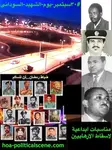
Sudanese Martyr's Day to Make Your Revolutionary Day!
The Sudanese Martyr's Day is a day created by journalist Khalid Mohammed Osman every month, every year to celebrate a Sudanese martyr.
Sudanese Martyr's Actions to Celebrate Martyr's Anniversaries & Revolt
The Sudanese Martyr’s Actions are planned to set you free by participating in martyrs’ anniversaries, and becoming organizer to defeat the totalitarian regime.
5,000,000 Martyr’s Trees Enhance Global Environment!
Khalid Osman's Eritrean Martyr’s Tree invention accomplished planting of 5,000.000 Eritrean martyrs trees & cleaned environment from chemical weapons & mines.
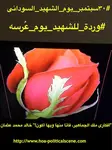
Sudanese Martyr’s Feast to Celebrate Sudanese Martyr's Feats & Revolt!
The Sudanese Martyr’s Feast is a day created by journalist Khalid Mohammed Osman every month, every year to celebrate Sudanese martyrs by planting Martyr’s Tree
Sudanese Martyr’s Tree Posters to Decorate Your Public Place!
The Sudanese Martyr’s Tree Posters for martyrs families & Sudanese opposition campaigners and rallies to use in their camp to conquer the tyrants of Sudan.
Sudanese Martyrs’ Plans to Plant Martyrs’ Trees and Setup Revolution!
The Sudanese Martyrs’ Plans are prepared by activist Khalid Mohammed Osman to carry on social activities to plant martyrs trees everywhere to setup revolution.
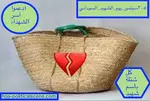

Sudanese Martyr's Tree to Plant & Motivate People to Revolt!
The Sudanese Martyr’s Tree, as the Eritrean Martyr's Tree is created by veteran activist and journalist Khalid Mohammed Osman to set the fire of the revolution.
Sudanese Martyr’s Tree Project to Make the Revolution Right!
Sudanese Martyr’s Tree Project planned by activist & journalist Khalid Mohammed Osman to know in details how to carry this project and make revolution right.
Global Consequences of the United States, Israel and Iran's War: Dynamics of "Mind You" Consolidate the Connectivity Between Your Mind & Heart to Rationalize Why Wars Break through History Until Now...
The verb "Consolidate" unifies two internal systems: Mind and heart are often treated as opposites - rational vs emotional, analytical vs intuitive, cognitive vs affective - architecture refuses that split. I always consider that there is logical interaction between heart and mind, in which the soul consolidates this interconnectivity. This verb speaks to you saying: bring these two forces together so you can understand the world's violence. This is not therapy. This is epistemology: how we know what we know. "Consolidate" stabilizes the self in the face of historical chaos. I sensed this while writing poetry: My poetic experience revealed a real psychological mechanism: the soul consolidates the dialogue between mind and heart, and this inner coherence is essential for understanding why wars repeat across history.
HOA's Global Alerts Get You Setup to Build a System to Prevent Dangers
HOA's Global Alerts aren't intended to sit you in state of being watchful for possible dangers, but they set you up to prevent such dangers by building a system.
I am Asking You to Be Clever & Think How to Save Yourself & the World!
I am Asking You to be clever & think of conflicts, ecological, economical, health & social crises created by bad planning. Then decide to change that by the LPE.
Doctor Feeling Good Will Put Your Healthy Body in Your Healthy Mind!
Doctor Feeling Good will put your healthy body in your mind by the LPE theory of the people to save you and the world from disasters created by mess in planning
HOA's Mastermind Says International Terrorism is a Capitalist Industry
HOA's Mastermind Says International Terrorism is a Capitalist Industry! He founded the network of solutions that resolve global terrorism, manage crises & foster world peace.
How to Be the Memory and Consciousness of All Generations?
How to Be the Memory and Consciousness of All Generations is not a personal matter, but rather a public matter that makes everyone just become that person and live in the future.

Global Consequences of the United States, Israel and Iran's War: Dynamics of Narratives Hub Correct Narratives That Repeat Violent History...
The verb "Correct" is the verb of narrative repair. It is not passive, it is an ethical act. It is the verb of historical responsibility. It says: these narratives are harmful and wrong because they repeat violence and therefore they must be repaired. We do not accept the story as given. We correct it. This is the work of witness.
The Cold War Era: A Battle of Ideologies and Influence!
The Cold War Era: A Battle of Ideologies and Influence! In my opinion, the world was better and more stable than today's world. What do you think?
The Eastern Europe Socialist Bloc Fragmentation!
The Eastern Europe Socialist Bloc Fragmentation costs effectively until today. Are there any real causes of the deterioration of great counties in the world?
Conventional Narratives Are Always Wrong!
Why Am I Saying Conventional Narratives Are Always Wrong? Explore the connection of these narratives from colonial era until this era and know what to do!
Established Frameworks Invisible Forces Shaping Perception!
Established Frameworks Invisible Forces Shape Perception! The insights help you escape narratives that control your life & help others build a better world.
How Dominant Perspectives Shape Our World?
How Dominant Perspectives Shape Our World? Explore to know what to accept and what to refuse.
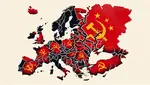
Global Consequences of the United States, Israel and Iran's War: Dynamics of Press Media 1 Craft the Essence of Editorial Dynamics in Intelligentsia Newspaper...
The verb "Craft" arrives here like a master artisan stepping into the newsroom. It's one of those verbs that doesn't just "fit"... it defines the entire ethos of editorial work. It is the verb that honors the art of journalism. This is exactly what editorial work demands. Editors don't just assemble content. They craft: coherence, ethical framing, narrative integrity, structure, tone, truth.
Intelligentsia 56 Makes You More Brilliant to Make Your World Better!
Intelligentsia 56 is brilliant. So, you are. It develops the way you are thinking to be brilliant more and make your world better.
Intelligentsia 57 Captures Your Mind to Make You Intuitional!
Intelligentsia 57 captures your mind to develop your thinking capacities, so you can see what's wrong in the world and make it right.
Intelligentsia 58 Opens Your Mind into the Late Eighties Up to Now!
Intelligentsia 58 opens your mind into the period from the late eighties until now and rebuilds the capabilities of your mind, so you can see what's gone wrong with the world.
Intelligentsia 59 Shows You How to Ally Yourself with Socialism & Why?
Intelligentsia 59 Shows You How to Ally Yourself with Socialism. Is it because it's Humane & we're all humans, or what? A process to rebuild your mind capability to save yourself & the world & rebuild it.
Intelligentsia 60 Actions to Do When World Crises Knock on Your Door!
Intelligentsia 60 Actions to Do When World Crises Knock on Your Door! World crises reflect at home, unfolding how to act globally, think locally.
Global Consequences of the United States, Israel and Iran's War: Dynamics of Press Media 2 Create Citizenship Rhythm in Citizen's Ethical Media...
The verb "Create" arrives here like a drumbeat in the citizenship rhythm. Journalism doesn't just inform... it creates civic rhythm. Citizenship is not a static identity. It's a practice, a pulse, a daily rhythm of: awareness, collective memory, ethical engagement, participation, responsibility. Ethical media doesn't just report. It creates the rhythm that sustains a healthy civic body. "Create" is the natural successor to "Craft" in my alphabetical architectural rhythm,
How Does Political Illusion of Mass Media Deteriorate our World?
The Political Illusion of Mass Media is a political game played by the power of the capital in regimes that deteriorate the world. Do you know how to manage it?
Intelligentsia Multimedia Newspaper Revolutionizes Knowledge!
Intelligentsia Multimedia Newspaper revolutionizes knowledge. It develops your mind prudently to know the real reasons of world disasters & teaches you how to tackle them.
Principles of Press Media that Make You a Professional Journalist!
What are the Principles of Press Media that Make You a Professional Journalist? They are ethical and professional. You should know them, before even thinking of doing journalism.
Citizen Journalism Can Save the World From Political Catastrophes!
Citizen Journalism Can Save the World From Political Catastrophes! How can CJ save the world from political catastrophes?
Ethical Journalism Combats Dominant Narratives! Your Pen is Authority!
Ethical Journalism Combats Dominant Narratives! Press freedom is essential, as long as the press is the fourth power that focuses on the truth. You're powerful
Global Consequences of the United States, Israel and Iran's War: Dynamics of Violations - Journalistic Investigations Criticise Human Rights Violations & Injustice in Denmark & Elsewhere Across Borders...
The verb "Criticise" lands here with the force of a spotlight cutting through darkness. It's the verb that gives this chamber its moral edge: sharp, investigative, uncompromising. It is the verb of ethical confrontation.
Are Odense Municipality, CIVICA Housing Company & the Police Corrupt?
Are Odense Municipality, CIVICA Housing Company & the Police Corrupt? More than seventy years of foreigners presence in Denmark has corrupted Denmark.
What the Heck are Human Rights Organizations and the UNHCR Doing?
What the Heck are Human Rights Organizations and the UNHCR Doing is a serious question these organisations should think about before losing any credibility and transparency.
In Denmark They Violate Human Rights for Money
In Denmark They Violate Human Rights for Money! This is a real time report you can call real life story that expose privacy and thus human rights violations in Denmark.
Is the Law Paralyzed Resulting in Injustice in Denmark?
Is the Law Paralyzed Resulting in Injustice in Denmark? This question exposes how some people from a specific culture can make things worse, when they are employed in the police forces.

Political News: No Political Borders Should Exist Between Humans!
Political News to dynamically minimize the political borders between humans. The mind is ours and you learn from a century of persistence.
Refugees in the Long Run to Survive!
Hot times refugees will emerge whenever there's crisis on Earth. What should we do for them? Best answer: Give them new homes & warm feelings. Unfortunately...
Refugees in Denmark Lacking the Bright Future!
The situations of refugees in Denmark impose the question why Denmark is tough with the UN Convention political refugees? This is the toughest question I have been asked!
Global Consequences of the United States, Israel and Iran's War: Dynamics of Mapping the HOA's Network - Crystallize Thousands of Learned Experiences in the Horn of Africa & the World Political Landscape...
The verb "Crystallize" lands here with the clarity of a mineral forming under pressure: sharp, transparent, inevitable. It defines what mapping actually does: it turns lived experience into structure, form, clarity, geometry. Mapping is crystallization. When you map: chaos becomes geometry, complexity becomes form, experiences become structure, patterns emerge, relationships harden into shape. "Crystallize" is the verb that captures this transformation.
The Horn Africas Network is for the Horn of Africa's Friends to Meet!
The Horn Africas Network aims to help friends who are burning from the political disasters to come together, share political ideas, read for knowledge & unite.
HOA Indexes Some Sacred Literary and Political Stories!
The HOA Index Network indexes literary & political stories that may change the way you look to politics in your area & develop your life from such new look and feel.
Horn Africas Political Tragedy As Seen On Apple iTunes To Fund Your...
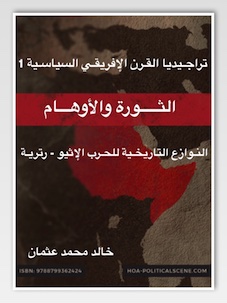
Horn Africas Political Tragedy as seen on Apple iTunes to fund your tragedies! The book uncover the political tragedy in the Horn of Africa through decades of oppression. Every country is covered thoroughly, just to learn and know.

What Do You Think of "Global Consequences of the United States, Israel and Iran's War"?
Share Your Reflections on Global Consequences of the United States, Israel and Iran's War:.
The global consequences of this war are not abstract, they shape daily life, public emotion, and the way each of us navigates an increasingly unstable world. I invite you to pause for a moment and reflect on how these shifts touch your own experience.
How do you perceive these consequences?
How do you cope with them, interpret them, or make sense of the narratives surrounding them?
Your perspective matters.
Use the form below to share your thoughts, questions, or lived insights.
If what you read here resonates with you... if it brings clarity, steadiness, or a deeper understanding, I warmly invite you to subscribe to Intelligentsia Newspaper, where independent, ethical analysis is always at the center.
Have A Great Story About This Topic?
Do you have a great story about this? Share it!
Concerned about Conflicts Fact that Never Been Disclosed?
Get Horn Africa's Political Tragedy.
Recent Articles


-
HOA's Interval with Wisdom Nuggets of Inspiring Ethical Proverbs!
Sep 09, 26 04:59 AM
 HOA's Interval with Wisdom Nuggets of Inspiring Ethical Proverbs! You can see your ethics & the ethics of the surroundings clearly to develop & enhance your own.
 -
Intelligentsia 61 from Danish Injustice to American War Abortion of
Aug 29, 26 11:14 AM
 Intelligentsia 61 from Danish Injustice to American War Abortion of Iranian Revolution and Media Stupidity, world people fall into the trap of manipulation.
 -
When, Why and How the European Paradise Became Hell on Earth?
Aug 23, 26 10:20 AM
 When, Why and How the European Paradise Became Hell on Earth? This one in the dynamics will make your mind spin and reflect with clarity to address this matter.
Some Support is Appreciated so Much!
When I get a new information, or a good read, my conscience tells me to be obliged to whom has added a drop of knowledge with some values in my life by doing some good deeds to him. Some links here get me a little power to support some people in need, indeed, by paying my subscription to international human organizations I am part of their generous good deeds. Like this at Awassa.
A Friend in Need is A Friend Indeed!
How many times have you fallen like a mountain, because you were great with your inspirations, guidance and professional teaching and later on found some people you made professional drawn in luxuries and never cared about you?
A hand up is better than a hand down. Share a link of a page you liked in great sites, but please not FACEBOOK. I am a man of principles.
A Man is Known by the Company he Keeps!
True, don't you think so? I can tell you stories and stories about that. Can you tell me one in details with the original cultures of the world it refers to? Take the cultural section by a huge and write that in the comments form.
Healthy Citizens are the Greatest Asset any Country can have!
It's true. But, he didn't know what ill governance can do for healthy citizens, or how ill monarchies can bring healthy citizens into miseries, or why great powers play by the fates of so many healthy citizens in the world.
Know any similar situations where healthy citizens are broken by the ruling elites in any country? Bring that into readers' attention through the comments form at Are You Intellectual?
Global Dynamics to Make Everyone Intellectual
Look for the top 100 Google most searched terms globally in 2021. You will not find any single thing that any person looks for and wants to know about, or use in daily life, such as food, health, education, cinema, tv, news, developing qualities and qualifications, playing, traveling, and even what causes Coronavirus and other pandemics, which are real threats to all people lives etc... You will find only search terms used for top social media, Youtube, search engines and Amazon. Political illiteracy is what matters to me to educate. See Global Dynamics & signup for the newsletter.
Did you get any of my books from Apple Books?
Click here to tell me & get some free books. Fill the form.
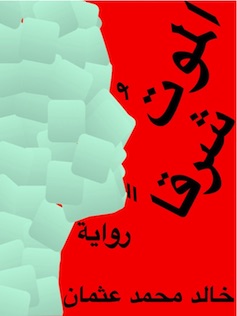
رواية "الموتُ شرقاً" تكشف لك سرّ الموت الشرقي التراجيدي المستمر للإنسان
احصل علي الرواية الآن واكتشف إنهيار القواسم المشتركة، واستلهم إبداعا يشبه الأسطورة في النص الروائي
"Follow", "like", "tweet", or "pin" the pictures to express your love! Thanks
TweetHorn Africa's Political Tragedy

Love in the Internet Time on Apple Books

Rising of the Phoenix Poetry on Apple Books

Free Poetry Picture Book
Free poetry picture book on Apple Books. You can use the images on public places for your customers to enjoy, while taking coffee.

The French & Spanish Versions
You can work the French versions and the Spanish versions of the two books above with me on, one on one bases. Contact Us.
HOAs Political Poetry Imaged
I'll be thankful, if you get one of my books.
My Books!