Archive of Truth in Exile Builds 3 Ecosystems for You!
Archive of Truth in Exile Builds 3 Ecosystems that together form the basis of a civic resistance movement. Their purpose is to clear the fog created by international media narratives and to illuminate the deeper forces shaping global decline after 1989... a date that defines backwardness after the operations that intended to collapse the Eastern Bloc, which have fragmented large strong states and resulted in millions of martyrs, displaced people and refugees. These "created situations" are still continuing in recent wars, fragmented societies, human rights violations and injustice in many places.
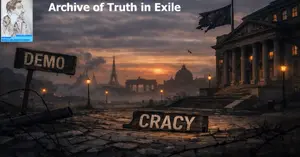
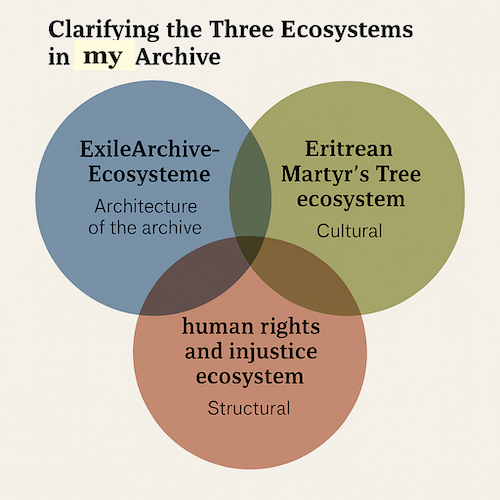 Archive of Truth in Exile Creates 3 Ecosystems that lead to civic resistance movement to strengthen your society and lead it to real progress: Illustrating the 3 systems each in its responsive colour. If you want to use this diagram on the web, link it to the page https://www.hoa-politicalscene.com/archive-of-truth-in-exile-builds-3-ecosystems.html To acquire all of these and win the civic resistance and movement race connect with the archive's creator.
In that same historical moment, Eritrea achieved independence, after the fall of half a million of martyrs. From this sacrifice emerged the Eritrean Martyr's Tree, a living memorial that evolved into a generative model for building these three ecosystems.
This framework offers historical grounding, moral clarity, and a pathway for societies seeking to recover their collective strength. These ecosystems exist as tools of renewal, constructed for those who wish to rebuild with purpose, intelligence, and dignity.
The Archive of Truth in Exile's three ecosystems did not appear by accident, as you see. Their earliest spark came from the natural world and the political world at the same time... inspired from the Martyrs’ Tree I have created, where testimony grows like roots and branches across generations.
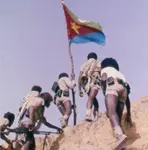
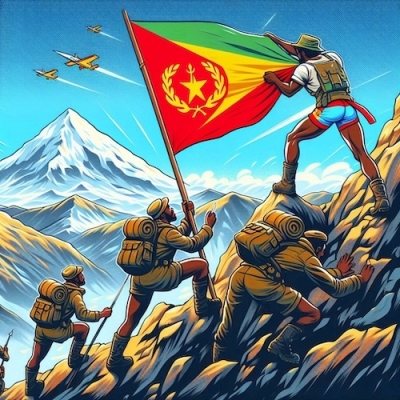 Archive of Truth in Exile Creates 3 Ecosystems: An illustration of Eritrean fighters climbing a hill to firmly plant their Eritrean flag at the summit.
The Philosophy of the Archive of Truth in Exile's Social Ecosystems!
But, turning that metaphor into a working system required something more deliberate: an infrastructure that grounds the archive's ethics, and an architecture that shapes its movement. Together, they produce three interdependent ecosystems that allow testimony, memory, and civic clarity to circulate with purpose.
To clarify the structural logic of this archive, I use the term ecosystem in three distinct registers:
The Exile Archive Ecosystem is the architectural spine... a living system that sequences testimony, hashtags, visuals, and legal witness into a coherent, adaptive archive. This is the digital archive that spreads through the HOA Political Scene to other platforms, like BlueSky, LinkedIn, Pinterest, Rumble, Substack, Tumblr, and X (Twitter).
The Martyr's Tree Ecosystem is cultural and symbolic, rooted in Eritrean memory and contested rituals of remembrance. Its infrastructure and architecture were constructed during the implementation of the project, which has been carried successfully by the Eritrean people, who deserve a Noble Prize for it.
The Human Rights and Injustice Ecosystem is structural... a machinery of harm that reproduces silence, error, and procedural violence. The experiences of these official injustice frameworks has both old and new phases, through which many people live under their pressures until this moment.
Each ecosystem operates independently, yet together they reveal how memory, power, and resistance circulate across borders. This layered usage is intentional, and central to the archive's infrastructure.
The Archive's ecosystems were inspired by nature, but built through infrastructure and architecture. The idea of ecosystems entered the archive long before its infrastructure existed.
The natural world and the Martyr's Tree it inspired gave me the metaphor. The infrastructure and architecture gave that metaphor a working form, allowing it to grow into three distinct ecosystems that now shape how the archive organizes memory, meaning, and civic purpose. This one is crisp, dignified, and structurally clear.
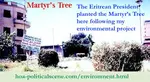
 Archive of Truth in Exile Creates 3 Ecosystems: Illustrating some Eritrean Martyr's Trees planted in an area between hills during the national activities to honour the Eritrean heroes who have given their lives for their nation.
🌍 🌏 🌎 The Three Ecosystems: Definitions and Functions!
Before these ecosystems could be defined, they had to be built.
After the Martyr's Tree project took shape, the outlines were clear during the practical experiments and the the archive entered a period of construction... testing metaphors against structure, refining categories, sequencing testimony, and learning how symbolic logic could coexist with technical architecture.
This was not automatic work; it was iterative, deliberate, and often difficult. Each ecosystem had to earn its form through practice: through episodes, corrections, visuals, taxonomies, and the lived pressure of real testimony. What emerged from that process were not decorative metaphors, but operational systems: each with its own function, logic, and civic purpose.
What has been built through the practices of the Martyr's Tree provided its infrastructure, architecture and ecosystem. That foundation was the base to the later digital development.
- Martyr’s Tree Ecosystem
The Martyr's Tree ecosystem is cultural, symbolic, and ecological. It is rooted in Eritrean memory, contested rituals of remembrance, and the natural world that shapes those rituals. It draws from the physical logic of trees: roots, branches, seasons, decay, renewal.
These symbols are rooted in the Eritrean soil from where Eritrean communities strengthen their beliefs of identical nationality whether inside Eritrea, in Sudan, or in any place in the western diaspora. Sudan has always been their home, or gateway to the world.
In that moment of recognition to the emotional national pulses of the Eritrean Martyr's Tree, which I have spotted from these ingredients, I have the vision of their reponse to the idea and how it resonates with their inheritance. They recognised their identity, which divers from other nations in the area through their experiences with the Italian colonisation.
So, this ecosystem holds the emotional and cultural memory of a people, while also revealing the environmental metaphors that structure Eritrean life. It is where heritage, ecology, and political symbolism intersect in a living reminder that memory is never neutral, and that landscapes carry testimony.
- Exile Archive Ecosystem
The Exile Archive Ecosystem is the archive's internal engine of coherence... a system that gathers dispersed testimony and sequences it into a living, adaptive structure. It integrates narrative fragments, legal witness, hashtags, visuals, and analytic frames into a single, evolving architecture.
This ecosystem is not a container but a process: it metabolizes experience into civic meaning. It ensures that every episode, every correction, every visual, and every micro‑taxonomy strengthens the archive's spine rather than scattering it. Its purpose is structural clarity that transforms individual pain into organized knowledge, and organized knowledge into collective enforcement.
The goal of the Exile Archive Ecosystem along with the other combined system in the HOA Political Scene Network work exactly as the sections of the Global Dynamics to encourage societies to connect with the network, read, understand and use the same systems to develop themselves from within their values.
- Human Rights and Injustice Ecosystem
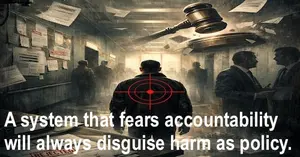
The human rights and injustice ecosystem is the structural machinery of harm... a system that reproduces silence, error, and procedural violence across institutions. It maps how injustice circulates: through flawed asylum processes, unchallenged police narratives, communal narratives, courts narratives, bureaucratic shortcuts, and the quiet normalization of harm.
This ecosystem exposes the architecture of wrongdoing, showing how individual cases are not anomalies but predictable outcomes of systemic design. It is analytical and civic in purpose, revealing the mechanisms that turn human beings into administrative problems. By naming these structures, the archive transforms them from invisible routines into accountable systems.
The Exile Archive Ecosystem was never personal. It explored unfair trials and errors in a modern European system and how that led to a Geneva convention political refugee committing a suicide, another one found dead because of neglecting, other similar refugees families scattered because of welfare issues, some other fled to other lands and some others silenced for life.
Together, these three ecosystems form a layered field of meaning: cultural, structural, and archival... allowing readers to see how testimony moves through memory, power, and resistance.
The Mutual Reflection of the Two Philosophical Ecosystem Origins!
These are the Dual Origins of the Archive: Technical Logic and Symbolic Lineage!
The Archive of Truth in Exile grows from two distinct origin‑logics.... one engineered, one inherited. Each offers a different kind of causality, and together they form the full philosophical and structural foundation of the archive. One explains how the archive works; the other explains why it exists.
- 🔧 I. The Technical Origins:
Infrastructure → Architecture → Ecosystems
The archive's internal logic of construction reflects a clear technical sequence with integrated components that depend on one another.
Its infrastructure (the principles, workflow, and ethics) forms the ground. Its architecture (the structure, categories, and sequencing) gives that ground shape. Only then can an ecosystem emerge.
Without infrastructure (the principles, workflow, and ethics that ground the archive), there is no architecture.
Without architecture (the structure, categories, and sequencing that give the archive form), there is no ecosystem.
This is the engineering logic of the archive.
Yet the idea of "ecosystems" entered the archive long before its infrastructure (technical foundations) were built. The natural world, especially the Eritrean Martyr's Tree with its cultural and ecological infrastructure provided the first metaphor. The archive's architecture gave that metaphor a technical form, allowing it to develop into three distinct ecosystems that now organize how memory, power, and civic meaning circulate across the archive... across borders.
- 🌿 II. The Symbolic Origins, Two Logics - Both True:
Ecosystem → Martyrs' Tree → Archive.
Alongside the technical sequence is a symbolic lineage that moves in the opposite direction.
Nature → Cultural memory → Ecological metaphor → Archival philosophy.
This reinforces the idea that the archive is not only engineered... it is inherited.
Here, the ecosystem comes first.
The natural ecosystem, the idea that every martyr is a seed, every testimony a root, every witness a branch is what inspired the creation of the Martyr's Tree. And the Martyr's Tree, in turn, inspired the archive's ecological metaphor.
So symbolically, the ecosystem is the first spark. It is the imaginative root system from which the archive’s cultural, ethical, and civic meaning and logic grow. This is the emotional and philosophical seed that precedes the technical machinery... shaping how the three ecosystems take form and how they continue to evolve.
- 🌱 III. Two Causalities, One Coherent System:
These two origin‑paths operate on different planes:
- A. Inspirational causality:
Symbolic, emotional, philosophical.
The natural ecosystem gives the metaphor - regeneration, roots, branches, continuity.
- B. Functional causality:
Technical, structural.
Infrastructure and architecture provide the mechanism - the engineering and sequencing.
Both are true.
Both are necessary.
But they do not compete; they complement.
By working through both logics, the archive learned how to let metaphor guide imagination while letting structure guide implementation. This is how the archive holds its dual nature - poetic and engineered - without contradiction.
- 🌐 IV. The Three Ecosystems - Definitions and Functions:
Technical, structural, operational.
The three ecosystems that now organize the archive arise from the meeting of these three logics:
- 1. The Technical Ecosystem:
Definition: The technical ecosystem is the backbone that enables the archive to exist, function, and remain accessible across borders. It includes the digital scaffolding, platforms, workflows, and tools that allow testimony to be recorded, organized, and protected.
Function: This ecosystem ensures stability, continuity, and resilience. It safeguards the archive against loss, distortion, or erasure, and provides the technical pathways through which witness can circulate. It is the infrastructure that keeps the archive alive.
- 2. The Structural Ecosystem:
Definition: The structural ecosystem is the conceptual architecture that organizes the archive’s content. It defines how pages relate to one another, how hubs interconnect, and how testimony is grouped into coherent systems of meaning.
Function: This ecosystem gives the archive its shape. It transforms scattered entries into a navigable whole, allowing readers to understand the relationships between infrastructures, architectures, narratives, dynamics, and subsystems. It is the map that reveals the logic of the archive.
- 3. The Operational Ecosystem:
Definition: The operational ecosystem is the living, adaptive layer where testimony becomes action. It includes the processes, interpretive practices, and civic functions that allow the archive to respond to injustice, connect global experiences, and generate collective understanding.
Function: This ecosystem activates the archive. It turns witness into movement, meaning, and civic force. It is where testimony interacts with the world informing analysis, shaping narratives, and enabling the archive to grow in response to new disturbances and new forms of harm.
How They Work Together?
These three ecosystems, technical, structural, and operational are not separate silos. They are interdependent layers that meet, overlap, and reinforce one another. Together, they allow the archive to function as a living system of testimony, capable of holding its Eritrean origins while expanding to global injustices and cross‑border witness.
Together, they form a layered field of meaning - archival, cultural, and structural.
Each ecosystem operates independently, yet each strengthens the others, shaping how memory, power, and resistance circulate across borders.
- 🌉 V. A Conceptual Bridge to "The Archive as a System":
These ecosystems describe how the archive extends outward into culture, into memory, into the machinery of harm. But the archive itself is also a system with its own internal logic, workflow, and architecture. The ecosystems are its expressions, not its foundation.
Closing synthesis:
Together, these ecosystems form a layered field of meaning : archival, cultural, and structural. They operate independently, yet each one strengthens the others, revealing how memory, power, and resistance circulate across borders. This is the architecture that allows the archive to function not as a collection of posts, but as a living civic instrument.
🌱 How to reconcile them without contradiction?
I was dealing with two different kinds of causality (one symbolic, one technical) and three operational systems with their three logics (technical, structural, operational) and I had to explore the first ones during the construction of the archive to understand how they could coexist without collapsing into each other.
For YOU, the reader, this means recognizing that the archive grows from two sources at once: a symbolic ecosystem inherited from the Martyr's Tree, and a technical ecosystem engineered through its infrastructure and architecture.
By working through both logics, I learned how to let metaphor guide imagination while letting structure guide implementation. This is how the archive holds its dual nature - poetic and engineered - without contradiction, and how the three ecosystems take their final, coherent form.
Understanding each matter requires deep reading through the dynamics of the Archive of Truth in Exile, with clarity knowing where each episode belongs, how each structure functions, and how your own reading becomes part of the system's movement. When done properly, connect with it to enrich your knowledge more and to reflect sharing your thoughts about what you have read.
A Conceptual Bridge to "The Archive as a System"!
These three ecosystems describe how the archive extends itself outward into culture, into memory, and into the structural machinery of harm. But the archive itself is also a system, with its own internal logic, workflow, and architecture. The ecosystems are its expressions, not its foundation.
To understand how the archive generates these structures: how it sequences testimony, maintains coherence, and transforms witness into civic meaning, the internal system must be explained on its own terms. That logic is articulated separately, in the page that defines the Archive of Truth in Exile as a system in itself.
Explore the Global Dynamics Sections below.
Archive of Truth in Exile Builds 3 Ecosystems! For Civic Movements: Dynamics - Ecology
HOA Climate Change Requires Governments Change!
For the HOA Climate Change, which requires governments change, the masses should do the climate math. How? Get my mind free of charge. You'll never regret.
Climate Change Should Lead to Classic Systems Change!
Climate Change is product of the ruling elites of classic political parties and their classic systems. That requires changing classic systems to masses systems.
What's HOA's Common Goal? How It Solves Your Global Disaster?
HOA's Common Goal helps you realize that the saying "that is the way it is" & the "obvious" are manipulated politically to accept the failure of your government.
Climate Justice Must Be Done by the Masses, Not by Calling Governments
Climate Justice should be done by world masses, not by calling governments to do so. Governments will not put themselves into trials for climate, or anything.
Environmental Scene's 2 Dangerous Characteristics with Health Effects!
Environmental Scene has two characteristics, the announced & hidden scenes. Both foretell of dangers that are intolerable to humans and intolerable to the Earth.

Archive of Truth in Exile Builds 3 Ecosystems! For Civic Movements: Dynamics - Environment
Sudanese Martyr's Day to Make Your Revolutionary Day!
The Sudanese Martyr's Day is a day created by journalist Khalid Mohammed Osman every month, every year to celebrate a Sudanese martyr.
Sudanese Martyr's Actions to Celebrate Martyr's Anniversaries & Revolt
The Sudanese Martyr’s Actions are planned to set you free by participating in martyrs’ anniversaries, and becoming organizer to defeat the totalitarian regime.
5,000,000 Martyr’s Trees Enhance Global Environment!
Khalid Osman's Eritrean Martyr’s Tree invention accomplished planting of 5,000.000 Eritrean martyrs trees & cleaned environment from chemical weapons & mines.
Environmental Scene's 2 Dangerous Characteristics with Health Effects!
Environmental Scene has two characteristics, the announced & hidden scenes. Both foretell of dangers that are intolerable to humans and intolerable to the Earth.

Archive of Truth in Exile Builds 3 Ecosystems! For Civic Movements: Dynamics - First Pulse
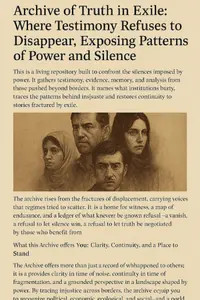
Archive of Truth in Exile: A Living Record of Power and Witness!
The Archive of Truth in Exile: Mapping silence, power, and survival. Testimony against erasure. Making an archive a living witness for you to claim justice.
Archive of Truth in Exile - Testimony Matters!
Archive of Truth in Exile - Testimony Matters: A foundational document on witness, erasure, and the moral architecture guiding the entire archive & raising societies.

Archive of Truth in Exile Builds 3 Ecosystems! For Civic Movements: Dynamics Hub
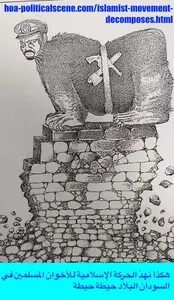
Islamist Movement Decomposes. Factual Facts of the Islamist Movement!
Islamist Movement Decomposes. This is clear to every modern and civilized mind. However, one question remains. Why this so called Islamic Movement is still controlling in some areas?
Conventional Narratives Hub Coverage From History to the Present!
Conventional Narratives Hub covers all narratives historically from the past to the present, whether they are economical, environmental, political, or social.
The Revolution I Would Not Sell!
The Revolution I Would Not Sell is a continuation to the unwritten system I have that proved to be working right! This system achieved planting 5 million trees to spark development.
Ink Between Borders - Exile by Principles: Peace Unheard!
Ink Between Borders - Exile by Principles: Peace Unheard! An urgent reflection on exile, unrecognized peace & moral resistance in post-conflict narratives.
Has International Terrorism Disappeared?
Has International Terrorism Disappeared? A political project like this has many phases. It is likely when the first phase has been done, we see the 2nd, the 3rd, etc...



Archive of Truth in Exile Builds 3 Ecosystems! For Civic Movements: Dynamics Narratives Hub
The Cold War Era: A Battle of Ideologies and Influence!
The Cold War Era: A Battle of Ideologies and Influence! In my opinion, the world was better and more stable than today's world. What do you think?
The Eastern Europe Socialist Bloc Fragmentation!
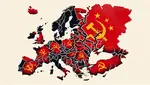
The Eastern Europe Socialist Bloc Fragmentation costs effectively until today. Are there any real causes of the deterioration of great counties in the world?
Conventional Narratives Are Always Wrong!
Why Am I Saying Conventional Narratives Are Always Wrong? Explore the connection of these narratives from colonial era until this era and know what to do!
Established Frameworks Invisible Forces Shaping Perception!
Established Frameworks Invisible Forces Shape Perception! The insights help you escape narratives that control your life & help others build a better world.
How Dominant Perspectives Shape Our World?
How Dominant Perspectives Shape Our World? Explore to know what to accept and what to refuse.

Archive of Truth in Exile Builds 3 Ecosystems! For Civic Movements: Injustice to Challenge
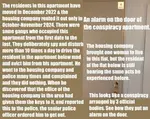
Are Odense Municipality, CIVICA Housing Company & the Police Corrupt?
Are Odense Municipality, CIVICA Housing Company & the Police Corrupt? More than seventy years of foreigners presence in Denmark has corrupted Denmark.
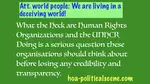
What the Heck are Human Rights Organizations and the UNHCR Doing?
What the Heck are Human Rights Organizations and the UNHCR Doing is a serious question these organisations should think about before losing any credibility and transparency.
In Denmark They Violate Human Rights for Money
In Denmark They Violate Human Rights for Money! This is a real time report you can call real life story that expose privacy and thus human rights violations in Denmark.
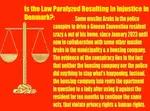
Is the Law Paralyzed Resulting in Injustice in Denmark?
Is the Law Paralyzed Resulting in Injustice in Denmark? This question exposes how some people from a specific culture can make things worse, when they are employed in the police forces.

Archive of Truth in Exile Builds 3 Ecosystems! For Civic Movements: Injustice to Confront
Political News: No Political Borders Should Exist Between Humans!
Political News to dynamically minimize the political borders between humans. The mind is ours and you learn from a century of persistence.
Refugees in the Long Run to Survive!
Hot times refugees will emerge whenever there's crisis on Earth. What should we do for them? Best answer: Give them new homes & warm feelings. Unfortunately...

Archive of Truth in Exile Builds 3 Ecosystems! For Civic Movements: Pain Travels With Us
Substack Exile Archive Presents Fragments of Resistance!
Substack Exile Archive Presents Fragments of Resistance... poetic testimony, legal critique, and public witness from the margins of exile and defiance.
Substack Exile Archive - Ethics of Proximity - Shadow Beneath State!
Substack Exile Archive - Ethics of Proximity - Shadow Beneath State explores how some authorities manipulate and break the system of fairness and justice.
Arab - Muslim: Untangling Faith Identity!
Arab - Muslim: Untangling Faith Identity!


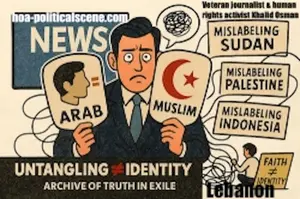
The starting actions through which the "Exile Archive Spine of Meaning" are outlined to save your society from all of these disturbances you watch in the news:
They are all here at the Action Guide with the following steps to join the Horn Africa's Network to be acquainted with it, the basic foundation of the Principles of Citizen Journalism that Can Save the World From Political Catastrophes and they let you know in additional to all of that more basic information about the press media principles that encouraged me to create the LPE of the Masses' Era with its mind-blowing solutions to global political catastrophes.
Not withstanding this, the generator of the Action Guide itself is the Global Dynamics. The Global Dynamics are actually generated with the first step I started to examine how these dynamics which I have invented can change the world. The Eritrean Martyr's Tree was the foundational base. The proofs of optimal success lie in the success of the experimental project:
It was evolved into the Infrastructure, and the architecture of the martyr's tree, which have led to the creation of the martyr's tree ecosystem, as you can explore through the Archive of Truth in Exile Constructs a Social Ecosystem!
This social ecosystem has in turn developed into 3 ecosystems, when the Archive of Truth in Exile explored world conflicts, human rights violation and injustice in many places that fracture societies and end up producing many victims. These 3 systems are essential as you can understand from the Archive of Truth in Exile Builds 3 Ecosystems! For Civic Movements!
To become a good activist and maybe a leader of one of the associations of the world masses, as you learned from the resources on "Exile Archive Readers Guide" and "Exile Archive - Support Without Money", fill out the 'Contact Us' form. Be sure to let me know that you've read "Archive of Truth in Exile Builds 3 Ecosystems! For Civic Movements", as well as the Global Dynamics.
Show me that you understood what you read on "Asking You" along with the highlighted solutions through the sections of the "Exile Archive - Support Without Money" and you would like to create, or join one of the global masses associations. Let me know more about that you have learned well and so you are willing to join and create the ERA OF THE MASSES.
Sign up for "Intelligentsia Multimedia Newspaper Revolutionizes Knowledge" by filling the form on this section of the "Exile Archive - Support Without Money" and submit it. This is a double-opt-in list to prevent someone who knows your email address from subscribing you, without having you to know about it. Check an email with a confirmation link, I'll send to you. If you didn't find it in your incoming emails box, please check your junk folder and move it to your inbox folder.
Forward HOA Political Scene to your friends, including the link of "Exile Archive - Support Without Money", as follows: https://www.hoa-politicalscene.com/exile-archive-support-without-money.html. Motivate them to read it and join the pioneering solutions to global crises, and take the same actions outlined in the "Action Guide".
You make your move, they make their moves with you. The point is that it is so important to work with them, so that more friends and “friends of their friends” join the discussion about global crises, political shallowness, the lack of political depth in this Post-Cold War era and know the guidelines of the World Social Revolution, which is a reflection of what you read on "Post-Cold War Era a Shifting Global Landscape". You should at least make a few hundred friends as contacts to explain to them everything you have learned and understood from "Build Yourself a System of Power".
Setup a time to work in this project and arrange your contacts systematically into lists with basic information about each one of your contacts, such as name, age, gender, profession, email address and location. In this way, you will guide, organize and teach them how to "Breaking the Illusion of Truth" as you have been taught. You'll enable them this way to carry out the process to build everyone a system of power, inspired by the ecosystem on "Exile Archive - Support Without Money". I will let you know the specifications of these groups. Upon completion, please use the contact form to forward this information to me. You should have their consent, first. Then use the same "Contact Us" form to tell me you've done the first process and wait for further instructions.
Write your comments on "Exile Archive Practical Philosophy Paves the Way to Social Movement" - The comments form is at the end of the page - and provide details on them. Don't feel that you can't write good, even if your language isn't good. Just write your comments in any language and I will edit and translate them for you to become a global writer and you will see a better result in the process of participating in the Global Peaceful Revolution. Such revolution doesn't need a weapon, it needs minds. Share your page when it is published.
Share the links on "Exile Archive Practical Philosophy Paves the Way to Social Movement" and share the pictures of the global political campaigns on good websites. These images are on "Climate Change Disrupts Dominant Narratives" and the first pages of the Global Dynamics I published earlier. Please don't do this on the social media of Facebook because it is a capitalist umbrella and more and if you want to know what's more, I will tell you, only when you ask and I will even show you methods to conquer any big social media, except Twitter.
Distribute the links of the videos you watch on "Doctor Feeling Good" and hang the posters of the Global Revolution in public places. It will be good if you or your friends have public places such as bars, cafes, cafeterias, clubs, hotels, mini-market places, public companies and restaurants.
Read about the nature problems that affect the world badly, including the effects of global warming on many countries and on people, as you read on the posters of "Citizen Journalism that Can Save the World From Political Catastrophes" at 100-beautiful-sites-in-the-world.com/100-beautiful-sites-blog.html. This is a site dedicated to the effects of global warming that you read about politically on "How Sudan Lost Its African Soul - The Disappearance of Joy".
Watch historical and political documentaries and films about the crises of environment and nature caused by classical regimes and open market big companies, and documentaries about some of the topics you read on the sections of "Exile Archive Practical Philosophy Paves the Way to Social Movement" at tvcinemaapp.com/tv-cinema-app-blog.html. This is another site oriented to the cinema and television that offers among documentaries cinematic analyzes movies and television series and lessons on how to install channels and watch movies free, so you don't need to pay for that.
** Please, if you find anything that does not make sense to you on "Exile Archive Practical Philosophy Paves the Way to Social Movement", use the feedback form to write about it. I will answer your questions and reward you for that by offering you some good books to read and learn more about how to improve your life.
What Do You Think of "Archive of Truth in Exile Builds 3 Ecosystems! For Civic Movements"?
Civic movement is your strength. It is its strength too. You and your society interact in harmony in what matters for personal, family, neighbourhood, communal and social development. Differences lapse when everybody knows the fact that the "A Healthy Body in a Healthy Mind". This is my proverb which flips the known proverb "A Healthy Mind in a Healthy Body, I created during the creation of the Eritrean Martyr's Tree while I was working in the Eritrean official newspaper "Haddas Ertra" in Asmara after the independence of Eritrea in 1991.
If you believe in this mentality that produces these systems, "you are obliged to yourself" only, but to your society too, This is a both-sided reflection that suggests neither of you will be safe, if any of you feels sick, or unsafe. From here, everything that affects you and your society hinders development. The society is not only your family, but the community that holds all families.
This why the Archive of Truth in Exile Builds 3 Ecosystems For Civic Movements. Connect with it, reflect and write your impression. To make your contribution even better, subscribe to Intelligentsia Newspaper and confirm you subscription and follow the Action Guide of the Global Dynamics to build public power.
Have A Great Story About This Topic?
Do you have a great story about this? Share it!
Concerned about Conflicts Fact that Never Been Disclosed?
Get Horn Africa's Political Tragedy.
Recent Articles


-
HOA's Interval with Wisdom Nuggets of Inspiring Ethical Proverbs!
Sep 09, 26 04:59 AM
 HOA's Interval with Wisdom Nuggets of Inspiring Ethical Proverbs! You can see your ethics & the ethics of the surroundings clearly to develop & enhance your own.
 -
Intelligentsia 61 from Danish Injustice to American War Abortion of
Aug 29, 26 11:14 AM
 Intelligentsia 61 from Danish Injustice to American War Abortion of Iranian Revolution and Media Stupidity, world people fall into the trap of manipulation.
 -
When, Why and How the European Paradise Became Hell on Earth?
Aug 23, 26 10:20 AM
 When, Why and How the European Paradise Became Hell on Earth? This one in the dynamics will make your mind spin and reflect with clarity to address this matter.
Some Support is Appreciated so Much!
When I get a new information, or a good read, my conscience tells me to be obliged to whom has added a drop of knowledge with some values in my life by doing some good deeds to him. Some links here get me a little power to support some people in need, indeed, by paying my subscription to international human organizations I am part of their generous good deeds. Like this at Awassa.
A Friend in Need is A Friend Indeed!
How many times have you fallen like a mountain, because you were great with your inspirations, guidance and professional teaching and later on found some people you made professional drawn in luxuries and never cared about you?
A hand up is better than a hand down. Share a link of a page you liked in great sites, but please not FACEBOOK. I am a man of principles.
A Man is Known by the Company he Keeps!
True, don't you think so? I can tell you stories and stories about that. Can you tell me one in details with the original cultures of the world it refers to? Take the cultural section by a huge and write that in the comments form.
Healthy Citizens are the Greatest Asset any Country can have!
It's true. But, he didn't know what ill governance can do for healthy citizens, or how ill monarchies can bring healthy citizens into miseries, or why great powers play by the fates of so many healthy citizens in the world.
Know any similar situations where healthy citizens are broken by the ruling elites in any country? Bring that into readers' attention through the comments form at Are You Intellectual?
Global Dynamics to Make Everyone Intellectual
Look for the top 100 Google most searched terms globally in 2021. You will not find any single thing that any person looks for and wants to know about, or use in daily life, such as food, health, education, cinema, tv, news, developing qualities and qualifications, playing, traveling, and even what causes Coronavirus and other pandemics, which are real threats to all people lives etc... You will find only search terms used for top social media, Youtube, search engines and Amazon. Political illiteracy is what matters to me to educate. See Global Dynamics & signup for the newsletter.
Did you get any of my books from Apple Books?
Click here to tell me & get some free books. Fill the form.
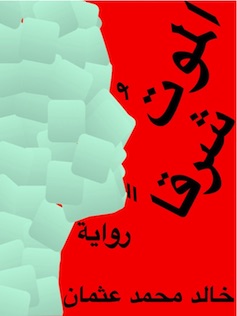
رواية "الموتُ شرقاً" تكشف لك سرّ الموت الشرقي التراجيدي المستمر للإنسان
احصل علي الرواية الآن واكتشف إنهيار القواسم المشتركة، واستلهم إبداعا يشبه الأسطورة في النص الروائي
"Follow", "like", "tweet", or "pin" the pictures to express your love! Thanks
TweetHorn Africa's Political Tragedy

Love in the Internet Time on Apple Books

Rising of the Phoenix Poetry on Apple Books

Free Poetry Picture Book
Free poetry picture book on Apple Books. You can use the images on public places for your customers to enjoy, while taking coffee.

The French & Spanish Versions
You can work the French versions and the Spanish versions of the two books above with me on, one on one bases. Contact Us.
HOAs Political Poetry Imaged
I'll be thankful, if you get one of my books.
My Books!