3 Fundamental Injustice Stories about Fake Democracies and Human Rights!
"3 Fundamental Injustice Stories about Fake Democracies and Human Rights!" is not simply a collection of three cases or three well‑known figures. It is a warning signal. These stories reveal how the clock is ticking for a deep and undeniable backward shift happening inside Europe... a shift that exposes the fragility behind the polished image of democracy, neutrality, and human rights.
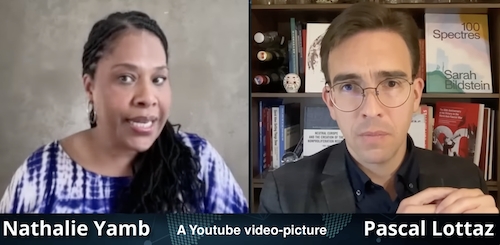 3 Fundamental Injustice Stories about Fake Democracies and Human Rights: Bascal Lottaz interviewing Swiss‑Cameroonian activist Nathalie Yamb on Her sanction and isolation, which exposes severe human rights violations in the capital of human rights organizations... striking deep at the heart of the UN and these organisations.
For decades, many people across Africa and the Middle East have imagined Europe as a kind of earthly paradise... a place of fairness, opportunity, and institutional integrity. But that image no longer holds. These cases show that the systems people admire from afar are now struggling under their own contradictions, revealing patterns of injustice that mirror the very failures they once condemned in others.
This page is part of a broader effort to document these patterns, expose the myths, systemic injustice and build a counter‑archive grounded in lived experience and structural analysis. Connect with us to strengthen this work.
Sanctioned by the EU, Abandoned by Switzerland:
The Nathalie Yamb Case and the Architecture of Selective Citizenship!
When the European Union placed Swiss‑Cameroonian activist Nathalie Yamb on its sanctions list in 2025, the decision was framed as a matter of "security" and "foreign influence." But the deeper story... the one that exposes the political machinery beneath the surface — is not about Russia, nor about Africa, nor even about Yamb herself.
It is about how modern institutions police dissent, how they weaponize administrative tools to silence inconvenient voices, and how citizenship becomes conditional when a person's narrative challenges geopolitical interests.
The Yamb case is not an anomaly. It is a mirror.
And what it reflects is a pattern that stretches across continents, from underdeveloped countries I have watched for decades, to the heart of Europe, where the myth of institutional neutrality continues to crumble.
1. The Sanctions: Punishment Without Trial
In June 2025, the EU added Nathalie Yamb to a sanctions list originally designed to target Russia for its destabilizing activities. She became the first Swiss citizen to be sanctioned under this framework.
The accusations were not about criminal acts.
They were about speech:
- alleged alignment with Russian narratives
- participation in “informational manipulation campaigns”
- criticism of French military operations in Africa
- association with AFRIC, a research network accused of Russian ties
None of these allegations were tested in court.
None were subject to due process.
None were accompanied by transparent evidence.
This is the new frontier of political punishment:
- administrative sanctions used as a substitute for legal accountability.
2. The Legal Challenge: A Fight Against Arbitrary Power
Yamb responded by filing a case before the EU General Court (Case T‑582/25). Her legal arguments expose the structural flaws of the sanctions regime:
- No exemptions for Swiss nationals, despite Switzerland not being an EU member
- Violation of fundamental rights: movement, economic activity, expression
- Lack of due process: no hearing, no right to defend herself
- Insufficient factual basis: accusations too vague and broad
- Failure to state reasons: sanctions justified with contradictory or incomplete explanations
Her case is not only about her own rights.
It is about the dangerous precedent of punishing individuals for political speech under the banner of “security.”
3. The Narrative Battle: Africa, Europe, and the Fear of Dissent
Yamb’s primary political focus has always been Africa, not Ukraine. She has been a vocal critic of:
- French military interventions
- European influence networks
- Western narratives about African sovereignty
This is precisely why she became a target.
Her voice disrupts the geopolitical comfort zone.
Her rhetoric challenges the post‑colonial order.
Her influence in African political spaces threatens European strategic interests.
Labeling her "pro‑Russian" is not about Russia.
It is about delegitimizing anti‑colonial critique.
This is a pattern I have seen for years in underdeveloped countries:
- when a voice becomes too influential, institutions shift from debate to suppression.
4. Switzerland’s Silence: The First Abandonment
Switzerland — the country whose passport she holds — did not defend her.
Despite:
- the sanctions being extraterritorial
- the lack of due process
- the political nature of the accusations
- the impact on a Swiss citizen's rights
The Swiss government remained silent.
Neutrality, once a principle, has become a posture.
And in this case, even the posture collapsed.
5. The Second Abandonment: Swiss Banks Move Against Her
What happened next is even more revealing.
Although Switzerland did not officially adopt the EU sanctions, Swiss banks acted as if they had — in what Swiss media described as vorauseilender Gehorsam, "anticipatory obedience".
Swiss banks:
- closed all her accounts
- blocked her access to her own money
- classified her as a PEP (Politically Exposed Person) without justification
- refused incoming payments, making even basic transactions impossible
- reduced her to a "civil death", as one Swiss outlet described it
PostFinance, the state‑owned bank obligated to offer basic accounts, gave her an account so restricted it was practically unusable:
- no online banking
- no foreign currency
- no debit or credit card
- no digital payments
- no ability to receive payments from other banks
This is not neutrality.
This is not due process.
This is not the rule of law.
This is institutional abandonment.
And it mirrors the same patterns I have seen in countries with far weaker democratic reputations.
6. The Broader Pattern: When Citizenship Becomes Conditional
The Yamb case sits alongside others — Shamima Begum, dissidents across Africa, whistleblowers in Europe — as evidence of a global trend:
- When a person's narrative challenges power, institutions withdraw protection.
- When a citizen becomes politically inconvenient, citizenship becomes conditional.
- When institutions fear dissent, they use administrative tools to silence it.
This is the architecture of selective citizenship.
And it is the architecture I have been mapping in MY own Archive of Truth in Exile.
7. Conclusion: Switzerland's Position Is Not Neutral — It Is Complicit
The most shocking part of this story is not the EU sanctions.
It is Switzerland's reaction.
A country that prides itself on neutrality, due process, and human rights:
- did not defend its citizen
- did not question the EU's extraterritorial reach
- did not uphold its own legal standards
- and allowed its banks to enforce sanctions that Switzerland never adopted
Worse still:
- Swiss banks closed her accounts and refused to return her money.
This is not neutrality.
This is not independence.
This is not the Switzerland the world imagines.
This is a quiet alignment with power — and a quiet abandonment of a citizen.
The Yamb case is not an exception.
It is a warning.
Sources:
EU legal filing: Case T‑582/25, Yamb v Council https://curia.europa.eu/juris/liste.jsf?num=T-582/25
Weltwoche report on Swiss banks enforcing sanctions and closing her accounts https://weltwoche.ch/story/nathalie-yamb-sanktionen-schweiz-banken
Ministers Cannot Ignore the Shamima Begum Case:
What Her Story Reveals About Citizenship, Power, and the Politics of Abandonment
When a headline declares that "Ministers cannot go on ignoring the Shamima Begum case," it is not simply a call for political attention. It is an indictment of a system that has used administrative power to erase a citizen rather than confront its own failures.
The Shamima Begum case is not about one young woman who left the UK at 15.
It is about how a state chooses to define citizenship, how it constructs narratives of threat, and how it abandons individuals when their existence becomes politically inconvenient.
This case sits squarely within the global pattern I have observed for decades — from underdeveloped countries to the heart of Europe — where institutions retreat from responsibility by weaponizing silence, narrative, and administrative tools.
1. A Child Leaves the UK — and the State Looks Away
In 2015, three schoolgirls from East London — all minors — left the UK to join ISIS in Syria. Shamima Begum was 15 years old.
The UK's security services had been monitoring the radicalisation pipeline in her community.
They had intelligence on the recruiter who groomed her.
They had warnings from her school.
Yet the state failed to intervene.
This is the first act of institutional avoidance:
the failure to protect a child from trafficking and exploitation.
2. The Citizenship Revocation: Administrative Power as Erasure
In 2019, the UK Home Secretary stripped Begum of her British citizenship, claiming she posed a security threat.
This decision:
- was made without trial
- relied on secret evidence
- was justified through political rhetoric
- effectively rendered her stateless
- shifted responsibility onto Bangladesh, a country she had never lived in
The UK used an administrative tool — citizenship deprivation — to erase its own role in her radicalisation and trafficking.
This is the second act of avoidance:
- the state punishes the victim to avoid confronting its own failures.
3. The Trafficking Question: The Issue the UK Wants to Avoid
The European Court of Human Rights is now examining whether the UK violated its anti‑trafficking obligations by failing to protect Begum as a minor.
The central question is not whether she joined ISIS.
It is whether she was trafficked.
If she was trafficked:
- the UK had a duty to protect her
- the UK had a duty to investigate
- the UK had a duty to support her recovery
- the UK had no legal basis to strip her citizenship
This is why ministers want to avoid the case:
- acknowledging trafficking would expose institutional negligence.
4. The Narrative War: Constructing the "Perfect Enemy"
The UK government framed Begum as:
- a threat
- a traitor
- a symbol
- a political liability
This narrative served several purposes:
- it shifted public anger away from government failures
- it created a simple villain for a complex story
- it allowed ministers to appear “tough on security”
- it silenced uncomfortable questions about grooming and trafficking
This is the third act of avoidance:
- the state constructs a narrative to justify abandonment.
5. The Legal Afterlife: When Citizenship Becomes Conditional
The UK Supreme Court upheld the government's decision, arguing that national security concerns outweighed Begum's right to return and participate in her own appeal.
This ruling sets a dangerous precedent:
- citizenship becomes conditional
- due process becomes optional
- minors can be punished for their exploitation
- administrative power overrides legal rights
This is not just about Begum.
It is about the future of citizenship in the UK.
6. The Broader Pattern: From London to Geneva to the Global South
My reaction to this case is not emotional — it is analytical.
I have seen this pattern before:
- in underdeveloped countries where citizens are abandoned when politically inconvenient
- in MY own Geneva encounters, where institutions retreat into silence
- in the Nathalie Yamb case, where Switzerland abandoned a citizen under external pressure
The pattern is global:
- When a person's existence threatens the narrative, institutions withdraw protection.
Begum's case is not an exception.
It is part of a transnational architecture of selective citizenship.
7. Conclusion: Ministers Cannot Ignore This Case — Because It Exposes Them
The Shamima Begum case forces the UK to confront:
- its failure to protect a child
- its failure to investigate trafficking
- its use of citizenship as a political weapon
- its willingness to abandon a citizen for convenience
- its reliance on narrative over justice
This is why ministers avoid the case.
Not because it is legally complex.
But because it is politically revealing.
The Begum case is not about her alone.
It is about the state's responsibility, the limits of citizenship, and the dangerous power of administrative erasure.
And like the Yamb case, it shows that the myth of Western institutional superiority is just that — a myth.
Khalid Osman: A Case Study in Institutional Avoidance, Administrative Silence, and the Fragility of "Neutral" Systems
📄 Solidarity Statement — Template
Copy, paste in document, fill it, publish it worldwide & submit it to human rights organizations.
To whom it may concern,
We, the undersigned, affirm our complete solidarity with Khalid Osman, a veteran human rights activist and journalist whose safety is now threatened by procedural injustice and institutional abuse. His case exposes a disturbing reality: assumptions have been treated as facts, and due process has been replaced by arbitrary power, leaving him vulnerable to harm and silencing.
We call on your organization to:
Acknowledge the urgency of this situation without delay.
Hold the responsible authorities to account for the violations committed.
Ensure immediate protection and advocacy for Khalid’s fundamental rights.
This verdict bears the marks of a predetermined decision intended to silence a long‑standing human rights defender and journalist — a Geneva Convention political refugee whose humanitarian and ethical journalism has shaped more than 50 years of public life.
Human rights are not discretionary.
Justice cannot rest on presumption.
We stand firmly with Khalid Osman.
Sincerely,
[Your Full Name]
[Your Organization, if applicable]
Attention: You can do the same process for the other two people included on this page to insert their names where it's applicable.
From an observer's standpoint, the case of Khalid Osman is not simply the story of one veteran activist and journalist and the voice behind the Archive of Truth in Exile navigating bureaucratic obstacles. It is a textbook example of how institutions behave when confronted with a citizen who refuses to accept erasure, who insists on clarity, and who documents every step of the process.
His archive reveals a pattern that is both familiar and deeply unsettling:
- institutions that present themselves as neutral, fair, and rights‑based can, under pressure or convenience, retreat into silence, delay, and procedural ambiguity.
His case exposes this architecture with unusual clarity.
1. The Initial Trigger: A Citizen Seeking Protection Meets a System Seeking Distance
His episodes describe a moment when he approached institutions — police, legal representatives, administrative bodies — expecting protection, clarity, or due process.
Instead, he encountered:
- evasive communication
- contradictory instructions
- unexplained delays
- shifting responsibilities
- refusal to acknowledge errors
- silence where accountability was required
This is the first layer of institutional avoidance:
the system creates distance instead of resolution.
2. The Lawyer's Silence: When Representation Becomes a Form of Abandonment
One of the most striking elements in his archive is the behavior of the lawyer who was supposed to represent him.
From an observer's perspective, the silence of a legal representative is not a small detail — it is a structural failure.
Khalid's testimony shows:
- police not responding to his complaints
- police lying & turning his complaints against him
- court sessions created to incriminate
- no due process
- no cross-examination
- unanswered emails, un viewed recorded evidences
- unreturned calls
- missing explanations
- failure to act on urgent matters
- refusal to clarify procedural steps
This is not simply poor service.
- It is a form of administrative abandonment, where the person tasked with defending his rights becomes a barrier instead of a bridge.
This mirrors the pattern seen in other cases:
- when a citizen becomes inconvenient, representation collapses.
3. The Police Encounters: The Ambiguity of Protection
His episodes describe multiple interactions with police — each one revealing a tension between:
- what the institution claims to be
- and how it behaves in practice
As an observer, the pattern is clear:
- inconsistent explanations
- unclear procedures
- shifting narratives
- reluctance to document events exactly as they were
- avoidance of responsibility
This is not unique to his case.
It is part of a broader phenomenon:
- institutions that rely on ambiguity to avoid accountability.
4. The Administrative Maze: When Process Becomes a Tool of Control
His archive shows how administrative systems can use:
- delays
- missing documents
- contradictory instructions
- unclear deadlines
- procedural opacity
- as tools of control.
This is not overt oppression.
- It is soft obstruction, the kind that leaves no fingerprints but leaves the citizen exhausted.
His case demonstrates how a system can appear neutral while behaving in ways that undermine the very rights it claims to uphold.
5. The Emotional Afterlife: When Institutions Create the Conditions They Later Ignore
One of the most powerful aspects of his archive is how it documents the emotional and psychological toll of institutional avoidance.
As an observer, what stands out is not the emotion itself — but the institutional indifference to it.
His episodes show:
- distress met with silence
- urgency met with delay
- clarity met with confusion
- vulnerability met with procedural coldness
This is the same pattern seen in other cases:
institutions create harm, then treat the resulting distress as irrelevant.
6. The Counter‑Archive: His Refusal to Disappear
What distinguishes his case from many others is his response.
Instead of accepting erasure, he built:
- a structured archive
- a chronological testimony
- a public record
- a philosophical framework
- a political analysis
This transforms his case from a private struggle into a public document of institutional behavior.
As an observer, this is the most significant part of his story: He refused the silence that institutions rely on.
7. The Broader Pattern: His Case as a Mirror of Systemic Fragility
Khalid's case sits alongside the Yamb and Begum cases not because the facts are identical, but because the institutional logic is the same:
- avoidance
- narrative control
- administrative erasure
- selective protection
- silence as strategy
His archive shows that these patterns are not limited to "weak" states or "underdeveloped" systems.
They appear everywhere, including in countries that present themselves as models of democracy, neutrality, and human rights.
His case exposes the fragility of these claims.
Conclusion: Why Khalid's Case Matters Beyond His Own Experience
From an observer's perspective, the significance of his case is not only in what happened to him — but in what his testimony reveals:
- how institutions behave under pressure
- how rights can be undermined through silence
- how administrative systems can fail without admitting failure
- how a citizen can be abandoned without anyone saying the word "abandonment"
- how the myth of institutional neutrality collapses under scrutiny
Khalid's Archive of Truth in Exile is not just a record of his experiences.
- It is a map of institutional behavior, a counter‑narrative to official silence, and a contribution to a global understanding of how injustice operates in systems that claim to be just.
And that is why his case belongs alongside the others — not as a personal grievance, but as a structural example.
3 Fundamental Injustice Stories about Fake Democracies and Human Rights:
Solidarity Call
These three injustice stories are not isolated events.
They are signals.
They reveal how even the most established systems can fail the very people they claim to protect.
If these examples resonate with you — if you recognize the pattern, if you feel the urgency — then you are already part of the community that refuses silence.
- Would you like to stand stronger with us?
- Would you like to join a network that exposes these failures and works to correct the hard situations created by these systems?
Connect with us.
Add your voice. Use the form below.
Strengthen the counter‑archive.
Help transform witness into action.
Because systems do not correct themselves.
People do.
3 Fundamental Injustice Stories about Fake Democracies and Human Right: Substack HOA Political Scene's Archive of Truth in Exile
Substack Exile Archive Presents Fragments of Resistance!
Substack Exile Archive Presents Fragments of Resistance... poetic testimony, legal critique, and public witness from the margins of exile and defiance.
Substack Exile Archive - Ethics of Proximity - Shadow Beneath State!
Substack Exile Archive - Ethics of Proximity - Shadow Beneath State explores how some authorities manipulate and break the system of fairness and justice.
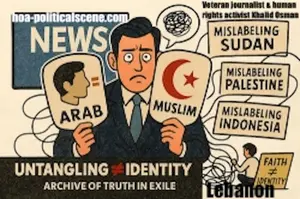
Arab - Muslim: Untangling Faith Identity!
Arab - Muslim: Untangling Faith Identity!


3 Fundamental Injustice Stories about Fake Democracies and Human Right: the Archive of Truth in Exile is a Living Witness
Archive of Truth in Exile: A Living Record of Power and Witness!
The Archive of Truth in Exile: Mapping silence, power, and survival. Testimony against erasure. Making an archive a living witness for you to claim justice.
Archive of Truth in Exile - Testimony Matters!
Archive of Truth in Exile - Testimony Matters: A foundational document on witness, erasure, and the moral architecture guiding the entire archive & raising societies.

3 Fundamental Injustice Stories about Fake Democracies and Human Right: Human Rights & Privacy Violations in Denmark
Are Odense Municipality, CIVICA Housing Company & the Police Corrupt?
Are Odense Municipality, CIVICA Housing Company & the Police Corrupt? More than seventy years of foreigners presence in Denmark has corrupted Denmark.
What the Heck are Human Rights Organizations and the UNHCR Doing?
What the Heck are Human Rights Organizations and the UNHCR Doing is a serious question these organisations should think about before losing any credibility and transparency.
In Denmark They Violate Human Rights for Money
In Denmark They Violate Human Rights for Money! This is a real time report you can call real life story that expose privacy and thus human rights violations in Denmark.
Is the Law Paralyzed Resulting in Injustice in Denmark?
Is the Law Paralyzed Resulting in Injustice in Denmark? This question exposes how some people from a specific culture can make things worse, when they are employed in the police forces.


3 Fundamental Injustice Stories about Fake Democracies and Human Right Violations in Denmark
Political News: No Political Borders Should Exist Between Humans!
Political News to dynamically minimize the political borders between humans. The mind is ours and you learn from a century of persistence.
Refugees in the Long Run to Survive!
Hot times refugees will emerge whenever there's crisis on Earth. What should we do for them? Best answer: Give them new homes & warm feelings. Unfortunately...
Refugees in Denmark Lacking the Bright Future!
The situations of refugees in Denmark impose the question why Denmark is tough with the UN Convention political refugees? This is the toughest question I have been asked!


Politik i Horn af Afrika!
Politiken er mit arbejde! Jeg havde praktiseret politik som journalist i Horn af Afrika og Mellemøsten områder, over tredive år.
What Dogmatism Actually Means?
Is dogmatism passive? Intelligentsias don't consider dogmatism as an active habit, so how it works to limit the vision of some elites and how to get rid of it?

Conventional Narratives Have Strong Impacts of Systemic Behaviours and Failures!
3 Fundamental Injustice Stories about Fake Democracies and Human Rights: Examples of Narratives Failures
The Cold War Era: A Battle of Ideologies and Influence!
The Cold War Era: A Battle of Ideologies and Influence! In my opinion, the world was better and more stable than today's world. What do you think?
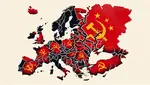
The Eastern Europe Socialist Bloc Fragmentation!
The Eastern Europe Socialist Bloc Fragmentation costs effectively until today. Are there any real causes of the deterioration of great counties in the world?
Conventional Narratives Are Always Wrong!
Why Am I Saying Conventional Narratives Are Always Wrong? Explore the connection of these narratives from colonial era until this era and know what to do!
Established Frameworks Invisible Forces Shaping Perception!
Established Frameworks Invisible Forces Shape Perception! The insights help you escape narratives that control your life & help others build a better world.
How Dominant Perspectives Shape Our World?
How Dominant Perspectives Shape Our World? Explore to know what to accept and what to refuse.


3 Fundamental Injustice Stories about Fake Democracies and Human Rights: Examples of Dynamics
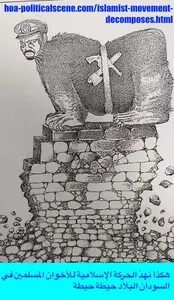
Islamist Movement Decomposes. Factual Facts of the Islamist Movement!
Islamist Movement Decomposes. This is clear to every modern and civilized mind. However, one question remains. Why this so called Islamic Movement is still controlling in some areas?
Conventional Narratives Hub Coverage From History to the Present!
Conventional Narratives Hub covers all narratives historically from the past to the present, whether they are economical, environmental, political, or social.
The Revolution I Would Not Sell!
The Revolution I Would Not Sell is a continuation to the unwritten system I have that proved to be working right! This system achieved planting 5 million trees to spark development.
Ink Between Borders - Exile by Principles: Peace Unheard!
Ink Between Borders - Exile by Principles: Peace Unheard! An urgent reflection on exile, unrecognized peace & moral resistance in post-conflict narratives.
Has International Terrorism Disappeared?
Has International Terrorism Disappeared? A political project like this has many phases. It is likely when the first phase has been done, we see the 2nd, the 3rd, etc...


3 Fundamental Injustice Stories about Fake Democracies and Human Rights: Examples of Human Rights Dynamics
Human Rights Activism Contact | Support & Testimony Across Borders!
Connect with Human Rights Activism Contact. Reach veteran activist Khalid Osman for support, testimony & solidarity across borders. Correction as care, refusal as witness.

The Action Guide Solves Anything Else Beside the 3 Fundamental Injustice Stories about Fake Democracies and Human Rights
The starting actions through which the "Exile Archive Spine of Meaning" are outlined to save your society from all of these disturbances you watch in the news:
They are all here at the Action Guide with the following steps to join the Horn Africa's Network to be acquainted with it, the basic foundation of the Principles of Citizen Journalism that Can Save the World From Political Catastrophes and they let you know in additional to all of that more basic information about the press media principles that encouraged me to create the LPE of the Masses' Era with its mind-blowing solutions to global political catastrophes.
Not withstanding this, the generator of the Action Guide itself is the Global Dynamics. The Global Dynamics are actually generated with the first step I started to examine how these dynamics which I have invented can change the world. The Eritrean Martyr's Tree was the foundational base. The proofs of optimal success lie in the success of the experimental project:
It was evolved into the Infrastructure, and the architecture of the martyr's tree, which have led to the creation of the martyr's tree ecosystem, as you can explore through the Archive of Truth in Exile Constructs a Social Ecosystem!
This social ecosystem has in turn developed into 3 ecosystems, when the Archive of Truth in Exile explored world conflicts, human rights violation and injustice in many places that fracture societies and end up producing many victims. These 3 systems are essential as you can understand from the Archive of Truth in Exile Builds 3 Ecosystems! For Civic Movements!
To become a good activist and maybe a leader of one of the associations of the world masses, as you learned from the resources on "Exile Archive Readers Guide" and "Exile Archive - Support Without Money", fill out the 'Contact Us' form. Be sure to let me know that you've read "Archive of Truth in Exile Builds 3 Ecosystems! For Civic Movements", as well as the Global Dynamics.
Show me that you understood what you read on "Asking You" along with the highlighted solutions through the sections of the "Exile Archive - Support Without Money" and you would like to create, or join one of the global masses associations. Let me know more about that you have learned well and so you are willing to join and create the ERA OF THE MASSES.
Sign up for "Intelligentsia Multimedia Newspaper Revolutionizes Knowledge" by filling the form on this section of the "Exile Archive - Support Without Money" and submit it. This is a double-opt-in list to prevent someone who knows your email address from subscribing you, without having you to know about it. Check an email with a confirmation link, I'll send to you. If you didn't find it in your incoming emails box, please check your junk folder and move it to your inbox folder.
Forward HOA Political Scene to your friends, including the link of "Exile Archive - Support Without Money", as follows: https://www.hoa-politicalscene.com/exile-archive-support-without-money.html. Motivate them to read it and join the pioneering solutions to global crises, and take the same actions outlined in the "Action Guide".
You make your move, they make their moves with you. The point is that it is so important to work with them, so that more friends and “friends of their friends” join the discussion about global crises, political shallowness, the lack of political depth in this Post-Cold War era and know the guidelines of the World Social Revolution, which is a reflection of what you read on "Post-Cold War Era a Shifting Global Landscape". You should at least make a few hundred friends as contacts to explain to them everything you have learned and understood from "Build Yourself a System of Power".
Setup a time to work in this project and arrange your contacts systematically into lists with basic information about each one of your contacts, such as name, age, gender, profession, email address and location. In this way, you will guide, organize and teach them how to "Breaking the Illusion of Truth" as you have been taught. You'll enable them this way to carry out the process to build everyone a system of power, inspired by the ecosystem on "Exile Archive - Support Without Money". I will let you know the specifications of these groups. Upon completion, please use the contact form to forward this information to me. You should have their consent, first. Then use the same "Contact Us" form to tell me you've done the first process and wait for further instructions.
Write your comments on "Exile Archive Practical Philosophy Paves the Way to Social Movement" - The comments form is at the end of the page - and provide details on them. Don't feel that you can't write good, even if your language isn't good. Just write your comments in any language and I will edit and translate them for you to become a global writer and you will see a better result in the process of participating in the Global Peaceful Revolution. Such revolution doesn't need a weapon, it needs minds. Share your page when it is published.
Share the links on "Exile Archive Practical Philosophy Paves the Way to Social Movement" and share the pictures of the global political campaigns on good websites. These images are on "Climate Change Disrupts Dominant Narratives" and the first pages of the Global Dynamics I published earlier. Please don't do this on the social media of Facebook because it is a capitalist umbrella and more and if you want to know what's more, I will tell you, only when you ask and I will even show you methods to conquer any big social media, except Twitter.
Distribute the links of the videos you watch on "Doctor Feeling Good" and hang the posters of the Global Revolution in public places. It will be good if you or your friends have public places such as bars, cafes, cafeterias, clubs, hotels, mini-market places, public companies and restaurants.
Read about the nature problems that affect the world badly, including the effects of global warming on many countries and on people, as you read on the posters of "Citizen Journalism that Can Save the World From Political Catastrophes" at 100-beautiful-sites-in-the-world.com/100-beautiful-sites-blog.html. This is a site dedicated to the effects of global warming that you read about politically on "How Sudan Lost Its African Soul - The Disappearance of Joy".
Watch historical and political documentaries and films about the crises of environment and nature caused by classical regimes and open market big companies, and documentaries about some of the topics you read on the sections of "Exile Archive Practical Philosophy Paves the Way to Social Movement" at tvcinemaapp.com/tv-cinema-app-blog.html. This is another site oriented to the cinema and television that offers among documentaries cinematic analyzes movies and television series and lessons on how to install channels and watch movies free, so you don't need to pay for that.
** Please, if you find anything that does not make sense to you on "Exile Archive Practical Philosophy Paves the Way to Social Movement", use the feedback form to write about it. I will answer your questions and reward you for that by offering you some good books to read and learn more about how to improve your life.
How to Share 3 Fundamental Injustice Stories about Fake Democracies and Human Rights with Socials?
When you share through the buttons at the bottom of the page, leave the picture when it gets there and write this: What's hot? Discover connection of human rights & politics, written in literature & poetry how injustice reveals itself - THEN add these tags with hashtags, or only tags without the # on some socials like BlueSky and Substack: NathalieYamb, ShamimaBegum, KhalidOsman, Injustice, HumanRights, FakeDemocracies, InstitutionalFailure, SystemicInjustice, SelectiveCitizenship, Separate these words where you don't need to use tags.
What Do You Think of the 3 Fundamental Injustice Stories about Fake Democracies and Human Rights?
Let's know what duo you think of "3 Fundamental Injustice Stories about Fake Democracies and Human Righ".
Your interaction means a lot to us and I personally appreciate it very much. You cn use commentary form also to bring your story into this huge network. If you know of anyone who is experiencing the same issues, please make sure to have their consent and write it here. We are sincere about putting human rights organization in their right place of accountability. Your voice is our power... this network is yours too.
Have A Great Story About This Topic?
Do you have a great story about this? Share it!
Concerned about Conflicts Fact that Never Been Disclosed?
Get Horn Africa's Political Tragedy.
Recent Articles


-
HOA's Interval with Wisdom Nuggets of Inspiring Ethical Proverbs!
Sep 09, 26 04:59 AM
 HOA's Interval with Wisdom Nuggets of Inspiring Ethical Proverbs! You can see your ethics & the ethics of the surroundings clearly to develop & enhance your own.
 -
Intelligentsia 61 from Danish Injustice to American War Abortion of
Aug 29, 26 11:14 AM
 Intelligentsia 61 from Danish Injustice to American War Abortion of Iranian Revolution and Media Stupidity, world people fall into the trap of manipulation.
 -
When, Why and How the European Paradise Became Hell on Earth?
Aug 23, 26 10:20 AM
 When, Why and How the European Paradise Became Hell on Earth? This one in the dynamics will make your mind spin and reflect with clarity to address this matter.
Some Support is Appreciated so Much!
When I get a new information, or a good read, my conscience tells me to be obliged to whom has added a drop of knowledge with some values in my life by doing some good deeds to him. Some links here get me a little power to support some people in need, indeed, by paying my subscription to international human organizations I am part of their generous good deeds. Like this at Awassa.
A Friend in Need is A Friend Indeed!
How many times have you fallen like a mountain, because you were great with your inspirations, guidance and professional teaching and later on found some people you made professional drawn in luxuries and never cared about you?
A hand up is better than a hand down. Share a link of a page you liked in great sites, but please not FACEBOOK. I am a man of principles.
A Man is Known by the Company he Keeps!
True, don't you think so? I can tell you stories and stories about that. Can you tell me one in details with the original cultures of the world it refers to? Take the cultural section by a huge and write that in the comments form.
Healthy Citizens are the Greatest Asset any Country can have!
It's true. But, he didn't know what ill governance can do for healthy citizens, or how ill monarchies can bring healthy citizens into miseries, or why great powers play by the fates of so many healthy citizens in the world.
Know any similar situations where healthy citizens are broken by the ruling elites in any country? Bring that into readers' attention through the comments form at Are You Intellectual?
Global Dynamics to Make Everyone Intellectual
Look for the top 100 Google most searched terms globally in 2021. You will not find any single thing that any person looks for and wants to know about, or use in daily life, such as food, health, education, cinema, tv, news, developing qualities and qualifications, playing, traveling, and even what causes Coronavirus and other pandemics, which are real threats to all people lives etc... You will find only search terms used for top social media, Youtube, search engines and Amazon. Political illiteracy is what matters to me to educate. See Global Dynamics & signup for the newsletter.
Did you get any of my books from Apple Books?
Click here to tell me & get some free books. Fill the form.
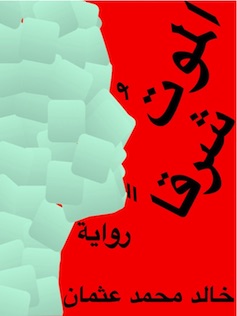
رواية "الموتُ شرقاً" تكشف لك سرّ الموت الشرقي التراجيدي المستمر للإنسان
احصل علي الرواية الآن واكتشف إنهيار القواسم المشتركة، واستلهم إبداعا يشبه الأسطورة في النص الروائي
"Follow", "like", "tweet", or "pin" the pictures to express your love! Thanks
TweetHorn Africa's Political Tragedy

Love in the Internet Time on Apple Books

Rising of the Phoenix Poetry on Apple Books

Free Poetry Picture Book
Free poetry picture book on Apple Books. You can use the images on public places for your customers to enjoy, while taking coffee.

The French & Spanish Versions
You can work the French versions and the Spanish versions of the two books above with me on, one on one bases. Contact Us.
HOAs Political Poetry Imaged
I'll be thankful, if you get one of my books.
My Books!