Archive of Truth in Exile Creates a Social infrastructure!
Archive of Truth in Exile Creates a Social infrastructure: It began many years ago, with the seed of an idea that emerged in my mind after Eritrea's independence in 1991: the Eritrean Martyr's Tree. What started as a symbolic gesture grew into a framework of ethical, ecological, and civic meaning. It has evolved into a living social infrastructure... one that continues to grow across borders, carried by those who refuse to let truth be exiled.
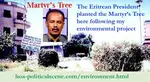
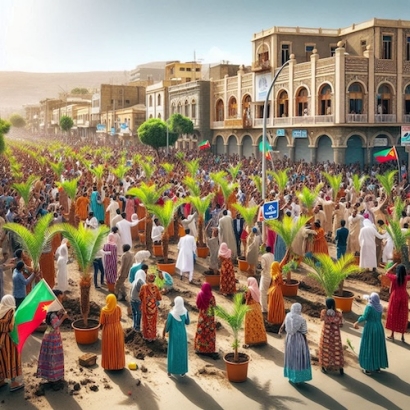 Archive of Truth in Exile Creates a Social Infrastructure: Illustrating the enthusiasm and national tempers of Eritreans, while responding to the idea and the plans to plant the Eritrean Martyr's Tree everywhere in the free country after independence. What the Eritreans have carries bypassed the state official system that has neglected generative idea like this and continued to neglect it in every Eritrean Martyrs' Day. It is now strong here on my network as a tribute to my people in Eritrea, to show them how they have helped in generating the global dynamics. Between them I never thought that I was stranger, but part of their social fabric.
This marks the beginning of building the kind of ecosystem your society needs in order to rise, to lead the future, and to withstand the turbulence shaping our world today. Such an ecosystem is not a luxury... it is the pathway to a secure future: your safety, the safety of your community, and the safety of the world you inhabit.
It is also the framework through which you recognise yourself as a civic asset of power... a form of power that surpasses any institutional authority. You are the first and most essential asset responsible for carrying these tasks forward.
The outlines of the social infrastructure I developed during the experimental phase of the Eritrean Martyr’s Tree demonstrate two things:
The accuracy and internal coherence of the system itself, and the applicability of the same process to positive social development in any context, benefiting every individual asset within it.
This is why this page exists: to explain the architecture, to show how it works, and to make its principles available to anyone ready to build a healthier, more resilient society.
Why the Idea of the Social Infrastructure is Essential?
- First, the idea carried national significance while simultaneously serving the environment... an ethical convergence of memory and ecological care.
- Second, it naturally expanded into an international ecosystem ethos, connecting local remembrance to global responsibility.
- Third, it created a societal space where Eritreans could gather, honour their heroes, and reaffirm a shared narrative of dignity.
- Fourth, it revealed the potential to inspire civic movements wherever communities sought to organise around justice, memory, and collective responsibility.
- Fifth, its roots extended into global dynamics, resonating with resistance movements that mirrored the very principles envisioned at the beginning.
These are the seeds from which I have created the 5 Pillars for Your Social System, flipping the NGOs motto: Think Globally, Act Locally upside down with my motto: Think Locally, Act Globally. This is a revolution... not a joke.
A Revolution THAT Fragments Conventional Narratives...
In a world where official narratives fracture and institutions look away, this archive steps forward as a different kind of infrastructure... one built not from concrete or code, but from witness. It gathers the scattered fragments of exile and arranges them into a living system where memory circulates, testimony finds continuity, and silence is no longer a void but a signal.
This is not simply a repository of stories; it is a social architecture in motion, designed to hold power accountable and to reconnect communities that injustice has deliberately dispersed, human rights violated, economical wars shaped in economies domination master the scene, conflicts and fractures of states continues, social disruption oriented and environmental sustainability id forgotten, while space explorations continue to distablize the ecosystem.
Here, truth becomes a public utility... shared, renewable, and impossible to bury.
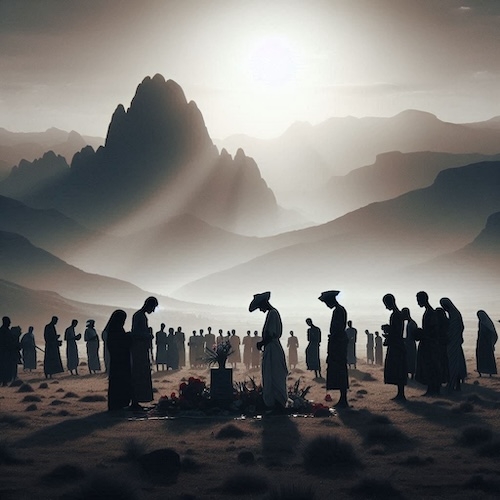 Archive of Truth in Exile Creates a Social Infrastructure: Illustrating Eritrean people in their traditional clothing paying tribute to their fallen heroes, the martyrs somewhere in Keren, during their searching, and gathering their bones to bury them in honour.
Why Using the Term Ecosystem in Such Social Structural Movement?
To clarify the structural logic of this archive, I use the term ecosystem in three distinct registers. The Exile Archive Ecosystem is the architectural spine... a living system that sequences testimony, hashtags, visuals, and legal witness into a coherent, adaptive archive.
The Eritrean Martyr's Tree ecosystem is cultural and symbolic, rooted in Eritrean memory and contested rituals of remembrance. The human rights and injustice ecosystem is structural: a machinery of harm that reproduces silence, error, and procedural violence.
Each ecosystem operates independently, yet together they reveal how memory, power, and resistance circulate across borders. This layered usage is intentional, and central to the archive's infrastructure.
 Archive of Truth in Exile Creates a Social Infrastructure: Illustrating many Eritrean Martyrs Trees growing high in the martyrs graves. This is not a typical picture, just illustration. The martyrs have their memorial grounds in many places.
Components of the Social Infrastructure!
- A moral spine that anchors collective action in dignity, memory, and responsibility.
- A network of individual civic assets, each recognising their agency and role in shaping societal outcomes.
- Shared symbols and rituals that bind communities across geography and generations.
- Mechanisms of participation that allow every person to contribute to collective wellbeing.
- Feedback loops that turn lived experience into continuous improvement.
- Transnational linkages that connect local struggles to global movements.
- A repository of truth, ensuring that memory is preserved, corrected, and transmitted.
- Ecological consciousness, integrating environmental care into civic identity.
Logic of the Social Infrastructure!
- Society evolves when individuals recognise themselves as primary units of power, not passive subjects.
- Collective strength emerges when personal agency is organised into structured, ethical action.
- Symbols like the Eritrean Martyr's Tree function as civic algorithms: simple forms that generate complex social behaviour.
- A community becomes resilient when its memory, ethics, and participation are interlinked rather than isolated.
- Social development is replicable when the process is transparent, teachable, and rooted in lived experience.
- The model scales because it is modular: each component can be adopted independently yet reinforces the whole.
Civic Function of the Social Infrastructure!
- It equips individuals to act as guardians of societal wellbeing, not spectators.
- It transforms memory into collective responsibility, ensuring that past sacrifices shape future conduct.
- It creates spaces of belonging where communities honour their heroes and reaffirm shared values.
- It cultivates civic literacy, enabling people to understand their rights, duties, and power.
- It generates civic movements capable of resisting injustice and building healthier futures.
- It aligns personal dignity with public action, making every individual a custodian of safety... personal, societal, and global.
How the Social Elements in This System Are Constructed?
- The Introductory of the Archive of Truth in Exile:
The beginning of the Archive of Truth in Exile is a foundational compass. It connects to the dynamics and empower the reader (you).
- It clarifies the philosophy of interconnectivity that makes any social movement strong.
- It establishes the explanatory of the whole process and enriches the mind with social inspirations.
- It confirms the strength of social frameworks linking them with the established global dynamics, created from the experimental process of the Eritrean Martyr's Tree.
-
Archive of Truth in Exile Creates a Social Infrastructure
Infrastructure is the foundation... the underlying system of relations, memory, and civic logic that the archive builds. It answers the question:
This page establishes:
- The practical philosophical base.
- The civic logic and its power.
- The ethical stance and its application.
- The structural necessity of the archive.
It's the "ground layer of the social movement."
-
Archive of Truth in Exile Creates a Social Architecture
This is the natural second page of the practice.
Architecture is what rises on top of infrastructure.
It answers the question:
How does the archive evolve from documentaries to take shape in the world?
This page articulates:
- The visible structures.
- The narrative forms.
- The public-facing design.
- The way testimony is organized and presented.
If infrastructure is the skeleton, architecture is the body.
-
Archive of Truth in Exile Creates a Social Ecosystem
This belongs after the first two.
Why?
Because an ecosystem is what emerges once the infrastructure and architecture are in place. It answers:
How do the parts interact, evolve, and sustain each other?
This page describes:
- The interdependence of the archive's components.
- The flow of testimony and practices.
- The community logic.
- The recursive, living nature of the project.
It's the "living environment" that grows from the first two layers.
More details on these 4 pages with the specific layers included are live in the sections of the Global Dynamics.
Back to the Beginning: From Where Do These Dynamics Stem and How Do They Point to the Future?
Eritrean Martyr's Tree Infrastructure: A Grassroots Model of Environmental Recovery The Eritrean Martyr’s Tree Infrastructure stands today as one of the most ambitious, community‑driven environmental rehabilitation efforts in the Horn of Africa.
Born from the ashes of a decades‑long war and rooted in a culture that venerates sacrifice, the initiative blends ecological urgency with national memory. It is both a reforestation campaign and a civic ritual... a living monument to those who fell, and a practical response to the environmental devastation left behind.
A Post‑War Landscape in Need of Repair:
Eritrea emerged from one of Africa’s longest wars with a landscape deeply scarred by deforestation, drought, and land degradation. Forest cover, once estimated at around 30% in the late 19th century, had collapsed to as low as 2–3% by 2018. The drivers were clear:
- Fuelwood shortages.
- Agricultural expansion.
- Overgrazing and the ecological toll of conflict.
These pressures created a national imperative: rehabilitate the land or risk long‑term ecological collapse.
The Birth of the Eritrean Martyr’s Tree:
The Eritrean Martyr's Tree was conceived as an environmental and symbolic intervention... a way to heal the land while honoring those who died for independence. The idea gained traction because it resonated with Eritrea’s culture of remembrance, where martyrs occupy a sacred place in public life.
The concept was simple but powerful: plant a tree for every martyr, and let the landscape itself become a living memorial.
Schools, communities, and public institutions embraced the initiative, turning tree‑planting into a civic duty and a national ritual. The campaign’s momentum was amplified by Eritrea’s broader Greening Campaign, which mandated tree planting at all national events and mobilized communities across the country.
Infrastructure Built on Memory and Mobilization:
What distinguishes the Eritrean Martyr's Tree Infrastructure from conventional reforestation projects is its social architecture. It is not merely a technical program... it is a system built on collective memory, civic participation, and national identity.
Key pillars of the infrastructure include:
- Community Mobilization: Villages, schools, and institutions organize planting drives tied to national commemorations.
- Green Clubs: Youth‑led environmental groups in schools sustain the momentum year‑round.
- Mandatory Integration: National events incorporate tree planting as a formal component.
- Monitoring and Guidelines: A national committee oversees implementation, ensuring measurable progress.
This structure transforms environmental action into a shared civic responsibility rather than a top‑down directive.
A Living Memorial in a Culture of Remembrance:
Eritrea's culture of honouring martyrs is deeply embedded in public life. Martyrs' Day on June 20 is marked by nationwide ceremonies, moments of silence, and community gatherings. The Eritrean Martyr's Tree Infrastructure extends this tradition into the landscape itself. My idea and creation are strong.
Each tree becomes:
- A symbol of sacrifice.
- A gesture of gratitude and...
- A contribution to national, regional and international renewal.
This fusion of memory and ecology gives the project emotional weight and long‑term sustainability.
Environmental Impact and Global Significance!
The initiative has contributed to:
- Reforestation of degraded lands.
- Improved soil and water conservation.
- Increased community awareness of environmental stewardship.
- A model of post‑conflict ecological recovery.
With millions of trees planted, the Eritrean Martyr's Tree Infrastructure demonstrates how environmental action can be rooted in cultural meaning and collective identity. It offers a blueprint for other nations emerging from conflict: rebuild the land by honoring those who defended it.
Conclusion:
The Eritrean Martyr's Tree Infrastructure is more than an environmental project... it is a national narrative written in living wood. It transforms remembrance into action, grief into growth, and sacrifice into sustainability. In a region where climate pressures and historical wounds run deep, Eritrea's approach stands out as a rare fusion of ecological necessity and cultural resilience. From it world societies can give birth to a bright shared future. My environmental project was intentional.
Archive of Truth in Exile Creates a Social Infrastructure: Dynamics - Ecology
HOA Climate Change Requires Governments Change!
For the HOA Climate Change, which requires governments change, the masses should do the climate math. How? Get my mind free of charge. You'll never regret.
Climate Change Should Lead to Classic Systems Change!
Climate Change is product of the ruling elites of classic political parties and their classic systems. That requires changing classic systems to masses systems.
What's HOA's Common Goal? How It Solves Your Global Disaster?
HOA's Common Goal helps you realize that the saying "that is the way it is" & the "obvious" are manipulated politically to accept the failure of your government.
Climate Justice Must Be Done by the Masses, Not by Calling Governments
Climate Justice should be done by world masses, not by calling governments to do so. Governments will not put themselves into trials for climate, or anything.
Environmental Scene's 2 Dangerous Characteristics with Health Effects!
Environmental Scene has two characteristics, the announced & hidden scenes. Both foretell of dangers that are intolerable to humans and intolerable to the Earth.

Archive of Truth in Exile Creates a Social Infrastructure: Dynamics - Environment
Sudanese Martyr's Day to Make Your Revolutionary Day!
The Sudanese Martyr's Day is a day created by journalist Khalid Mohammed Osman every month, every year to celebrate a Sudanese martyr.
Sudanese Martyr's Actions to Celebrate Martyr's Anniversaries & Revolt
The Sudanese Martyr’s Actions are planned to set you free by participating in martyrs’ anniversaries, and becoming organizer to defeat the totalitarian regime.
5,000,000 Martyr’s Trees Enhance Global Environment!
Khalid Osman's Eritrean Martyr’s Tree invention accomplished planting of 5,000.000 Eritrean martyrs trees & cleaned environment from chemical weapons & mines.
Environmental Scene's 2 Dangerous Characteristics with Health Effects!
Environmental Scene has two characteristics, the announced & hidden scenes. Both foretell of dangers that are intolerable to humans and intolerable to the Earth.

Archive of Truth in Exile Creates a Social Infrastructure: Dynamics - First Pulse
Archive of Truth in Exile: A Living Record of Power and Witness!
The Archive of Truth in Exile: Mapping silence, power, and survival. Testimony against erasure. Making an archive a living witness for you to claim justice.
Archive of Truth in Exile - Testimony Matters!
Archive of Truth in Exile - Testimony Matters: A foundational document on witness, erasure, and the moral architecture guiding the entire archive & raising societies.
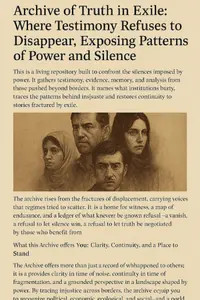

Archive of Truth in Exile Creates a Social Infrastructure: Dynamics Hub
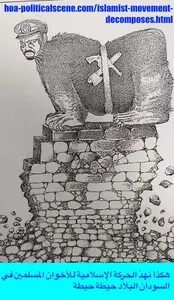
Islamist Movement Decomposes. Factual Facts of the Islamist Movement!
Islamist Movement Decomposes. This is clear to every modern and civilized mind. However, one question remains. Why this so called Islamic Movement is still controlling in some areas?
Conventional Narratives Hub Coverage From History to the Present!
Conventional Narratives Hub covers all narratives historically from the past to the present, whether they are economical, environmental, political, or social.
The Revolution I Would Not Sell!
The Revolution I Would Not Sell is a continuation to the unwritten system I have that proved to be working right! This system achieved planting 5 million trees to spark development.
Ink Between Borders - Exile by Principles: Peace Unheard!
Ink Between Borders - Exile by Principles: Peace Unheard! An urgent reflection on exile, unrecognized peace & moral resistance in post-conflict narratives.
Has International Terrorism Disappeared?
Has International Terrorism Disappeared? A political project like this has many phases. It is likely when the first phase has been done, we see the 2nd, the 3rd, etc...

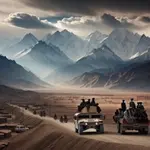
Archive of Truth in Exile Creates a Social Infrastructure: Dynamics Narratives Hub
The Cold War Era: A Battle of Ideologies and Influence!
The Cold War Era: A Battle of Ideologies and Influence! In my opinion, the world was better and more stable than today's world. What do you think?
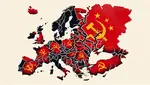
The Eastern Europe Socialist Bloc Fragmentation!
The Eastern Europe Socialist Bloc Fragmentation costs effectively until today. Are there any real causes of the deterioration of great counties in the world?
Conventional Narratives Are Always Wrong!
Why Am I Saying Conventional Narratives Are Always Wrong? Explore the connection of these narratives from colonial era until this era and know what to do!
Established Frameworks Invisible Forces Shaping Perception!
Established Frameworks Invisible Forces Shape Perception! The insights help you escape narratives that control your life & help others build a better world.
How Dominant Perspectives Shape Our World?
How Dominant Perspectives Shape Our World? Explore to know what to accept and what to refuse.

Archive of Truth in Exile Creates a Social Infrastructure: Injustice to Challenge
Are Odense Municipality, CIVICA Housing Company & the Police Corrupt?
Are Odense Municipality, CIVICA Housing Company & the Police Corrupt? More than seventy years of foreigners presence in Denmark has corrupted Denmark.
What the Heck are Human Rights Organizations and the UNHCR Doing?
What the Heck are Human Rights Organizations and the UNHCR Doing is a serious question these organisations should think about before losing any credibility and transparency.
In Denmark They Violate Human Rights for Money
In Denmark They Violate Human Rights for Money! This is a real time report you can call real life story that expose privacy and thus human rights violations in Denmark.
Is the Law Paralyzed Resulting in Injustice in Denmark?
Is the Law Paralyzed Resulting in Injustice in Denmark? This question exposes how some people from a specific culture can make things worse, when they are employed in the police forces.

Archive of Truth in Exile Creates a Social Infrastructure: Injustice to Confront
Political News: No Political Borders Should Exist Between Humans!
Political News to dynamically minimize the political borders between humans. The mind is ours and you learn from a century of persistence.
Refugees in the Long Run to Survive!
Hot times refugees will emerge whenever there's crisis on Earth. What should we do for them? Best answer: Give them new homes & warm feelings. Unfortunately...
Refugees in Denmark Lacking the Bright Future!
The situations of refugees in Denmark impose the question why Denmark is tough with the UN Convention political refugees? This is the toughest question I have been asked!

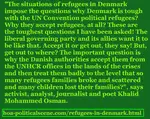
Archive of Truth in Exile Creates a Social Infrastructure: Injustice to Criticize
Politik i Horn af Afrika!
Politiken er mit arbejde! Jeg havde praktiseret politik som journalist i Horn af Afrika og Mellemøsten områder, over tredive år.
What Dogmatism Actually Means?
Is dogmatism passive? Intelligentsias don't consider dogmatism as an active habit, so how it works to limit the vision of some elites and how to get rid of it?

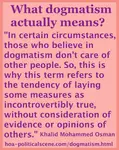
Archive of Truth in Exile Creates a Social Infrastructure: Pain Travels With Us
Substack Exile Archive Presents Fragments of Resistance!
Substack Exile Archive Presents Fragments of Resistance... poetic testimony, legal critique, and public witness from the margins of exile and defiance.
Substack Exile Archive - Ethics of Proximity - Shadow Beneath State!
Substack Exile Archive - Ethics of Proximity - Shadow Beneath State explores how some authorities manipulate and break the system of fairness and justice.
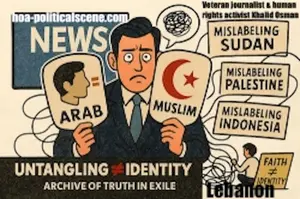
Arab - Muslim: Untangling Faith Identity!
Arab - Muslim: Untangling Faith Identity!


What Do You Think of "Archive of Truth in Exile Creates a Social Infrastructure"?
In such matters of human rights violations, injustice, climate and economical conflicts, disruption in many places, no one should be passive. These are serious issues that endanger life and continued to escalate since 1989.
This is why world social solutions have already been constructed from this simple project, before even the rise of all of these problems.
The environmental and national project you read about has a purpose and by completing this page you have already known about it. What remains is the fact that "nothing happens, unless something moves." Your move is essential to shape your society and solve these problems.
Use the Action Guide of the Global Dynamics to lay the grassroots of social movements and use the form below to let me know what you think of "Archive of Truth in Exile Creates a Social Infrastructure". Thanx:)
Have A Great Story About This Topic?
Do you have a great story about this? Share it!
Concerned about Conflicts Fact that Never Been Disclosed?
Get Horn Africa's Political Tragedy.
Recent Articles


-
HOA's Interval with Wisdom Nuggets of Inspiring Ethical Proverbs!
Sep 09, 26 04:59 AM
 HOA's Interval with Wisdom Nuggets of Inspiring Ethical Proverbs! You can see your ethics & the ethics of the surroundings clearly to develop & enhance your own.
 -
Intelligentsia 61 from Danish Injustice to American War Abortion of
Aug 29, 26 11:14 AM
 Intelligentsia 61 from Danish Injustice to American War Abortion of Iranian Revolution and Media Stupidity, world people fall into the trap of manipulation.
 -
When, Why and How the European Paradise Became Hell on Earth?
Aug 23, 26 10:20 AM
 When, Why and How the European Paradise Became Hell on Earth? This one in the dynamics will make your mind spin and reflect with clarity to address this matter.
Some Support is Appreciated so Much!
When I get a new information, or a good read, my conscience tells me to be obliged to whom has added a drop of knowledge with some values in my life by doing some good deeds to him. Some links here get me a little power to support some people in need, indeed, by paying my subscription to international human organizations I am part of their generous good deeds. Like this at Awassa.
A Friend in Need is A Friend Indeed!
How many times have you fallen like a mountain, because you were great with your inspirations, guidance and professional teaching and later on found some people you made professional drawn in luxuries and never cared about you?
A hand up is better than a hand down. Share a link of a page you liked in great sites, but please not FACEBOOK. I am a man of principles.
A Man is Known by the Company he Keeps!
True, don't you think so? I can tell you stories and stories about that. Can you tell me one in details with the original cultures of the world it refers to? Take the cultural section by a huge and write that in the comments form.
Healthy Citizens are the Greatest Asset any Country can have!
It's true. But, he didn't know what ill governance can do for healthy citizens, or how ill monarchies can bring healthy citizens into miseries, or why great powers play by the fates of so many healthy citizens in the world.
Know any similar situations where healthy citizens are broken by the ruling elites in any country? Bring that into readers' attention through the comments form at Are You Intellectual?
Global Dynamics to Make Everyone Intellectual
Look for the top 100 Google most searched terms globally in 2021. You will not find any single thing that any person looks for and wants to know about, or use in daily life, such as food, health, education, cinema, tv, news, developing qualities and qualifications, playing, traveling, and even what causes Coronavirus and other pandemics, which are real threats to all people lives etc... You will find only search terms used for top social media, Youtube, search engines and Amazon. Political illiteracy is what matters to me to educate. See Global Dynamics & signup for the newsletter.
Did you get any of my books from Apple Books?
Click here to tell me & get some free books. Fill the form.
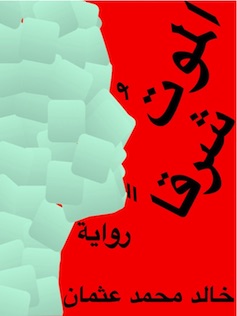
رواية "الموتُ شرقاً" تكشف لك سرّ الموت الشرقي التراجيدي المستمر للإنسان
احصل علي الرواية الآن واكتشف إنهيار القواسم المشتركة، واستلهم إبداعا يشبه الأسطورة في النص الروائي
"Follow", "like", "tweet", or "pin" the pictures to express your love! Thanks
TweetHorn Africa's Political Tragedy

Love in the Internet Time on Apple Books

Rising of the Phoenix Poetry on Apple Books

Free Poetry Picture Book
Free poetry picture book on Apple Books. You can use the images on public places for your customers to enjoy, while taking coffee.

The French & Spanish Versions
You can work the French versions and the Spanish versions of the two books above with me on, one on one bases. Contact Us.
HOAs Political Poetry Imaged
I'll be thankful, if you get one of my books.
My Books!